


























For India, with its diversity of conditions and multiple layers of development, the validity of this approach is clear: AI can be a bridge across inequalities if framed as a collective good, and not merely as only a tool for productivity or profit for the elite classes.
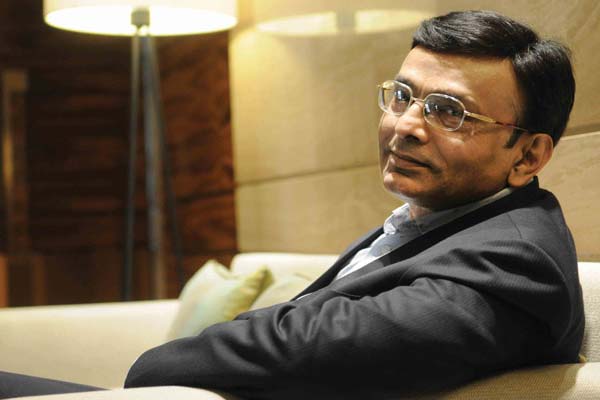
Technology guru and social visionary Antonio Grasso, author of ‘Toward a Post Digital Society – Where Digital Evolution Meets People’s Revolution’, and founder of Digital Business Innovation Srl, and gfiles Associate Editor Ravi Visvesvaraya Sharada Prasad ( an alumnus of Carnegie Mellon and IIT Kanpur, who was ranked by Onalytica UK as the 19th most influential thought leader in the world in Telecommunications, and by the IoT community as the second most influential thought leader in the world in IoT Internet of Things ) discuss how various emerging technologies can transform Indian society and economy.
RVSP:- You wrote a highly acclaimed book titled ‘Toward a Post Digital Society – Where Digital Evolution Meets People’s Revolution’. In your book, you described the business and social impacts of artificial intelligence. India is a country where large parts of the poor and rural population live in a milieux of 1850 AD, while the middle class lives in an environment of 2020-2025 AD, and the elite in 2050 AD. Mobile cellular telephones have revolutionised economic and social life in India and enabled the disadvantaged poor to leapfrog several generations of economic and social development. Could you describe the key points of your book, and their validity and relevance to India’s economy and society?
AG:- In my book ‘Toward a Post Digital Society’ I described artificial intelligence as a structural force that redefines both economic activity and social organisation. My central argument is that AI does not merely add efficiency to existing processes but creates a new layer of cognition within society, where data becomes the raw material for decisions, services, and interactions.
This transformation produces asymmetries, because technology always advances faster than institutions and cultures can adapt. That is why different social groups may appear to live in different historical times, as you described in the Indian context.
What connects them, however, is the capacity of digital technologies to reduce distances: mobile networks were the first step, AI will be the next, enabling access to knowledge, services, and opportunities that would otherwise remain out of reach.
The key message of my book is that digital evolution must remain human-centric. AI should not be treated as an isolated technical system but as a component of a broader social contract where trust, inclusivity, and ethical responsibility guide innovation.
For India, with its diversity of conditions and multiple layers of development, the validity of this approach is clear: AI can be a bridge across inequalities if framed as a collective good, and not merely as only a tool for productivity or profit for the elite classes.
RVSP:- In your book, you had also described how blockchain and smart contracts could bring about Direct Democracy and Collective Leadership.
There has been a lot of debate in India about political structures and the design of electoral systems. Especially about Electronic Voting Machines being vulnerable to manipulation. I have been writing about the vulnerabilities of Electronic Voting Machines since 2002.
Since the early 1950s there have been attempts to implement decentralised local governance at the village level, what is termed Panchayati Raj. How could the ideas in your book benefit the Indian political system, especially elections? And local governance and administration?
AG:- In my book I explored how blockchain and smart contracts can create new architectures of trust by decentralising validation and decision-making. The central idea is that democracy in the digital age should not depend exclusively on institutions as intermediaries but should also be supported by transparent, verifiable, and distributed systems.
For India, where debates about electoral integrity and the design of voting systems are highly sensitive, this approach offers a balanced perspective. Blockchain can provide immutable audit trails for electoral processes, reducing the perception of manipulation and increasing public confidence.
At the same time, smart contracts can automate the enforcement of rules in governance, ensuring that outcomes are not just decided but also executed fairly and transparently.
On the institutional side, the Panchayati Raj tradition demonstrates that decentralisation has deep roots in India. Digital tools can reinforce this legacy by enabling participatory governance at scale, where local communities are empowered with secure, traceable, and tamper-resistant mechanisms for decision-making. The benefit is not only greater transparency in elections but also stronger accountability in local administration.
The convergence of technological innovation and democratic principles does not eliminate the need for institutions, but it reshapes their role: from controlling processes to guaranteeing inclusion, fairness, and accessibility in a society where digital trust becomes the foundation of collective leadership.
RVSP: – In your book you had described how Web 3.0 led to Decentralisation and Decentralised Autonomous Organisations, Disintermediation, and user empowered Internets. Could you elaborate on these, especially their relevance to India?
Regarding Disintermediation, India has historically been a land of traders, with middlemen and brokers pocketing larger profits than producers.
AG: – Web 3.0 represents a transition from an Internet dominated by centralised platforms to one shaped by decentralised infrastructures where users regain control over their identity, their data, and their participation. This is not only a technological shift but also a cultural and social one, since it redistributes power from a few large intermediaries to communities and individuals.
In the Indian context, this evolution is particularly relevant. Historically, middlemen and brokers have had a strong role in shaping economic life, often extracting value disproportionally compared to producers.
Decentralisation and disintermediation can help rebalance this dynamic by enabling direct interaction between creators and consumers, farmers and markets, citizens and services.
When transactions are transparent and governed by decentralised protocols, the margin for rent-seeking behaviour is reduced and trust becomes embedded in the system itself rather than delegated to an intermediary.
Decentralised Autonomous Organisations add a further layer, offering the possibility of community-driven decision-making where rules are enforced algorithmically and participation is more inclusive.
For India, with its vast and diverse population, DAOs can provide a model for collective coordination that is both flexible and accountable, supporting not only economic initiatives but also social and civic projects.
The deeper message is that Web 3.0 technologies enable an Internet that is not just used by people but shaped by them.
For a country like India, where innovation coexists with structural inequalities, this shift holds the potential to empower producers, reduce dependency on entrenched intermediaries, and expand digital participation to wider segments of society.
RVSP:- In your book you had discussed Tokenomics at length. Recently the CEO of Robinhood, Vlad Tenev, outlined his vision of moving the entire international financial system on to blockchain technologies, that tokenisation would permit Indian investors to invest in US equities and real estate.
What advice do you have for the Indian government and financial institutions about blockchain tokens and cryptocurrency tokens, economic and financial artificial intelligence agents?
How should India’s monetary and fiscal policies be adapted, especially to take inflationary – and possibly deflationary – measures into account?
AG:- For India’s policymakers, the starting point is clear taxonomy and prudential perimeters.
Distinguish payment tokens, stablecoins, utility tokens, and security-like tokens; require issuer accountability, audited reserves for any redeemable claim, and disclosure standards aligned with market-risk, liquidity-risk, and operational-risk metrics.
Treat crypto exposures in banks and NBFCs with conservative risk weights, concentration caps, and look-through requirements to embedded leverage and rehypothecation.
Monetary policy needs insulation from private token cycles.
Keep core nominal anchors (inflation target and expectations) independent of token volatility by: (1) limiting stablecoin systemic share in retail payments unless fully reserved in high-quality rupee assets; (2) maintaining clear convertibility rules so that redemptions transmit into money markets without disorderly liquidity spirals; (3) using standing facilities and collateral frameworks that do not hardwire crypto as eligible collateral.
If a digital rupee is pursued, design it as a two-tier instrument with caps for retail holdings, tiered remuneration to prevent deposit flight in stress, and programmable features constrained by law.
Do not delegate monetary discretion to code; keep programmability at the edge (wallet or contract layer) with central bank policy tools unchanged.
On fiscal and financial stability, apply activity-based, technology-neutral rules: KYC/AML, travel rule compliance, proof-of-reserves with independent attestation, incident reporting SLAs, and mandatory operational resilience testing for custodians, exchanges, and stablecoin issuers.
Establish resolution playbooks for token intermediaries, including segregation of client assets, wind-down funds, and triggers for redemption gates.
Tokenomics for public goods should obey orthodox budget constraints.
For government or municipal tokens, avoid implicit debt through under-collateralised “utility” claims.
If tokens finance infrastructure, treat them as securities with prospectus-level disclosures, accrual rules, and secondary-market safeguards, not as off-balance-sheet instruments.
AI-based economic and financial agents require guardrails: model-risk management (data lineage, validation, backtesting), sandboxed market access with throttle limits, auditable decision logs, and liability attribution between developer, deployer, and user.
For trading agents, impose pre-trade risk checks, message-rate limits, kill switches, and circuit breakers aligned with equity and FX microstructure norms.
For lending /credit agents, require explainability for scoring, fairness testing, and stress scenarios that include data-feed manipulation and oracle failures.
Inflation / deflation adaptation should rely on robust, not cosmetic, mechanisms. For inflationary pressure amplified by token adoption (wealth effects, payment velocity), tighten via standard tools—policy rate, liquidity absorption, and targeted macroprudential measures—while ensuring that large stablecoin redemptions can pass through money markets without fire sales.
For deflationary shocks in token-heavy ecosystems, prefer fiscal stabilisers and liquidity facilities over algorithmic supply rules; code-based supply contractions can overshoot when demand is thin.
Where communities insist on protocol rules, require ex-ante buffers (insurance funds, backstop credit lines), variable transaction fees that absorb volatility, and governance processes that allow supervised parameter changes under transparent ballots.
Tax and accounting should remove distortion: neutral VAT / GST treatment for pure payment tokens, clear capital-gains regimes by holding period, loss-offset rules to reduce gaming, and fair-value accounting for corporates with disclosure of concentration and custody risks.
Finally, build supervisory data pipes: on-chain analytics plus regulated oracle feeds, so the central bank and market regulators can observe flows, concentration, and systemic linkages in near-real time without relying on self-reported snapshots.
RVSP:- In your book you had also spoken about digital technologies driving Energy Communities, decarbonisation, and prosumers and consumers of energy.
In India, electricity and fossil fuel energy distribution in the last mile local loop is inefficient and costly, compared to generation and transmission.
How would your ideas benefit India, especially rural village communities?
AG:- Energy communities are an institutional innovation as much as a technological one. In my book I emphasised that decentralised production and collective ownership can reduce inefficiencies, create incentives for sustainability, and align energy systems with social equity.
For India, where distribution costs and last-mile reliability are major challenges, policy design is crucial. The first step is to recognise prosumers—households, farmers, or cooperatives that both generate and consume electricity—as legitimate market participants. Regulation should make it possible for them to sell surplus energy into local grids under transparent tariffs, with simplified licensing and metering rules. This reduces dependency on centralised distributors and lowers overall system costs.
Second, financing models are essential. Rural cooperatives and panchayats can become anchors for microgrids if provided with concessional credit, blended finance, or public-private partnerships.
Tokenised energy credits could even serve as community-level incentives, but only within a clear regulatory perimeter that avoids speculative risk.
Third, state and central governments need to treat data and interoperability as public goods. Digital platforms that record generation, consumption, and settlement in real time can help build trust and make small-scale projects bankable. Smart contracts, properly regulated, can enforce settlement automatically and reduce transaction costs for local entities.
Finally, governance of energy communities should be embedded in local development frameworks. The Panchayati Raj system can be extended to energy, making village councils responsible for oversight, dispute resolution, and fair allocation of benefits. In this way, digital technologies are not substitutes for policy but enablers of inclusive structures that integrate rural India into the national decarbonisation agenda.
RVSP:- In your book you had spoken about the impact of the Metaverse on society, and about the creator economy and influencer marketing. Could you explain their relevance in the Indian context.
Among Indian youth, it has become a craze to be influencers on Instagram, YouTube, and Facebook.
AG:- The Metaverse and the creator economy represent more than entertainment or lifestyle trends; they are signals of a structural shift in how identity, work, and value are constructed in digital societies.
In my book I highlighted that immersive environments and user-driven content open new ways of expressing culture, building communities, and generating economic activity.

For India, this is highly relevant because of the demographic profile. A young population, digitally connected, sees content creation not only as leisure but as an accessible pathway to visibility, income, and even entrepreneurship.
Platforms like Instagram or YouTube have already shown how individuals can reach large audiences with minimal capital investment.
The Metaverse extends this by allowing creators to design immersive experiences, virtual goods, and new forms of interaction that go beyond traditional social media.
Economically, this shift matters because it reduces barriers to entry in industries such as media, education, retail, and design. A rural youth with access to connectivity could, in principle, participate in the same digital marketplaces as urban elites.
Strategically, Indian businesses and policymakers should not dismiss this as a fad but consider how infrastructure, intellectual property frameworks, and digital skills training can support a sustainable creator economy.
Culturally, the Metaverse amplifies India’s diversity. Regional languages, traditions, and artistic forms can be projected globally through immersive platforms, allowing local creators to reach international audiences.
At the same time, safeguards are necessary: transparency in monetisation models, digital literacy programs, and protections against exploitative algorithms will be essential to make this economy inclusive rather than extractive.
In short, the relevance for India is that these technologies open a parallel layer of society where young people can create value, express identity, and participate in global markets. With thoughtful policies and forward-looking business models, the Metaverse and the creator economy can become engines of both cultural renewal and economic growth.
RVSP:- In your book you had described how Cloud Computing and Edge Computing catalysed the emerging business paradigm of Servitization, where manufacturing companies shift their focus from selling their products towards providing integrated solutions combining products and services, especially customised products and solutions.
And how PaaS Product As A Service enabled Stakeholder Capitalism.
What advice do you have for India’s business leaders? On how emerging technologies are creating new business models. For example aircraft engine manufacturers are now marketing flying engine hours rather than merely selling engines to airlines. Regarding Stakeholder Capitalism, Crony Capitalism is a controversial topic in India at present.
AG :- Cloud and Edge Computing have accelerated a shift from product-centric models to service-oriented ecosystems. The logic of servitization is that value no longer resides only in physical assets but in the combination of product, data, and continuous service.
For Indian business leaders, the lesson is that emerging technologies redefine competitive advantage by embedding intelligence and connectivity into the lifecycle of offerings.
Servitization requires a new organisational mindset. Companies must move from one-off transactions to recurring revenue streams, where predictive maintenance, customised upgrades, and usage-based billing become the norm.
Edge Computing makes this scalable by enabling data to be processed close to the source, reducing latency and allowing real-time decision-making for industrial systems, logistics networks, and smart infrastructure.
For industries in India, this presents both opportunities and challenges. Traditional manufacturers need to invest in digital capabilities that integrate sensors, analytics, and cloud platforms with their products. Partnerships with technology providers become critical, as no single firm can master the full stack. At the same time, leadership must understand that servitization changes risk structure shifting focus from unit sales to service reliability and long-term client relationships.
The practical advice is to start by identifying high-impact use cases: mobility, energy systems, healthcare devices, or agricultural equipment. Develop pilot projects where performance-based contracts are feasible, then scale gradually while building trust with clients.
By embedding digital twins, secure data flows, and AI-driven analytics, Indian firms can position themselves in global value chains as providers of integrated solutions rather than low-cost manufacturers.
In this way, technologies such as Cloud and Edge Computing are not abstract innovations; they are enablers of new business models that align with global trends and allow Indian companies to compete on value, quality, and innovation rather than price alone.
RVSP:- You recently wrote an article about how digital technologies created competitive advantages, where you talked about innovation, disruption, processes, operations, and trusted data and secure information, among other issues. What advice do you have for India’s business leaders.
AG:- My advice for Indian business leaders is to focus on execution fundamentals rather than abstract discussions about disruption.
Competitive advantage through digital technologies comes from three operational layers: processes, data, and governance.
On processes, companies need to digitise workflows end-to-end, not just partially. A fragmented digital system creates bottlenecks; an integrated one reduces costs and accelerates delivery. Leaders should invest in automation where repetitive tasks dominate, while keeping human expertise at the centre for judgement-based activities.
On data, the priority is trust and quality. Decisions are only as good as the information behind them. That means investing in secure data architecture, traceability of sources, and clear ownership of data assets.
Indian firms should build internal capabilities to validate, clean, and govern data before scaling advanced analytics or AI models.
On security, resilience is as important as efficiency. A single breach can erase years of reputational gains. Establishing multi-layered security frameworks—identity management, encryption, continuous monitoring—is no longer optional.
Indian companies operating in global markets must align with international standards so that trusted data becomes a competitive differentiator.
The practical message is that technology is a tool, not an end in itself. Leaders who embed it into daily operations, align it with measurable goals, and ensure trust in their data will create sustainable advantages in fast-changing markets.
RVSP:- You recently wrote articles where you described the myths surrounding blockchain technologies as well as the use of artificial intelligence in blockchains.
You mentioned that there are still numerous occasions where traditional databases performed better than blockchain. How do you foresee the technological evolution of blockchain and smart contracts?
What are the implications for governance in India, as well as business and legal systems in India?
What about the energy consumption and environmental impacts of blockchain technologies?
What about the impact of post quantum cryptography?
AG:- The next phase of blockchain will be defined by modularity and cryptographic advances rather than monolithic “one-chain-does-everything” designs.
Execution will move to specialized layers (rollups), data availability will be provided by dedicated networks, and settlement will remain on highly secure base layers. This separation improves throughput, reduces costs, and allows different security–performance trade-offs to be selected per use case.
Zero-knowledge proofs are the key accelerator. Modern zk-SNARK/zk-STARK systems enable private verification of computations, cheaper light-client validation, and scalable rollups.
Combined with data-availability sampling and stateless client research, they push verification toward end users without forcing them to run full nodes.
For India’s high-volume settings (payments, supply chains), this means more transactions can be verified quickly on modest devices.
Smart contracts will mature through safer languages and formal methods. Resource-oriented languages, capability-based design, and rigorous verification (model checking, symbolic execution) reduce common bugs such as reentrancy and integer errors.
Expect broader use of upgradable proxies with strict governance, timelocks, and audit trails, plus deterministic builds and reproducible deployments to improve supply-chain integrity in tooling.
Interoperability will rely less on centralized bridges and more on light-client proofs and zk-based messaging. This reduces counterparty risk between chains. MEV control will advance with proposer–builder separation and encrypted mempools, limiting extractive behaviors and improving fairness for users and dApps.
Energy consumption is increasingly managed by proof-of-stake and rollup architectures. PoS reduces energy use by orders of magnitude relative to PoW, while off-chain execution (L2) cuts per-transaction overhead.
Where PoW persists—for censorship resistance or niche security models—its role will be narrower, and operators will face stronger incentives to use low-cost renewables.
From a system design perspective, the priority is lifetime energy per verified transaction, not just headline consensus watts.
Traditional databases will continue to outperform blockchains for internal, trusted workflows. If a single organization sets permissions and can audit access, a well-designed database with append-only logs, HSM-backed keys, and tamper-evident hashing will be faster, cheaper, and simpler.
Blockchains are justified when independent parties need shared state without a central operator, when composability with external assets matters, or when public verifiability is a requirement.
Post-quantum transition should follow a staged path. Many blockchains rely on ECDSA or Ed25519 for accounts; these are vulnerable to sufficiently large quantum adversaries.
A practical roadmap is: (1) hybrid signatures (classical + PQC) to maintain backward compatibility; (2) PQC-ready address formats and quantum-agile wallets; (3) migration tools for rotating keys and re-binding assets; (4) on-chain governance procedures to upgrade system contracts.
Lattice-based schemes (e.g., Kyber/Dilithium class) and hash-based signatures for long-term anchors are likely candidates, but parameter choices must consider on-chain size limits and verification cost.
For smart contracts, anchor critical state with hash-based commitments that remain robust under quantum threat, and keep large PQC payloads off-chain with succinct on-chain proofs.
AI inside blockchain systems will be most useful at the edges: detecting anomalies, simulating market stress for protocol parameters, ranking transactions for inclusion under fairness policies, and improving oracle reliability. It should not substitute consensus or cryptographic guarantees.
Where AI agents transact autonomously, mandating auditable logs, rate limits, and deterministic policy checks will be essential to keep their behaviour within verifiable bounds.
In summary, expect modular stacks with zk verification, safer contract toolchains, trust-minimized interoperability, PoS-centric energy profiles, and a measured PQC migration.
Use a blockchain when you need shared, verifiable state across independent parties; reach for a database when you do not.
RVSP:- You recently wrote a path breaking article about the integration of artificial intelligence with IoT Internet of Things. Could you elaborate on transforming data streams into proactive autonomous intelligence. Sliced IoT, Connected IoT, Augmented IoT, Autonomous IoT. What are the opportunities for Indian entrepreneurs in these fields?
AG:- The integration of AI with IoT moves the technology stack from simple data collection to autonomous systems that can anticipate, decide, and act.
For entrepreneurs in India, the real opportunity is not in building generic devices but in creating business models tailored to local needs and market conditions.
In the phase of Sliced IoT, where networks are partitioned for different services, start-ups can specialise in verticals such as agriculture, logistics, or healthcare. By offering dedicated connectivity and service guarantees, they can differentiate from commodity connectivity providers.
With Connected IoT, the business focus is on interoperability. Indian entrepreneurs can build platforms that connect fragmented devices and standards, especially in industries like manufacturing or urban infrastructure where integration is still poor. The value lies in reducing complexity for clients through plug-and-play ecosystems.
Augmented IoT opens the door to analytics and decision support. Here, start-ups can deliver sector-specific AI models—for example predictive maintenance for industrial equipment or crop forecasting for small farmers. The opportunity is to move up the value chain from providing raw data to providing insights that directly affect efficiency and revenue.
Finally, Autonomous IoT is about full decision loops without human intervention. This is the space where entrepreneurs can rethink services entirely: autonomous energy microgrids in rural areas, adaptive traffic systems in congested cities, or smart retail environments.
These models create recurring revenue because clients pay for guaranteed outcomes—uptime, savings, or performance—rather than for devices alone.
For Indian entrepreneurs, the advantage is scale and diversity. The domestic market provides a vast laboratory of use cases, from smart villages to smart factories, and solutions proven locally can be exported to other emerging economies.
The challenge is to build trust, secure data flows, and create partnerships with established players. But the direction is clear: business value will come less from selling hardware and more from embedding intelligence into connected systems and monetising services on top of them.
RVSP:- What are the emerging technologies and use cases in Quantum Computing? India has ambitious plans in Quantum Computing. What advice do you have for India’s government leaders and business executives.
AG) Quantum computing is still pre-commercial, but its trajectory is becoming clearer as different architectures compete—superconducting qubits, trapped ions, neutral atoms, photonics, and topological approaches. Each has distinct trade-offs in terms of coherence times, error rates, and scalability.
The scientific frontier today is error correction: moving from noisy intermediate-scale quantum (NISQ) devices with a few hundred qubits to fault-tolerant systems with millions.
Emerging use cases cluster around three domains. The first is quantum chemistry and materials. Quantum computers can simulate molecular interactions at a fidelity classical systems cannot reach, enabling breakthroughs in drug discovery, catalysis, and energy storage. For India, with its pharmaceutical and energy sectors, this is a strategic domain.
The second is optimisation problems in logistics, finance, and supply chains. Quantum-inspired algorithms and hybrid quantum–classical methods can provide speedups in route planning, portfolio optimisation, or production scheduling, even before fully fault-tolerant machines exist.
The third is cryptography and security. Quantum computing threatens current public-key infrastructures, but it also enables quantum key distribution (QKD) and quantum-safe protocols.
Preparing for post-quantum cryptography is urgent: governments and businesses should already be testing lattice-based, code-based, and hash-based algorithms for integration into existing systems.
On the algorithmic side, beyond Shor’s and Grover’s paradigms, new hybrid algorithms—variational quantum eigensolvers, quantum approximate optimisation, and quantum machine learning—are advancing as practical candidates for NISQ devices. These will likely be the first to deliver useful advantage in specific industrial contexts.
The scientific challenge is not only hardware but also software and error mitigation. Techniques like dynamical decoupling, zero-noise extrapolation, and probabilistic error cancellation are extending the usable window of today’s machines.
Quantum cloud services now allow researchers to test algorithms remotely, accelerating global participation.
In summary, quantum computing is not yet a general-purpose tool but a specialised accelerator for problems in chemistry, optimisation, and security.
The path forward is to advance hardware scaling, deepen error correction, and cultivate hybrid approaches that integrate quantum with high-performance classical systems.
List of Abbreviations and Acronyms
AI – Artificial Intelligence
AML – Anti-Money Laundering
DAO / DAOs – Decentralised Autonomous Organisation(s)
dApps – Decentralised Applications
ECDSA – Elliptic Curve Digital Signature Algorithm
Ed25519 – Edwards-curve Digital Signature Algorithm 25519
FX – Foreign Exchange
GST – Goods and Services Tax
HSM – Hardware Security Module
IoT – Internet of Things
KYC – Know Your Customer
L2 – Layer 2 (scaling solutions on top of blockchains)
MEV – Maximal Extractable Value
NBFC / NBFCs – Non-Banking Financial Company / Companies
NISQ – Noisy Intermediate-Scale Quantum
PaaS – Product as a Service
PQC – Post-Quantum Cryptography
PoS – Proof of Stake
PoW – Proof of Work
QKD – Quantum Key Distribution
SLA – Service Level Agreement
VAT – Value Added Tax
zk-SNARK – Zero-Knowledge Succinct Non-Interactive Argument of Knowledge
zk-STARK – Zero-Knowledge Scalable Transparent Argument of Knowledge
Antonio Grasso’s bio
Antonio Grasso is the Founder and CEO of Digital Business Innovation Srl, a startup for driving advancements in artificial intelligence (AI), the Internet of Things (IoT), blockchain, and cybersecurity. With over forty years of experience in information technology, he is recognised internationally as a technologist, author, keynote speaker, and content creator with a strong focus on human-centric innovation.
As a global B2B influencer, Antonio collaborates with major technology companies to provide strategic insights on digital transformation, emerging technologies, and ethical innovation. His thought leadership — directed at business leaders, C-level executives, and policy makers — is expressed through executive dialogues, keynote speeches, research contributions, and content that reaches a wide international audience.
In 2024, he was granted a patent in the field of generative AI for a method and system that autonomously creates infographics from text using neural networks, reflecting his hands-on commitment to the technologies he discusses.
He has contributed to European Commission initiatives such as Next Generation Internet (NGI) and AI4EU and serves as an Accredited Global Mentor for Startups and Scaleups with the World Business Angels Investment Forum, a partner of the G20 Global Partnership for Financial Inclusion.
He is the author of ‘Toward a Post-Digital Society – Where Digital Evolution Meets People’s Revolution’, a book that explores how AI, blockchain, and Web3 reshape societies, business models, and long-term resilience. His mission is to raise awareness of opportunities and risks in digital transformation, aligning technological progress with ethics, inclusivity, and collective well-being.

Ravi Visvesvaraya Sharada Prasad is a computer scientist and author. He writes on technology and historical events in post-independent India. He is Associate Editor at gfiles.


