











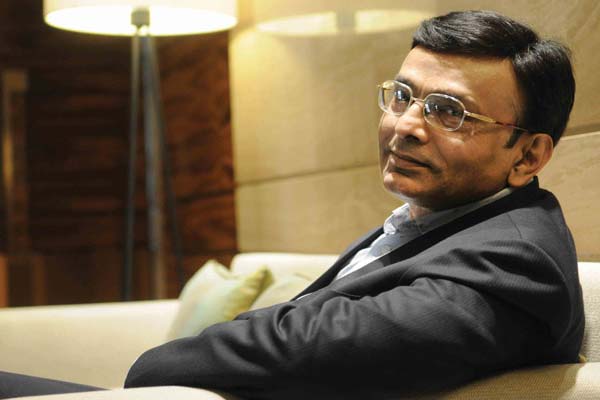


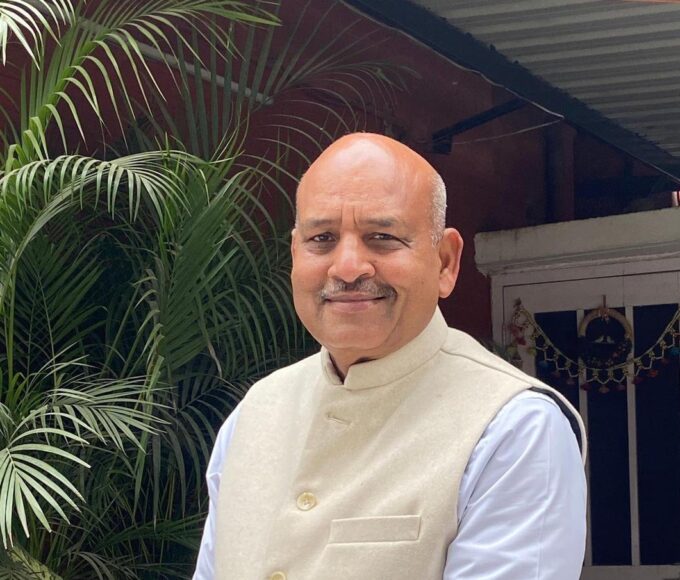












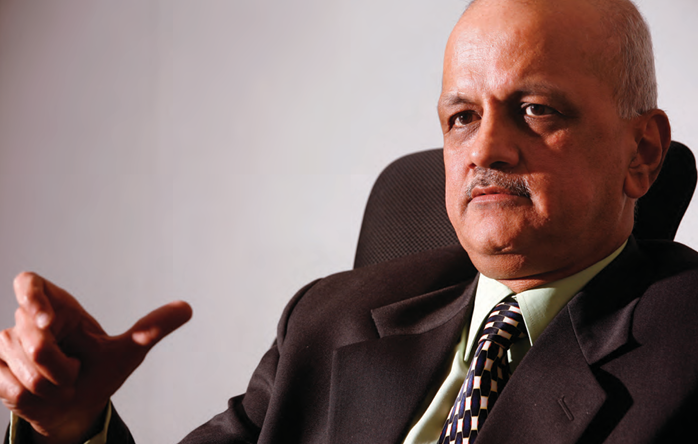
Rentala Chandrasekhar, who pioneered the concept of e-governance in India through Hyderabad’s evolution into “Cyberabad” and played a pivotal role in formulating the National e-Governance Plan (NeGP), established the first Department of Information Technology in the country, in Andhra Pradesh, and was its Secretary from June 1997 to December 1999. With an MS degree in computer science from Pennsylvania State University, US, and an MSc degree in chemistry from IIT, Mumbai, Chandrasekhar began his IAS career in 1975. In the Department of Information Technology, he was responsible for drawing up a national policy, strategy and action plan for e-governance. He was conferred the PM’s Award for Excellence in Public Administration in 2007-08.
gfiles: How much progress has been achieved under the National e-Governance Plan (NeGP) that was launched by your department in May 2006to “make all government services accessible to the common man in his locality”?
Rentala Chandrasekhar: There are two parts to e-governance: 1) enabling the services’ delivery everywhere; 2) enabling people anywhere to access that service. You are referring to the second part: service delivery platform. In a very broad sense, in villages we cannot expect people to have their own computers and access services. So we have the concept of assisted aid, we have service delivery points. The infrastructure of these points, called Common Service Centres (CSCs), is spread across all the villages. The initial programme was to reach one lakh villages and cover all the panchayats, going up to 2.4 lakh by 2012. To make these CSCs ready for delivering services, they need to have computers, power, connectivity and trained operators, who are incentivised to provide services in the villages. This is being done under this scheme.
gfiles: What have you achieved?
RC: We have about 8,000 CSCs in place. Each is expected to cater to around six villages. The business of government is conducted by several departments and agencies. So, to enable their services to be provided digitally, they need to do certain things within their department and in common. For example, the Department of Land Record or the Revenue Department in a State has to digitize all the land records and make them available through a network medium on the internet. Typically, this will be done by hoisting on a data centre and providing access to that centre. Then, anybody can access it either from a service centre or his personal computer.
So, the departments have to convert their operations into digital mode. What the Department of Information Technology (DIT) does is provide a common platform and certain common infrastructure which makes the job easier. First, there is a network which connects the State headquarters to the district headquarters and further down up to the block and tehsil levels. That eliminates the necessity for each department to set up its own network. The data centre at each State headquarters allows everybody to store the data securely at a centralized location where all the necessary technical support is available.
gfiles: Have the State governments been successful in digitization?
RC: Out of the 27 Mission Mode Projects (MMPs), 11 are in the State sector, nine in the Central sector and seven in the integrated sector which covers both State and Central governments. There are only two projects yet to be approved and three are in the final stages of approval. Other projects are in the process of implementation by the departments concerned in various States. Some of them have been completed – the Ministry of Corporate Affairs (MCA) functions online, and some other services are also available online like income tax, excise, passports, courts, land records, transport and so on.
One of the MMPs is called e-Districts under which States have been funded for various kinds of high volume services for simple and routine government services like caste certificate, income certificate, birth certificate and filing an RTI application. So, these services for which a large number of people come to government offices, district and subordinate offices are covered under the e-Districts project which is under implementation in about 14 States and 40 districts.
Now, we are taking necessary steps for obtaining an approval for nationwide roll up. It has been completed in Assam, Uttar Pradesh and Tamil Nadu. In other States, it is nearing completion as far as pilot districts are concerned. It demonstrates to citizens the benefit of getting these services and facilities and provides government servants in various organizations and departments hands-on experience of how this system functions, their role and the revised relationship between the government and citizens.
gfiles: Are CSCs functioning as the front-end delivery points for government, private and social sector services to rural citizens in an integrated manner?
RC: Absolutely. The intention of e-governance in all these areas is to provide services to citizens at their doorsteps. We have had evaluation of land records, transport sector services and property registration, based on a methodology developed by IIM, Ahmedabad, and the National Institute of Smart Governance and carried out by an independent third party, SSR, on random sampling basis with actual surveys by market research agencies.
According to those surveys there has been a significant reduction in the number of trips people have to make to government offices, in the wait for a service as well as the incidence of bribery. There is not yet an adequate number of services enabled. It was clear from the outset that all government services will not become available overnight. It takes time. Therefore, the CSCs were set up to bring the infrastructure into place.
gfiles: Do you face problems regarding broadband? What’s the bandwidth available to you?
RC: The assessment revealed that there are areas of concern. 1) Power: in most villages power is still a problem. This is being addressed in two ways – one is by using low power consuming devices like laptops. Today, there are extremely low cost chips, having rugged devices so that you don’t need air conditioning. The other is use of generators and solar power. TERI, which is the energy partner for the CSC scheme, has come up with an integrated 350-watt solution using solar power which has been tried out in a few locations.
2) Connectivity: Again, connectivity, especially broadband, is an issue in rural areas. That is being tackled in two or three different ways. One, under the scheme itself, BSNL was asked to provide wireless connectivity to the CSCs. Through this, connectivity for the CSCs which don’t have a high bandwidth landline available was covered. Right now, the broadband available with us is very limited. With 3G auctions completed and broadband wireless auctions underway, we expect acceleration of broadband availability in villages. So the rollout of the CSCs, connectivity and services has to be synchronized, though done independently. Considering the challenges and number of different agencies involved, considerable headway has been made and services are now visible in many places.
gfiles: What is the status of the e-Courts project? Would it help the government restore the aam aadmi’s faith in the rule of law?
RC: One of the MMPs is the e-Courts project that is being implemented through the Ministry of Justice and they have certain mechanisms through which the courts are involved in overseeing the project. In the MCA, all filing is done electronically. In income tax, electronic filing by a company is mandatory. Individuals are also allowed to file though it’s not mandatory. Similarly, for filing a court case, there are approximately 13,000 court locations across the country. In any case, connectivity up to block and tehsil level is available under this scheme.
The data centres are now being established in the State headquarters but the key challenge is to do the computerization within the courts – the operations of the courts, judgements, case diaries, filing and registration and the like.
gfiles: One of the nine Central MMPs is the national citizens’database. Is it distinct from the project of the Unique Identification Authority of India (UIDAI) under the Planning Commission?
RC: Actually, this project originated in 2006 when the NeGP was approved and the idea was really to have a citizen or resident ID mechanism to facilitate service delivery. In most services there are two things necessary. One is identification for a person to receive or apply for any service. The second is the payment mechanism. So these are two types of common services which need to be integrated into e-governance service. Today, there are certain activities being undertaken under the creation of the National Population Register (NPR) alongside the census. This is being done by the Registrar General of India (RGI) of Census of India. Again, there are primary departments who handle this. We only provide some support wherever required in terms of common infrastructure and so on.
gfiles: Isn’t there some kind of duplication between NeGP and UIDAI?
RC: There is a certain amount of apparent duplication but there is a mechanism for coordination because they address slightly different areas. NPR is being done by the RGI and it is required under the law. UIDAI is to facilitate service delivery. In fact, there is a coordination committee between the Home Ministry, UIDAI and Department of IT on a continuous basis to ensure that not only actions are coordinated but overlaps are eliminated in the execution. For example, under the NPR, service delivery and provision of services is not a primary focus, there are security concerns and other issues. If you look at UIDAI, service delivery is a paramount concern and delivery of welfare benefits and financial services are also very important.
gfiles: How far has the National Internet Exchange of India (NIXI) succeeded in its objective of routing domestic traffic within the country instead of taking it all the way to the US? Will this strategy help reduce cyber attacks on Indians?
RC: Significant progress has been made in the NIXI. A number of centres have been set up where the traffic gets aggregated and routed locally, the idea being that internet traffic originating from India and destined for India shouldn’t go out of India for routing. NIXI has the participation of industry players and representation from the Department of Telecommunications. It’s an organization chaired by the Secretary of DIT but it’s an autonomous company.
gfiles:Will it benefit India security-wise or so?
RC: When the traffic is routed within the country, the cost will get optimized. Cyberspace is completely global but the laws of a country are applicable within it. If the origin and destination are within India, then the implementation of legal provisions becomes much simpler and can be done strictly. This is certainly helpful as far as security aspects are concerned.
gfiles: Has the Information Technology (Amendment) Act, 2008 proved to be adequate for ensuring national cyber security? If not, what is in the works?
RC: Security consists of several different actions. Legal provisions are only one part of cyber security. The IT Amendment Act has to provide adequate basis to take all the steps required to ensure security. The office of the Chief Controller of Certifying Authority (CCA) has been set up after the 2000 Act. This created a mechanism for digital and electronic signatures which provides a basis for secure transaction.
gfiles: All domains starting from India have .in in their URL. Do you have some kind of security mechanism for this?
RC: The .in registry is very much with India. It is done within the jurisdiction of the country by various institutions.
gfiles: But it costs a lot….
RC: The cost, to some extent, is also a function of the volume. As the volume goes up, we will be able to bring down the cost. There is a certain amount of infrastructure to be maintained to keep track of the addresses and services. It’s not simply a matter of somebody booking a domain and the name being given. Infrastructure has to be created to handle all the addresses and traffic. All that costs money which is why there’s a fee. It’s not that the fee is being used to earn money. In fact, most of these services are being provided at a lower cost than viability would indicate, in order to promote them.
gfiles: Do you have any data to show how we compare with the world in cyber security?
RC: Yes, there is continuous exchange of information between the searches in different countries, passing on information to one another about threats and attacks or about patterns. Such data is available and patterns are shifting. At different points of time you find more attacks coming from a particular source and more attacks taking place within some countries. There was an incident which brought down the whole infrastructure in Estonia, and also in the US and Korea.
gfiles: Are you finding it difficult to take action in cases of defacement?
RC: Yes. There are two parts to it. One is that you are taking action against the attacker. That becomes difficult if the attacker is not located in the country or is using resources in some other country. But protecting yourself also means you should not make yourself so vulnerable. So, certain steps are being taken in terms of advising people about the measures they need to take to secure themselves, the practices to avoid such attacks or, even if such an attack takes place, to ensure that you do not succumb to it.
gfiles: Has DIT put in place any strategy to remove periodic misgivings in the US, the UK and elsewhere on outsourcing of IT-enabled jobs to Indian BPO units?
RC: As far as arrangements for business process outsourcing in India is concerned, it’s well recognized that India is a very good destination for provision of such services. We have good quality manpower, infrastructure, IPR protection, strong legal framework and clear IT Act. So all the necessary instrumentalities of any civilised democratic set-up to protect information are there. The contractual laws are also in place.
gfiles: How is it that DIT does not have any commercial PSUs under its administrative control?
RC: When the liberalization of the economy began in 1991, several sectors were liberalized early. IT was one of them. The IT industry grew to be globally competitive within a decade. There is no need for the government to continue to have a PSU in that space when there are so many competent and active private sector companies. The role of the department has become largely supportive and facilitative.
gfiles: How do you estimate the market for computers in India?
RC: It’s a completely globalized market. It’s a very high-volume, low-margin and high-velocity business. All the three parameters are there in this business, so there are several factors which are taken into account by investors when they invest in a particular location. Second, the investment in India is not necessarily made solely on the basis of the Indian market demand, but on global market demand. The third aspect is that one has to look at the kind of demand and supply balance on the global basis and there is actually supply surplus globally. It’s a matter of time before the desirable investment happens in India.
gfiles: Is there any plan to unveil an incentive scheme for other electronic components such as passive components?
RC: Shortly after this government took office, the Minister constituted a task force on IT, covering software services, electronic hardware and manufacturing. The main focus was getting the manufacturing sector promoted in the country because that was one area where we felt we needed to do much more. So the task force was set up with all the industry people covering different areas like IT hardware electronic components, consumer electronics, telecommunication equipment, medical electronics and so on. The task force, with Ajay Choudhary as chairman and Kiran Karnik as co-chairman, has made a number of recommendations which have been analysed and shared by other Ministries. We have had several rounds of discussions with the National Manufacturing Competitiveness Council (NMCC). Now, taking the views of the industry, the department, NMCC and other Ministries involved, the issue has been taken to the Committee of Secretaries after which it will go to the Cabinet.
gfiles: What steps is DIT taking to regulate computer education, including computer animation and IT-enabled education, directly or through the DOEACC Society?
RC: IT education and IT-enabled education are looked after by the Ministry of Human Resources Development’s formal education wing, covering all the technology programmes like B Tech, BE, M Tech or ME. The Cabinet has approved the National Mission on Education through ICT (NMEICT) at a huge cost for providing infrastructure in universities and connectivity. Similarly, there is a programme called ICT in schools which the department of school education within that Ministry has been working on, aimed at using IT and IT-enabled methods for providing education in schools and improving the whole quality of education. The department of IT itself is involved in two ways. 1) providing infrastructure (we have one programme which was approved in March this year to set up a national knowledge network, one of the recommendations of the National Knowledge Commission. This project aims at connecting all the research institutes and universities in the country and enabling sharing of knowledge by creating easy and fast access to all knowledge resources. 2) Non-formal IT education. This is looked after by DIT. Several programmes are run by DOEACC in different areas like C-DAC but these are certificate programmes, not degree programmes. We also set up an IT research academy which aims to promote and support research, jointly carried out by academic institutions and the industry in areas of relevance to our country.
gfiles: Why has India not been able to replicate its software exports success story in the field of hardware exports?RC: The task force on manufacturing and other things has made a number of recommendations, one of them being establishment of clusters for hardware manufacturing. As I mentioned earlier, this sector is high-volume, low-margin and high-velocity, it requires very good infrastructural support and trade facilitations for moving in and out. Trained manpower is not a problem in our country. So what we are looking at in the task force report is that we need to build our hardware industry by extending and expanding our strengths in R&D, design, prototype manufacturing and testing. We need to build all-round in this context rather than simply going for just manufacturing in terms of getting high volume because, first and foremost, it’s a relatively low-value addition area.
gfiles: The mobile telephone revolution has been propelled by a drop in service tariff and in price of handsets. Is it possible to achieve a similar drop in the prices of other electronic products such as laptops, LCD televisions and washing machines?
RC: We have witnessed a huge drop in the cost of telecom services, especially the cost of bandwidth – fuelled, to a large extent, by technology. Higher bandwidth is available at lower cost due to technological advantages. As far as equipment like computers is concerned, material cost is involved. Therefore, technological advancement will obviously bring down prices substantially. Every year, there is reduction in the cost of computers.
For making computers more affordable, there are two things. 1) Proliferation of services and growth in different kinds of services which bring down the cost. 2) Growth of business models which does not involve the capital cost. For example, we are witnessing BSNL and other companies providing a bundle of internet services including peripheral equipment on a subscription model. This model has become very popular in India because you don’t need to pay the cap packs.
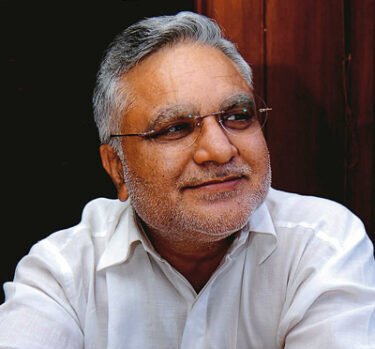
Anil Tyagi is a distinguished Indian journalist. An alumnus of the Delhi School of Economics (M.Com) and the University of Delhi (LL.B), he brings decades of rich experience to journalism. He presently serves as Editor of gfiles.