





















Lal Bahadur Shastri’s nephew recalls being a reluctant bureaucrat, yearning to join JP, and setting up MTNL
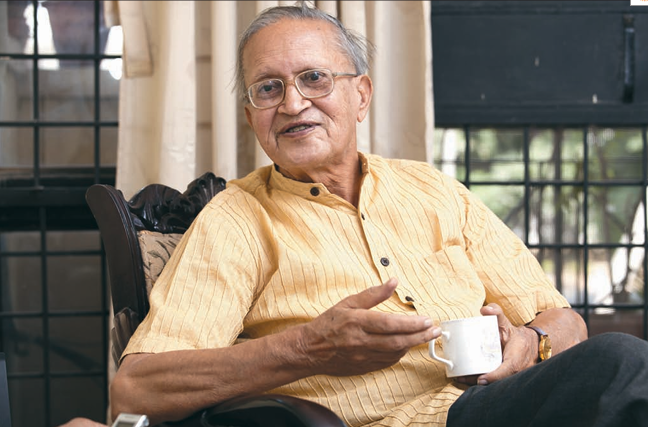
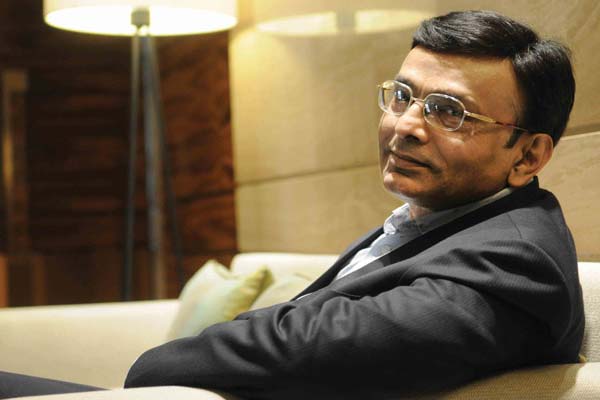
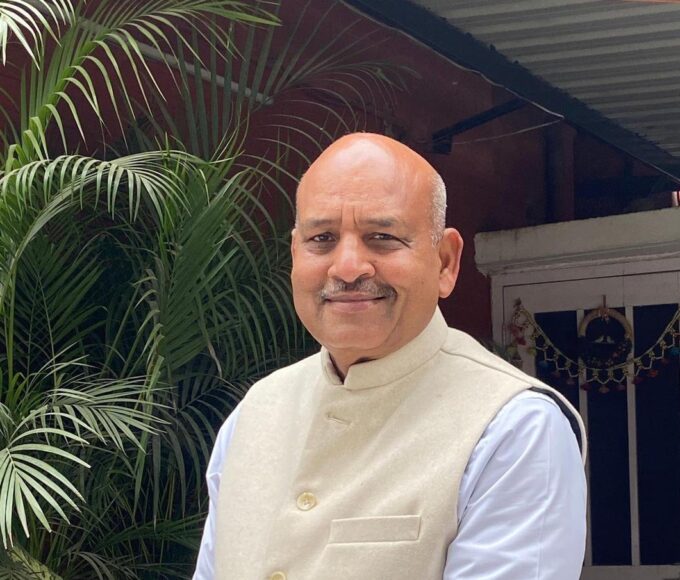
My mother, Sundari Devi, was the sister of Lal Bahadur Shastri. She was a Bihar MLA for about 18 years. My father, Shambhu Sharan, was the nephew of Jayaprakash Narayan. My father died when I was a month old in 1931. Shastri then took us to Allahabad, where we lived for six or seven years until our house was built in Patna and we shifted.
After BA from Patna University and MA from Allahabad University, I casually appeared for an admission test of the London School of Economics. Amazingly, I got through. In England, I spent Rs 400 a month. It was 13 rupees to a pound and I spent 30 pounds a month. Everything was cheap. Land and assets were also cheap. My family had to sell two pieces of land – one in Champaran, the other in Patna – for my education. They sold the land for a song. Today it would be worth crores of rupees.
I did BSc Economics there. LSE certainly made the man inside me. Europe put steel into you, partly because you had to compete with white people who had an air of supremacy, partly because we had just become independent.
Then I started on my Bar-at-Law. Because of my connections, a whole lot of people took great care of us. There was this Finance Minister in Bihar, A Narayan Sinha. He came to England and told me to go back to India.
He said, “What will you do by becoming a barrister? The zamindari is gone, so who will be your paymaster?” He told me my mother needed me. I obeyed and left law. At that time London was a centre for the IAS exam. I took the exam and got selected.
Everybody opposed my joining the IAS. Shastri said, “Main chahta hun ki Sreeji [my name] sarvang sundar ho. Sreeji uske pitaji ke peshe mein jaye aur phir rajniti mein jaye, samaj seva mein jaye.”
In the IAS, I did the usual things as SDO, Collector, Commissioner – works, finance, revenue. I had some good postings and I have been well regarded, albeit inviting controversies sometimes.
There is, in India, an intolerance of dissent. And we don’t value independence, we value dependence. So every bureaucrat likes to have a subordinate who is not independent but dependent on him. I have been a great votary of independence, partly because I was educated abroad and partly because of my family influences.
One of the most difficult experiences in life is to be free, to enjoy and properly use your freedom. Nobody really wants to be free. They want to be slaves of a well-ordered system provided by society.
I wanted to quit the IAS a number of times. The first time was in 1974 when JP started his movement. I felt I was not doing enough for my people. Since the time I was very young, I had worshipped JP. But my mother implored me not to quit.
JP’s movement was beautiful. Possibly, you will never see such a thing again. I wish Nehru had found ways of regular exchange of ideas with him. The worth of the man was first discovered by Gandhi who said there was nothing about socialism which JP didn’t know.
I regularly visited JP. As Commissioner, I found there was a CID report on JP’s visitors. My name was not there. The CID said relatives were not included. I visited JP not for family affairs but to discuss politics.
In the 1980s, corruption was at its peak. Again, I had a strong urge to leave. I consulted Madhu Dandavate and VP Singh. Dandavate said I should resign on a public issue. I also met Satyendra Narayan Sinha who later became CM of Bihar. He said, “Don’t quit, come to Bihar and help.”
Before leaving for Bihar, I was Additional Secretary in the Ministry of Communications. I felt that a portion of the telecom department had to be privatized or semi-privatized to be made more flexible for action. I had discovered that 40 per cent of Indian traffic either lands or originates in four metros. So I suggested to VN Gadgil, who had been my classmate in LSE, that these metros be clubbed and a corporation be formed. That’s how MTNL was born, despite strong opposition from telecom department officials. Rajiv Gandhi supported the idea and appointed the Geeta Krishnan committee to assess it. But politics played a part. Two metros were left out because they had non-Congress governments – Calcutta and Madras.
When I went back to Bihar, I was asked to choose between the Development Commissioner’s post and the Department of Revenue. I chose the former. Next was the Chief Secretary’s post but they wanted to bypass it and make me Deputy Chairman of the Planning Board in Bihar with the status of State Minister and finally upgrade it to Cabinet Minister. I said, if the Chief Minister wanted to make me a Cabinet Minister, he should do it through the front door and not the back door. They said, How is that possible. I said, If it’s not possible, I won’t do it. So I took voluntary retirement.
For years I had felt crushed under the limited responsibilities and limited agenda of the IAS. I felt somewhat liberated as a Development Commissioner because it opened up the whole gamut of government programmes. But your powers are not the same as a CM’s. Your powers are limited to how the government decides to use you.
And I wanted to have a role in everything about my country, not just the political aspect. Also, I was deeply troubled about the lack of ethical standards in politics.
In 1989, after quitting, I joined VP Singh’s Janata Dal. That was when the whole reservation affair started. The party broke up and Chandra Shekhar formed the government. VP Singh committed a mistake. Several times we tried to argue with him. What this country needs is need-based reservation and merit-based appointment. It will automatically go in favour of the lower castes. You don’t have to call them lower castes. But VP saw political advantage in calling them by their caste names.
Chandra Shekhar had a doubtful reputation. But he had a genuine feeling for the poor. He realised the importance of money in politics. Funding of political parties, collecting funds is one of the unsolved problems of politics.
Under Chandra Shekhar the party didn’t have a good name at all and it came to nought. The Janata Dal would have survived had Ram Sundar Das, who was a good man with a clean record, continued as Chief Minister. But Lalu Prasad Yadav took over in 1990. And 15 years were a total loss.
Occasionally, we demonstrated against Lalu. I did a padyatra in Champaran in 1995. For sometime I was also with the Lok Shakti party of Ramakrishna Hegde. Unfortunately, he decided to join with the BJP. I was very embarrassed about it. We stuck together for two elections.
I divided my time between politics and working with JPites, very intelligent people. I was accepted by them as a person but not as a political actor. They would not trust me with an office. My purpose in life was not holding political office but to bring about reform. So I quit politics.
I did a lot of other important things, tackling social issues. We did social awareness campaigns in dacoit-infested areas where kidnapping had become an industry. We rallied to stem fear in people.
I was talking to Naxalites in Bihar and made good progress. I used to arrange meetings between the CPI(ML) and democratic socialists. Despite my faith in democracy, I sometimes believe Marx’s theory of dictatorship of the proletariat. I have been impressed with Naxalites’ clarity of mind and knowledge of Marxism. I met a group of them in Hyderabad. During discussions, I raised the question of incipient fascism. All over India, fascism was budding. Jayalalithaa in Tamil Nadu, Narendra Modi in Gujarat, Mayawati in UP, Lalu in Bihar – they are all incipient fascists. I pointed out to the Naxalites that, according to them, fascism is a more serious danger than capitalism and challenged them to fight fascism.
My interactions with Naxalites led to a CID inquiry against me by the Andhra Pradesh government. Somebody called my son and asked him how I managed funds to travel to Hyderabad. My son was furious. He warned me that they might try to implicate me in some case. But they must have made more inquiries about me and stopped probing. My Shastri connection always acted as a shield for me.
I now run two organizations – Awami Eka Manch and Lok Paksh. The members are Patna-based elite but of progressive mindset. We had lots to do when Lalu was in power. Now I am taking it easy, at 79 years of age.
The Babri imbroglio: Vajpayee, Advani, Mulayam
I was deeply involved in the Babri Masjid issue. I held reconciliation meetings to promote communal peace in Gandhi Bhawan, Lucknow. In a meeting with the vice-president of the Muslim Personal Law Board, Dr Syed Kalbe Sadiq, I put forth four suggestions. (1) Rebuild the Babri Masjid where it was. (2) Nothing will be constructed at the site. (3) Build in partnership. (4) As an act of grace and goodwill, give the land to the Hindus on the promise that such demands won’t be made anywhere else in the country like Mathura or Kashi and there will be no more altercations on such grounds. He agreed but asked who would be the guarantor. I said the people of the country were the biggest guarantor. You win their goodwill and you can get no better guarantor.
I called on Atal Bihari Vajpayee and told him of the meeting. I saw another side of Vajpayee. He said he would agree to the fourth proposal. What he said next was unbelievable. He said, “BJP ka saashan ka khatra iss desh mein agaya hain. Unko saashan ki kala nahin aati.” He then asked me to talk to Advani. I didn’t have a problem getting an appointment. I was bearing a message from the Muslim Personal Law Board, I ran an organization and was an ex-civil servant and also a relative of JP. I said, “Advanji, you mean to say that for Hindus it has gone beyond the communal and touched a deep religious chord.” Yes, he said. I replied, “You forget that for Muslims too it has gone beyond the communal and touched a deep religious chord. It has to be looked into deeply.”
He was floored by my answer. He said he had wept only twice in his life – when JP was expelled from the Janata Dal and when the Babri Masjid was demolished. I don’t believe the latter.
Then I went to the RSS. They were interested but said they could respond only months later. I said nobody will make a proposal and wait for months for an answer, being uncertain about your answer. The fourth person I met was Acharya Giriraj Kishore of the Vishwa Hindu Parishad. He said, “Badle mein kya dena? Unko to mafi mangni chahiye ki unhone Babri Masjid wahan banaya kyun.” I said, Sorry, I have come to the wrong place and have nothing to say to you.
Then I went to Ali Mian and told him of my interactions. He asked me to write down my proposals and pursue the issue with Vajpayee, who, he said, was a good man. I pursued the matter with Vajpayee who hesitated and procrastinated for a while and then Mulayam Singh Yadav won the election and he is his own kind of politician. It suits him to fight the community’s fight. If Mulayam had not come to power, I would have continued pursuing Vajpayee and pushed it through. Mulayam couldn’t bear the idea of anyone achieving the goal which was meant for him to achieve and so I put the issue aside for better times.
The recent verdict of the court is beautiful. You can’t have a better judgement, made with foresight and in the best spirit of communal accommodation. To dismiss it on petty grounds would be foolish.
‘The IAS must learn to be humble’
An IAS officer has great potential for good provided he has the courage of conviction and provided he tries to decide things in anticipation of government approval. He is not a pen-pusher. He must decide things and solve the problem at the roots. The IAS members have sold their souls. In my moments of anger, I feel the IAS should be disbanded.
The IAS is not meant for very capable and highly intelligent people. It did a sterling job immediately after independence. The post-independence challenges required a very distinguished body of civil servants to tackle them. The IAS also rises to crisis situations beautifully. But the problem is that it carries within itself the arrogance of an ignoramus. There are other people who are equally sensitive about crises and they should get them to work with them. The IAS must learn to be humble, must go out and get involved in ground realities.
As for governance in this country, one cannot run a government in India without deep compassion.