







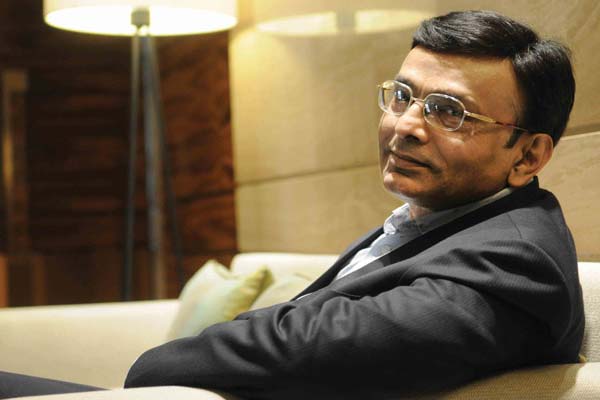







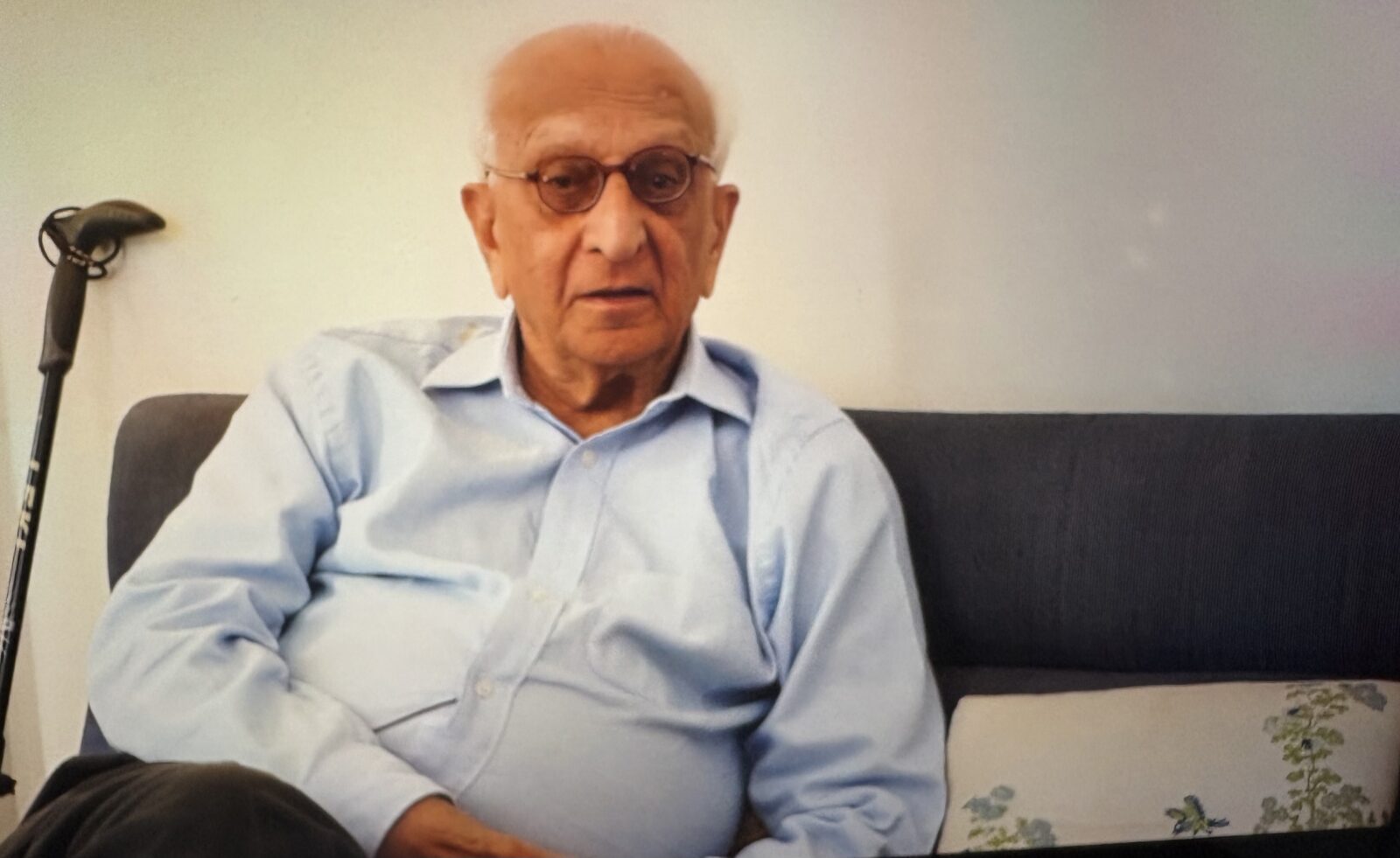
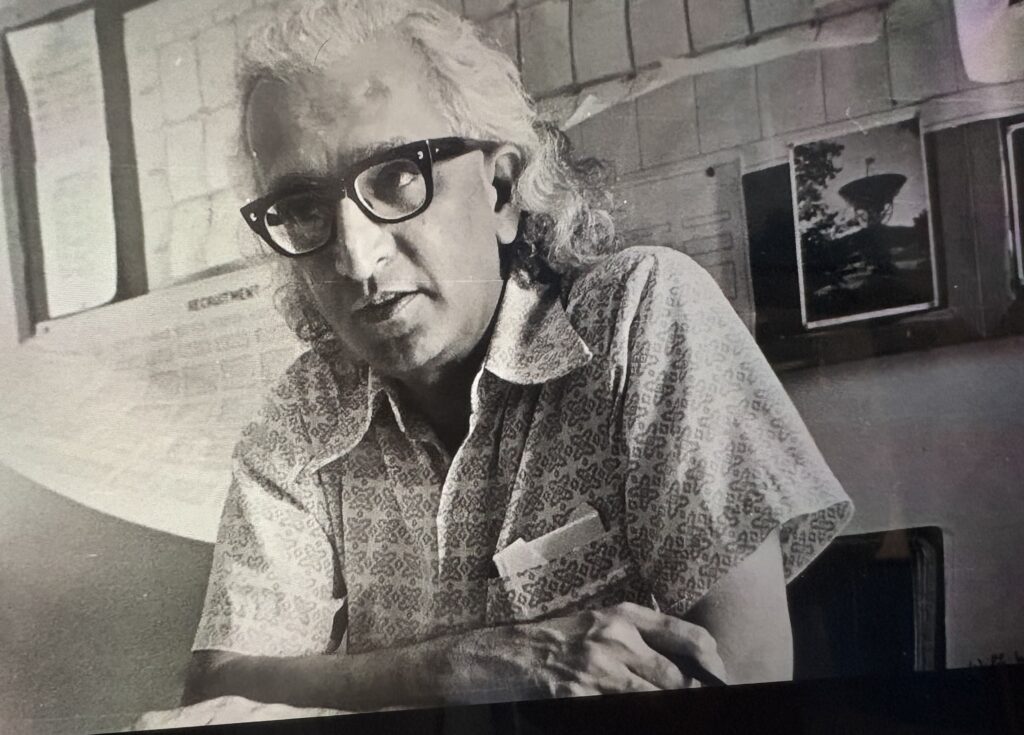
On 22 October 2025, India woke to a sad news on the passing of its centenarian ISRO veteran scientist, Prof. Eknath Vasant Chitnis. He died in Pune, aged 100 years and three months. With his passing, India has lost not merely a pioneering space scientist and institution‑builder, but also one of the last living links to the founding generation of our space programme. Prof. Chitnis worked closely with Dr Vikram Sarabhai, the father of India’s space programme, and embodied Sarabhai’s philosophy that space science must benefit society. His long and luminous journey – from a young volunteer physicist researching cosmic rays with Sarabhai at the nascent Physical Research Laboratory (PRL), after forgoing a secure Government of India Gazetted post with All India Radio, to becoming the founding Secretary of the Indian National Committee for Space Research (INCOSPAR) and later the architect‑Director of ISRO’s Space Applications Centre (SAC) and heading the ambitious Satellite Instruction Television Experiment (SITE) programme – was marked by deep commitment, purpose, integrity and a profoundly humanistic vision of harnessing space technology for national development.
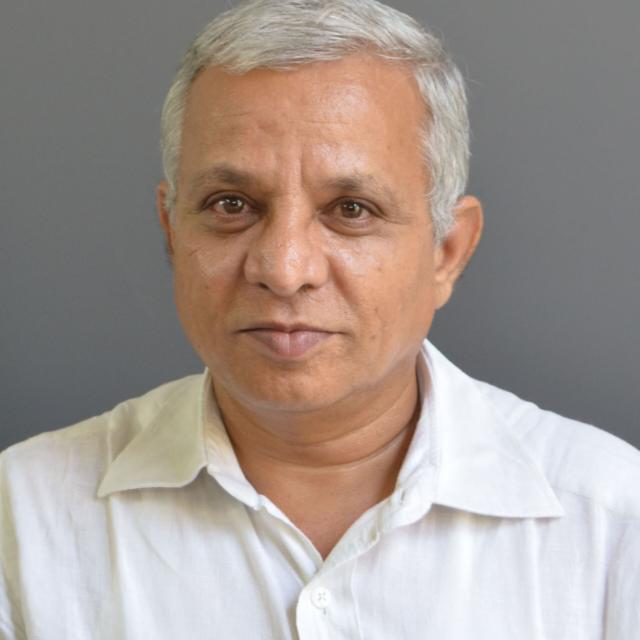
Dr. Chetan Eknath Chitnis—scientist and Head, Malaria Parasite Biology & Vaccines Unit, Institut Pasteur, Paris (a Padma Shri awardee)— son of Dr. EV Chitnis, shared this news on the A [ex Committee group of National Centre for Science Communicators (NCSC). He posted that his father had suffered a cardiac arrest and, despite being rushed to hospital in the early hours of 22 October, he could not be revived.
A Padma Bhushan awardee, Prof. Eknath Chitnis (born 25 July 1925) lived a remarkable 100 years. In the annals of human history few people have the honour of celebrating their own birth centenary; from amongst those, there are fewer parallels to the veritable and nation-building life that Dr. EV Chitnis lived. His achievements alongside Dr. Sarabhai’s in laying the foundations of ISRO and, earlier, of INCOSPAR – as its founding Secretary – and his leadership in translating Sarabhai’s vision – most notably the SITE – deserve a permanent place in the annals of Indian space history.
A Centenary Tribute Conference at IISER Pune
On 26 July 2025, just three months before his passing – a day after his birth centenary – the NCSC, in collaboration with the Indian Institute of Science Education and Research (IISER), organised a centenary tribute conference at IISER Pune. I was privileged to be part of the NCSC team that helped plan and organise this event. A galaxy of scientists, leaders from the space fraternity and science communicators attended: Dr V. Narayanan (Chairman, ISRO), Dr A. S. Kiran Kumar (former ISRO Chairman), Mr Kiran Karnik (former Director, ISRO’s Development and Educational Communication Unit (DECU), Dr. Pramod Kale (former Director, SAC), Dr Chetan Chitnis, Prof. Arbind Sinha, Dr Anil Bhardwaj (Director, PRL), Dr V. Narayanan Director, SAC), Dr Sunil Bhagwat (Director, IISER), Prof. Arun Balamuralidhar, Dr K. Sivan (Director, Human Space Flight Centre), Dr R. Jayaraman (Chairman, NCSC) and many others. Speaker after speaker recalled how Prof. Chitnis helped lay ISRO’s robust foundations.
Two ISRO veterans – Kiran Karnik and Dr. Pramod Kale – who worked closely with Prof. Chitnis in ISRO’s formative years, reflected on his pivotal role in implementing the monumental SITE project. SITE came with formidable administrative and technical challenges, yet Prof. Chitnis steered it to successful commissioning on 1 August 1975, during the Emergency period (imposed on 25 June 1975). Dr Kiran Kumar noted how SITE’s success and the realisation of its benefits for rural India catalysed ISRO’s subsequent telecommunications (INSAT) and remote sensing (IRS) programmes to bring transformative benefits to the rural people.
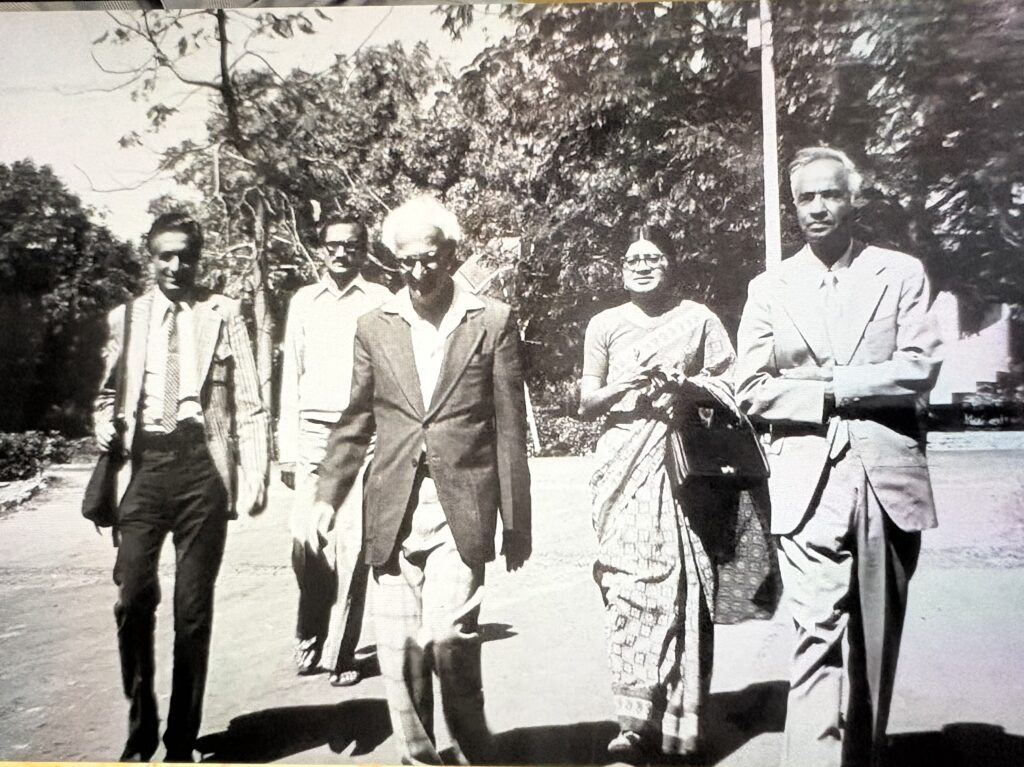
Dr Chetan Chitnis spoke movingly of his father, narrating lesser‑known aspects of his personal life and the ancestry of the Satara Chitnis family. The conference was a fitting tribute, highlighting Prof. Chitnis’s contributions not only to space technology, but to the social transformation catalysed by SITE. Under his leadership, ISRO’s distinctive culture – now an institution in itself – took firm root and continues to guide the organisation, as evidenced by the recent success (2 November 2025) of the LVM3‑M5 (“Bahubali”) mission placing the CMS 03 (GSAT 7R) satellite of over four tonnes (4100 Kgs) into the intended Geosynchronous Transfer Orbit (GTO).
The importance of SITE in shaping ISRO’s future and defining its public service ethos can best be understood in two remarkable reflections — one from within India’s scientific community, and another from the world beyond.
Unheralded Architect of a Vision Fulfilled
When Dr. Vikram Sarabhai passed away prematurely in December 1971, he left behind three visionary projects that were to define the trajectory of India’s space programme: The Satellite Instructional Television Experiment (SITE), the Aryabhata satellite, and the Satellite Launch Vehicle (SLV-3). Each represented a different facet of his dream—harvesting space applications for societal good, indigenous satellite capability, and self-reliant launch technology.
In the years that followed after the passing of Dr. Sarabhai, these visions were carried forward by Dr Sarabhai’s distinguished successor, Professor Satish Dhawan, ISRO Chairman and three of Dr. Sarabhai’s distinguished protégés. Prof. U. R. Rao, Dr APJ Abdul Kalam and Dr EV Chitnis. Prof UR Rao led the Aryabhata mission – in collaboration with the Soviet Union – and ensured that India’s first satellite successfully reached its orbit in 1975. Dr. A. P. J. Abdul Kalam steered the SLV-3 project, which successfully delivered India’s first satellite launch vehicle in 1980. Prof. Satish Dhawan, Sarabhai’s successor as ISRO Chairman, provided the organisational and moral leadership that turned all three dreams of Dr. Sarabhai into enduring realities. The third project, SITE, however, remains relatively less associated with its principal architect Dr. EV Chitnis. The SITE project was singularly shaped and realised under the leadership of Prof. E. V. Chitnis. While Aryabhata, SLV-3 and Dhawan’s reforms have been celebrated widely, the SITE experiment stands as an unsung cornerstone of Sarabhai’s legacy, brought to fruition by Chitnis’s leadership, determination and brilliance. It is therefore time that his contribution is acknowledged as one of the most socially transformative achievements in India’s scientific history.
SITE: Significance & Global Recognition
Arthur C. Clarke, celebrated science writer hailed ISRO’s SITE as the “greatest communication experiment in history”. He believed it demonstrated the immense potential of satellite technology to benefit humanity, particularly in education and development for rural and disadvantaged populations. Clarke, who first conceived the idea of geostationary satellites for global communication in his 1945 paper “Extra-Terrestrial Relays,” saw the SITE project as a practical and large-scale realization of his concept for social good. He was deeply impressed by India’s application-oriented approach, using advanced space technology (NASA’s ATS-6 satellite) not for commercial or military purposes, but to deliver educational and developmental programming to 2,400 remote Indian villages that had no prior access to television. Clarke recognized SITE as a prototype for direct-to-home (DTH) television and audio-visual distance education, predicting a future where anyone, anywhere, could access educational courses at their convenience. A reality now, taken for granted.
Early Life and Family
Eknath Vasant Chitnis was born on 25 July 1925 in Kolhapur, Maharashtra, to Malti and Dr Vasant Malhar Chitnis of the prominent Satara Chitnis family. The family’s lineage traces to Balaji Avaji, appointed the first “Chitnis” (royal secretary) by Chhatrapati Shivaji Maharaj in the seventeenth century. The Chitnis was the king’s personal secretary, responsible for official correspondence, documents and administrative affairs, including diplomacy. With the decline of Maratha power, the family transitioned to modern professions. Prof. Chitnis’s grandfather, Malhar Khanderao Chitnis, was a prominent lawyer at the High Court of the Central Provinces in Amravati, a Sanskrit scholar and an amateur astronomer who authored a Marathi book, “Wonders of Space” (1896). His father, Dr Vasant Malhar Chitnis, studied at B. J. Medical College, Bombay, and practised in Pune Camp.
Known fondly as “Nana”, Eknath lost his mother at eight and his father at sixteen. He and his sisters, Indu and Vimla, were raised by their grandmother (“Mami”) and his aunt and uncle, Yamuna and Narhar Chitnis, whose love and guidance, coupled with an enlightened, progressive milieu at home, shaped his character and values.
Education
Eknath studied at Camp Education Society School (Pune Camp) and later at Modern High School, Deccan Gymkhana. He obtained a B.Sc. from Fergusson College and Wadia College (Chemistry, then Physics), excelling in academics and sport—he was a lead batsman on his school’s championship cricket team. He completed his M.Sc. in Physics (specialising in Electronics) at the newly formed University of Poona, securing First Class First to the University. This grounding in modern physics and practical electronics proved invaluable for his subsequent career in experimental physics at PRL and later as a space scientist at SITE, SAC and ISRO.
A Tryst with Gandhi—and a Resolve to Serve
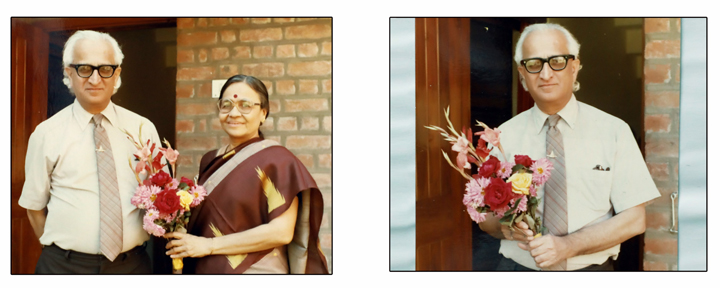
Eknath’s college years coincided with the climactic phase of the freedom struggle. After his arrest on 9 August 1942, Mahatma Gandhi was imprisoned at the Aga Khan Palace in Pune and was released on 6 May 1944. Gandhi remained in Pune for some time; national leaders, including Jawaharlal Nehru and Sardar Patel, visited him. Eknath and his friends attended Gandhi’s prayer meetings and public rallies in Pune. As Prof. Chitnis later recalled, those encounters were inspirational, planting in him a determination to devote his career to nation‑building just as India approached independence.
A Chance Meeting at the 1950 Indian Science Congress
After his master’s degree, E. V. Chitnis was selected, through the UPSC, for a permanent gazetted post as an Engineer with All India Radio (AIR) an attractive and secure employment with a salary of Rs 500 per month. While awaiting joining, he attended the 37th Indian Science Congress (January 1950, Pune), graced by such luminaries such as C. V. Raman, K. S. Krishnan, S. N. Bose, P. C. Mahalanobis and S. S. Bhatnagar. There he heard Vikram Sarabhai—who had worked with C. V. Raman at the Indian Institute of Science, Bangalore, before founding PRL—outline his plans for cosmic‑ray research at PRL, Ahmedabad, a research institution he had founded. Sarabhai described opportunities to “study the physics of cosmic rays using ground‑based detection systems” and the potential to expand the programme.
Volunteer Researcher at PRL
Impressed, Eknath travelled to Ahmedabad to meet Dr Sarabhai and PRL’s first Director, Dr K. R. Ramanathan. Though Sarabhai was keen to recruit him, PRL could not match the AIR salary. Eknath chose research over security, declined AIR and joined PRL as a volunteer researcher, supporting himself by teaching physics in a local college. Within six months, Dr. Sarabhai secured him a doctoral fellowship of Rs 100 per month, allowing him to focus full‑time on research at PRL.
In later interviews, Prof. Chitnis fondly recalled the early days at PRL, then housed in makeshift premises on the M. G. Science College campus. He lived in an asbestos‑roofed dormitory that was sweltering by day, so he and fellow researchers spent 14–16 hours in the air‑conditioned laboratories, working late into the night on their research. PRL soon planned a new building; the foundation stone was laid by C. V. Raman on 15 February 1952, and the building was inaugurated by Prime Minister Jawaharlal Nehru on 10 April 1954.
PRL: Cradle of India’s Space Programme
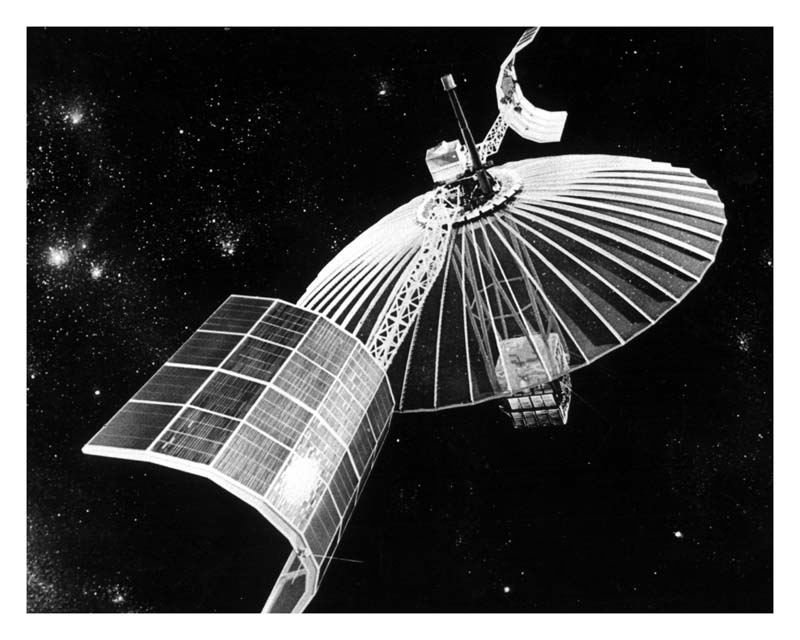
The early PRL years saw Sarabhai attract exceptional young talent from across India: R. P. Kane (who established PRL’s first cosmic‑ray experiments), U. R. Rao (who built India’s first satellite and later chaired ISRO), H. Razdan (who led the Nuclear Physics Laboratory in Srinagar), R. V. Bhonsle (who built one of India’s first large radio telescopes), R. G. Rastogi and Satya Prakash (world leaders in ionospheric physics), and Praful Bhavsar (later Director, SAC), among others. Under Sarabhai’s leadership, this cohort laid intellectual foundations for space research in India. PRL therefore, rightly came to be called the cradle of future ISRO scientists.
Prof. Chitnis designed and built—first in India—a Cherenkov counter and associated electronics to study cosmic rays. Between 1956 and 1958, he built an array of Cherenkov counters at the Kodaikanal Solar Observatory to conduct an extensive air‑shower experiment at high altitude, gathering valuable data.
The International Geophysical Year: A Global Catalyst for Space Research
The 1957–58 International Geophysical Year (IGY) brought worldwide collaboration in earth and space science, at the height of the Cold War. It was during this period that the Soviet Union launched the world’s first artificial satellite Sputnik on 4 October 1957. Immediately thereafter, USA launched their first satellite Explorer I on January 31, 1958. This was the first satellite to carry scientific instruments. From Indian side, Dr. Sarabhai and Dr. T. V. Ramamurthy (National Physical Laboratory) were part of the IGY global community who were part of planning committee in this global venture. In India, Kodaikanal Solar Observatory, which was part of the Cosmic Ray research, attracted international experts, including Prof. Bruno Rossi from MIT. Cosmic rays served as probes of deep space; their arrival directions were used to study anisotropy and origin. After visiting Kodaikanal and Ahmedabad, Rossi invited Eknath Chitnis with whom he had many interactions, to join his cosmic‑ray group at MIT—a move Sarabhai readily endorsed, for his doctoral research.
Incidentally, it was during this time that Dr Eknath Chitnis met his life partner, Dr. Kumud Samarth, a biochemist who had done her research on Cancer at US and had returned back to India and joined the Tata Memorial Hospital. They got married in 1957 and together travelled to Boston US. Dr EV Chitnis joined MIT and Mrs. Chitnis joined the Harvard Medical School.
At MIT (1958–61), Chitnis used the advanced computing facilities to analyse the extensive data he had collected from Kodaikanal and published his results in multiple papers. By 1961, Sarabhai had developed plans to use sounding rockets to carry detectors to 100–200 km for measurements in cosmic rays and the ionosphere, and to explore satellite applications in astronomy, telecommunications and remote sensing. He asked Dr Chitnis to return to India to help build a national space programme. Eknath returned to PRL as faculty; in collaboration with MIT colleagues, he established PRL’s first satellite telemetry station to track and receive data from early NASA satellites in the 1960s.
INCOSPAR: The Seed of ISRO
Recognising the potential of space, the Government established the Indian National Committee for Space Research (INCOSPAR) in February 1962 under Dr. Sarabhai, which was to be part of the Department of Atomic Energy (DAE) led by Dr Homi Bhabha. Sarabhai appointed E. V. Chitnis the founder Member‑Secretary of INCOSPAR. His early role was pivotal: he laid administrative and technical groundwork, including the crucial scouting of sites for rocket launches. It was Prof. Chitnis who helped identify Thumba, near Thiruvananthapuram, as the ideal location for the Thumba Equatorial Rocket Launching Station (TERLS) due to its proximity to the magnetic equator—a scientifically inspired choice with far‑reaching consequences. As Kiran Karnik later observed, he was “the quiet force behind Sarabhai’s bold visions, ensuring every step was grounded in practicality.”
ISRO and the Space Applications Centre
The 1960s and 1970s transformed India’s space effort. After Dr Bhabha’s untimely death in 1966, DAE’s mantle passed to Sarabhai. ISRO was formed in 1969 as a separate organisation under Sarabhai’s leadership. This was a time when Dr. Sarabhai headed, DAE, ISRO and also PRL, which had by then become part of DAE. Following Sarabhai’s sudden demise in 1971, Prof. Chitnis took on the task of operationalising the Space Applications Centre (SAC) in Ahmedabad, becoming its Director in 1972. Under his leadership, SAC became the hub for applying space technology to real‑world problems, from remote sensing and meteorology to telecommunications. Of Sarabhai’s trinity of flagship projects—the Aryabhata satellite, the Satellite Launch Vehicle (SLV) and SITE—it was SITE that most defined Prof. Chitnis’s legacy.
SITE: Technology with a Human Face
Launched in 1975 in collaboration with NASA, SITE used the ATS‑6 satellite to beam educational and developmental programmes directly to rural India. Covering more than 2,400 villages in six states, Andhra Pradesh, Bihar, Karnataka, Madhya Pradesh, Orissa and Rajasthan—the experiment ran from 1 August 1975 to 31 July 1976. Prof. Chitnis led the project end‑to‑end, including a meticulous village‑selection process to reach underserved regions with high illiteracy and poverty. UNESCO’s assessments of SITE (“The SITE Experience” and “Planning for Satellite Broadcasting: The Indian Instructional Television Experiment”) documented challenges and outcomes, highlighting content on agriculture, health, family welfare and education.
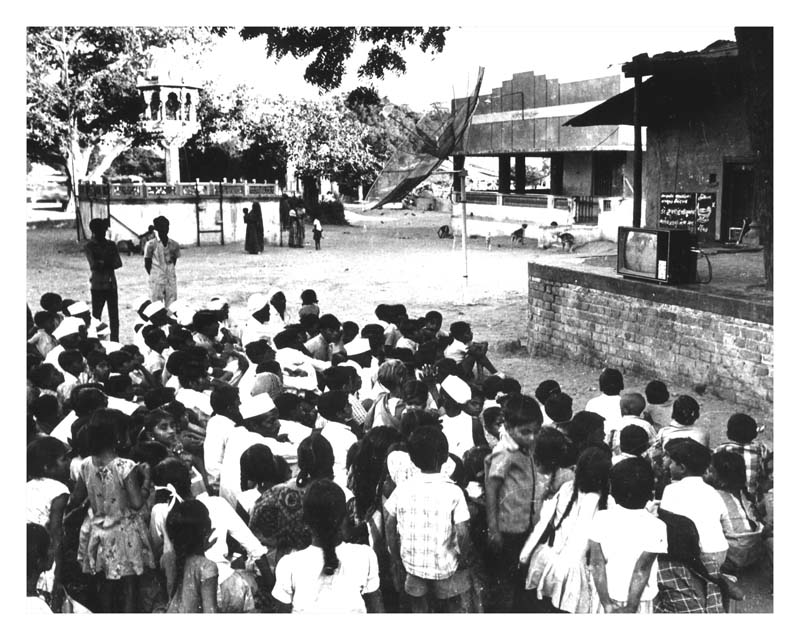
What made SITE revolutionary was its commitment to democratising access to technology. Beyond transmission, it was a carefully researched social intervention. Villages received community television sets, typically in schools or panchayat halls, which became hubs of learning. Farmers learnt modern techniques; women accessed knowledge on hygiene and nutrition; children received basic educational content. Studies recorded tangible gains in awareness and practice. Crucially, Prof. Chitnis oversaw integrated teams of engineers, educators and social scientists, insisting that software (content) be as rigorous as hardware.
Colleagues’ Testimonies
Those who worked with Prof. Chitnis offers anecdotal insights. Kiran Karnik—who joined ISRO in the 1970s and later led DECU—has described him as a mentor who combined rigour with empathy: “He turned technology into a tool for real life, not just missions.” Karnik recalled Prof. Chitnis’s insistence on field immersion, travelling to remote villages to understand realities first‑hand. Dr Pramod Kale, his successor at SAC and a key figure in early satellite programmes, praised his ethical leadership: “Science must serve society.” Kale noted how Prof. Chitnis navigated bureaucratic hurdles and international collaborations with grace, and how he mentored young engineers in interdisciplinary approaches.
Y. S. Rajan—later co‑author with A. P. J. Abdul Kalam—worked with Prof. Chitnis in formative years and credited him with integrating social sciences into space applications. He wrote that the “trinity of Sarabhai, Kalam and Chitnis” shaped ISRO’s ethos, and that SITE inspired wider applications in remote sensing and disaster management. A telling anecdote concerns Dr Kalam’s own induction into ISRO: while reviewing applications with Dr Sarabhai and Dr Murthy, Prof. Chitnis recommended Dr Kalam, who was later sent for training at NASA. Years later, as President, Dr Kalam made it a point to visit Prof. Chitnis and his family in Pune.
Impact of SITE
SITE’s ripple effects extended far beyond its formal one‑year duration. Its success directly influenced Doordarshan’s expansion; in the early 1980s, drawing lessons from SITE, Doordarshan rolled out over 190 low‑power TV transmitters, transforming television from an urban luxury into a national utility in quick time. Programmes like Krishi Darshan and Hum Log reached millions. The INSAT series followed, enabling direct‑to‑home transmissions and delivering services to rural communities. As Mr Karnik has observed, SITE demonstrated that satellite technology could bridge India’s urban‑rural divide and became a blueprint for later innovations.
Later Years and Continuing Service
Post‑SITE, Prof. Chitnis led the Kheda Communications Project in Gujarat, a pioneering successor of SITE that harnessed television for socio‑economic change in dairy‑farming communities. He retired from ISRO in 1985 (after receiving the Padma Bhushan) and settled in Pune, where he taught at the University of Pune and remained active in science education and public engagement. He is survived by his son, Dr Chetan Chitnis, and two daughters. Dr Chetan Chitnis, a renowned malaria researcher and recipient of the Padma Shri and the Infosys Prize in Life Sciences in 2010, shared at the centenary conference: “My father taught us that true progress lies in inclusivity. He lived simply, valuing family and ethics above accolades.” Chetan added, that when celebrating his father’s birth centenary at home on 25 July 2025, when asked Dr EV Chitnis said “If I had to live my life again, I wouldn’t change a thing.’’
Conclusion
The legacy of Prof. Chitnis and ISRO’s founder generation is etched into the organisation’s DNA. ISRO’s distinctive culture continues to lift it to new heights, as seen in the recent LVM3‑M5 launch carrying CMS‑03 (GSAT‑7R), a satellite of over four tonnes, to a precise geosynchronous transfer orbit. Yet, amid spectacular missions to the Moon and Mars, the founders’ emphasis on applications for societal good remains central to ISRO ethos. Prof. Chitnis and his mentor Dr Sarabhai remind us that space technology’s greatest triumph is the betterment of life on Earth.
Prof. E. V. Chitnis’s life was a testament to science with a soul. India owes him an enduring debt. Rest in peace, Dr Chitnis. Your contributions will remain etched in the annals of India’s space programme.
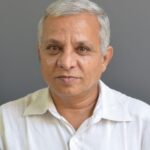
Shivaprasad Khened
Mr. Shivaprasad Khened is Senior Advisor at the Chhatrapati Shivaji Maharaj Vastu Sangrahalaya (CSMVS), Mumbai. As a science museum professional, he served for over three and a half decades with the National Council of Science Museums (NCSM), Ministry of Culture, Government of India, holding key leadership positions as Director of the National Science Centre, New Delhi among other key positions.