









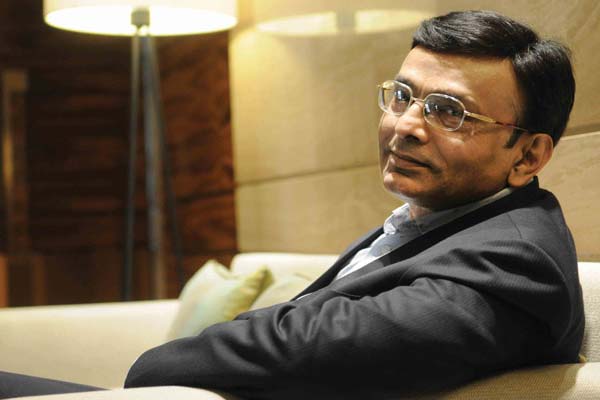



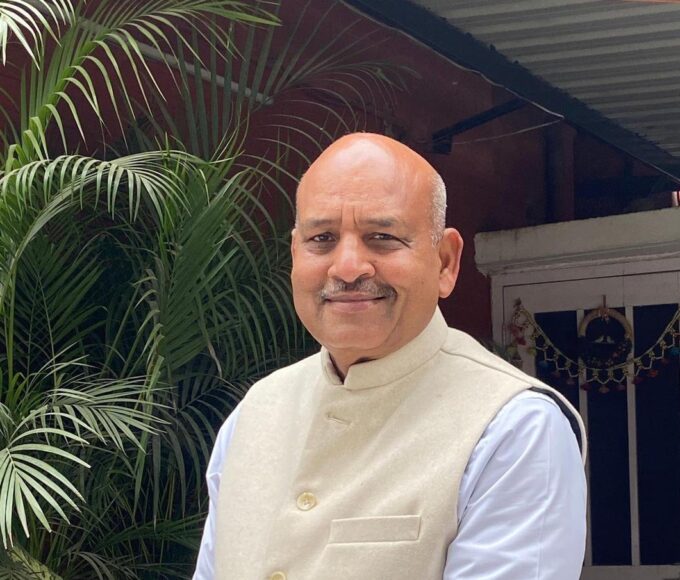










Nripendra Mishra, Chairman, Telecom Regulatory Authority of India (TRAI), is a 1967 IAS officer from the UP cadre. He was Secretary, Department of Telecommunications (DoT), where his major decision was the move from analog to digital. He also served as Secretary, Department of Fertilizers. He is credited with devising the pricing policy of fertilizers and the rural credit scheme. A towering figure among senior bureaucrats, he has been president of the All-India IAS Officers’ Association and believes that the country’s federalism has been strengthened and best implemented in spirit by the IAS.
gfiles: What is the work of TRAI?
Nripendra Mishra: The Telecom Regulatory Authority of India Act came into being in 1999. It does not adjudicate. For adjudication, the Telecom Disputes Settlement and Apellate Tribunal (TDSAT) is there. TRAI has recommendatory powers. One, it takes cognizance suo moto. Two, it does so on the government’s recommendation. Its third role is regulating licence policy. The fourth is managing spectrum. Under this head, it deals with compliance with rules by licence-holders; quality of service, protection of the customer; interconnectivity, regulation of tariff (absolutely in our power) and telecom rules.
We decide the issues, seek clarification, compliance, do internal analysis, and recommend that the government regulate on something with a note stating why we are sending the recommendation.
gfiles: What is the size of the subscriber base?
NM: We now have a telephone subscriber base of 20.6 crore while the broadband subscriber base is 23 lakh. Our target is to have a subscriber base of 50 crore by 2010. BLURB The government and private shares are equal.
gfiles: Is the private sector benefiting from government infrastructure?
NM: No. All private players have their own infrastructure. We decided that the government would not unbundle the broadband infrastructure of BSNL and MTNL. We allowed them to continue with copper wire broadband.
gfiles: Where do you stand in rural telephony?
NM: In rural telephony, we are below 4 per cent connectivity. Nationally, we have 90 per cent connectivity. DoT set up the Universal Service Obligation (USO) Fund for areas where there is less or no connectivity. is a non-lapsable fund and is allotted to three operators in a particular area. DoT’s satellite and field survey showed 7,000 points of gaps in connectivity – much of it in rural areas. These are net negative areas. This means capital cost plus operation cost yields negative revenue.
The problem with rural telephony is that there is no infrastructure like power, housing, liveable conditions. Even BSNL has a negative flow of funds in rural telephony in some areas. The government gives Access Definite Charge to those providing rural telephony. I recall that the Planning Commission would plan to finish the waiting list for new telephone connections in a particular area. But now the situation has changed, you go and get the connection at once. The east India states are the new area for telephone density, 60 lakh new subscribers are coming in every month from Bihar, Orissa and West Bengal. BLURB Rural telephony is a prime concern of the government.
gfiles: What about NGN (New Generation Network) issues?
NM: NGN has got broadband, voice data and entertainment. Mumbai, Delhi, Kolkata ask for all of the above. NGN has been implemented only in Europe. TRAI does not have much role in convergence. The Ministry of Information and Broadcasting, and the Ministry of Communications and Information Technology have to decide the issue. There is a growing demand by Internet Service Providers (ISPs) that PC to PC connectivity should be allowed. Out of 385 ISP licences, 10 are surviving. Earlier, we did not charge anything for ISP. Now, the cable people are saying they should be given telephone rights. We don’t regulate on a day-to-day basis, we don’t want to make laws on every issue. We want laws that allow for competitive growth and to let the market decide, contribute and regulate itself.
gfiles: What about unsolicited calls?
NM: We are coming out with new regulations. In the US, the penalty is a fine of $11,000 for an operator making an unsolicited call – the first offence.
gfiles: And what about the quality of service?
NM: Call drops, inaccurate bills, non-connectivity – all these have to be solved. The basic problem is over interconnectivity not being permitted. The infrastructure is inadequate. A tower can service only 300 subscribers but the traffic amounts to 500 subscribers. We are focusing on these issues – spectrum, interconnectivity, infrastructure, billing problems. We are coming out with definite regulations on all these aspects and we are going to tell the public quarterly which operator failed and why.
gfiles: And number portability?
NM: We made a recommendation to DoT in 2005. They are yet to decide. Number portability requires a lot of investment in infrastructure.