




















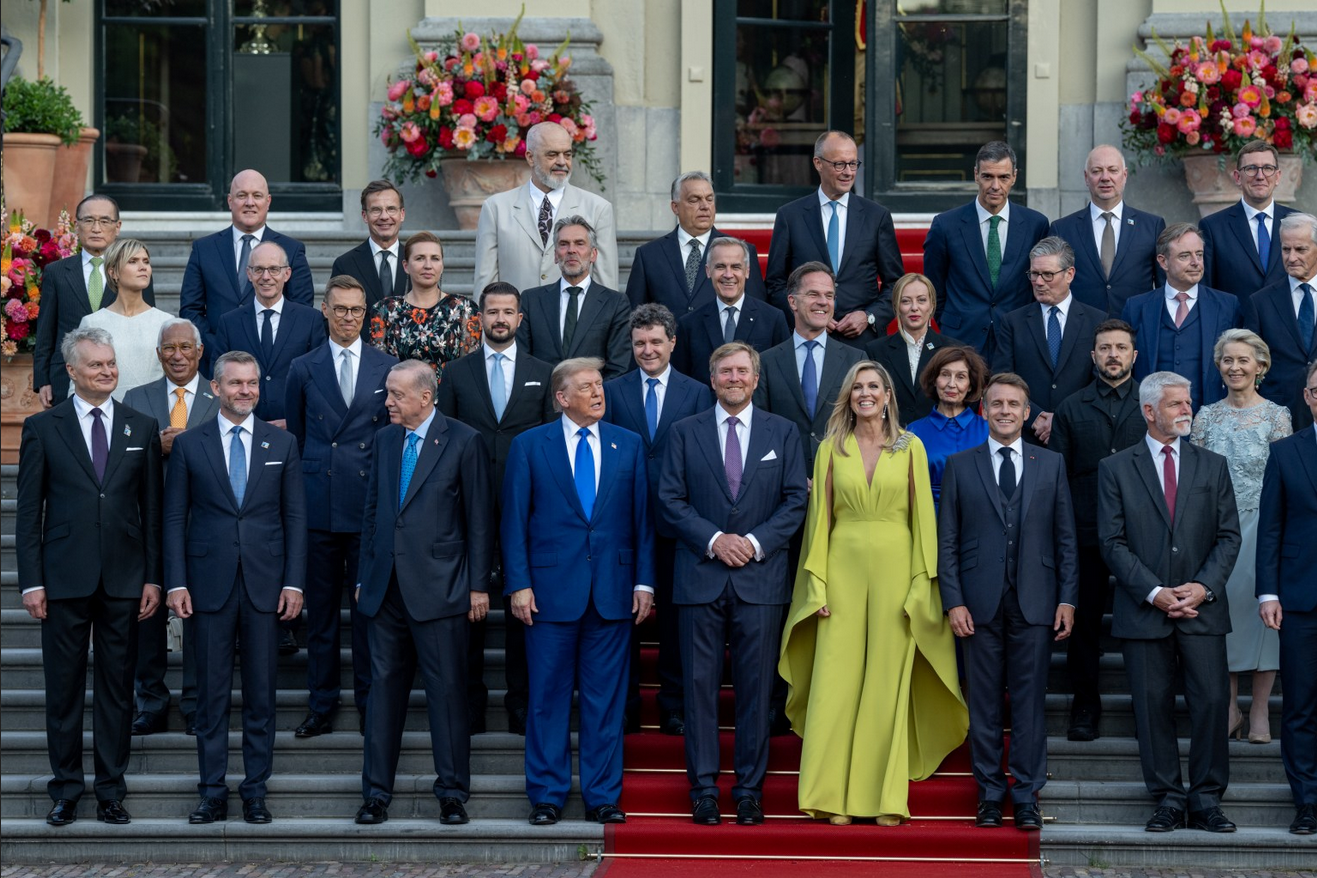
US President Donald Trump went for the Hague meeting of NATO leaders on a high note to a hero’s welcome where the member countries embraced him in sharp contrast to the embarrassment, he caused them a few years ago when he threatened to walk out of the European dominated military alliance and defund them.
On both sides there had been a major shift. Trump was peeved that the US was putting enormous monies into the NATO alliance and many countries in the 32-member bloc were not even spending 2% of their GDP on defence and wanted to piggyback on the US to meet its defence needs.
Trump walked into Hague with his head held high fresh from the spectacular bombings of Iran where he had claimed to have obliterated the nuclear facilities of Iran. This was welcome news for the European bloc which was afraid of Russia making a move against them after the Ukraine war and Iran was its ally supplying arms and soldiers.
When Trump was angry with the NATO leaders, the alliance led by Germany had started drawing up their own contingency plans with the help of UK and France for defence to tackle Russia, in case it came to its borders in Poland, and also decided to increase their defence spending to 5% from 2% which was to the satisfaction of Trump.
So both sides had good news to share with each other. So, change of perceptions from the first term of Trump in 2017 to 2025 in his second term.
Trump’s relationship with NATO has been marked by significant shifts, leading to changes in how both he and the alliance perceive each other.
Initially, during his first presidential campaign and early in his first term, Trump frequently criticized NATO, calling it “obsolete” and accusing member nations of not contributing enough to defence spending. He argued that the United States was bearing a disproportionate financial burden, and he questioned the value of the alliance, even suggesting the possibility of US withdrawing from the alliance and defunding it.
This initial stance generated considerable tension and concern among NATO allies in the wake of the Ukraine war and Russia’s hegemonistic tendencies towards Eastern Europe. Poland appeared to be on the map of Russia to invade after Ukraine that rattled NATO.
However, over time, a notable change occurred. While still emphasizing the need for increased defence spending, Trump’s public statements and actions regarding NATO evolved.
Key aspects of this shift included:
NATO members increasing defence spending: Prompted by Trump’s persistent pressure and concerns about a rising Russia, NATO members have significantly increased their defines spending. Notably, at a recent summit, NATO allies agreed to a new target of spending 5% of their GDP on defines by 2035, a substantial increase from the previous 2% target. This development has been seen as a significant win for Trump, who has taken credit for driving this change.
Trump’s shift in tone: After years of cantankerousness in statements, Trump recently expressed a more positive view of the alliance, even embracing it after the increase in defence spending commitments. For instance, he stated that he left a recent NATO summit “differently,” believing that the alliance was not a “rip-off” and those allies were committed to their own defence.
Reaffirmation of collective defence: Despite earlier ambiguities, NATO allies reaffirmed their commitment to the core principle of collective defence, enshrined in Article 5 of the Washington Treaty, which states that an attack on one member is an attack on all. This reaffirmation, particularly Trump’s unequivocal support, helped to alleviate fears the US might walk out of the alliance but that now it stood committed to it.
NATO’s strategic adjustments NATO leaders, particularly Secretary-General Jens Stoltenberg, had actively sought to manage the relationship with Trump, during his term, using strategic communication and engagement to address his concerns and secure his support for the alliance. This included highlighting the increased defence spending and strategically managing summit agendas.
In essence, while the relationship remains dynamic and potentially subject to change, the perception of each other has shifted. Trump, having seen a tangible outcome in increased defence spending, now expresses a more positive view of NATO. Meanwhile, NATO, while adapting to US demands and strategic shifts, has also demonstrated its resilience and ability to navigate challenges, in part due to effective leadership within the alliance.
Trump embraces NATO security alliance after years of attacks
“It’s not a rip-off,” Trump said of NATO after its 32 nations agreed to more than double their defence spending targets, which has been a sore spot for the U.S. president and President Donald Trump issued a full-throated endorsement of NATO and its defence mission after a summit of alliance leaders Wednesday; in his most forceful backing of a group, he once threatened to abandon. “These people really love their countries,” Trump told reporters. “It’s not a rip-off, and we’re here to help them.”
Diverse from the tension packed moments of Trump’s first term, much of the annual summit in The Hague centred around the impulses and worldviews of the Republican president whose “America First” foreign policy ethos downplayed the importance and influence of multilateral coalitions, media reports said in an analysis of his visit.
Trump spent less than 24 hours with his boots on the ground in Hague, returning to Washington with a sense of satisfaction that he had managed to secure the military alliance’s commitment to spend at least 5% of their GDP on their defence needs instead of draining US resources.
In his first term, President Trump had accused the alliance of freeloading off the United States. The focus on Ukraine was scaled back dramatically, with its invasion by Russia earning only a passing mention in the summit’s official statement, and Ukrainian President Volodymyr Zelenskyy’s profile at the gathering diminished.
Trump also sent NATO scattering for reassurances that the United States would remain committed to the alliance’s mutual defence pledge, affirming that he would abide by Article 5 of the NATO treaty just a day after he rattled the 32-nation alliance by being equivocal about the pact.
On both sides there had been a major shift. Trump was peeved that the US was putting enormous monies into the NATO alliance and many countries in the 32-member bloc were not even spending 2% of their GDP on defence and wanted to piggyback on the US to meet its defence needs.
“I stand with it. That’s why I’m here,” Trump said when asked to clarify his stance on Article 5. “If I didn’t stand with it, I wouldn’t be here.”
Trump shifts his tone on NATO
Trump later told a news conference that he felt inspired by the NATO leaders who had felt motivated to provide for their own defence by boosting their own spending on defence needs.
“They want to protect their country, and they need the United States, and without the United States, it’s not going to be the same,” Trump said, later adding: “I left here differently. I — I left here saying, ‘These people really love their countries. It’s not a rip-off.’ And we are here to help them protect their country.” He had mused just a day earlier that whether he abides by the treaty “depends on your definition” of Article 5.
The mutual praise in The Hague stood in stark contrast to Trump’s previous harsh words for the alliance, whose value he had long questioned. It also reflected the efforts made by other world leaders during the early months of Trump’s second term to approach the mercurial president using his own language of superlatives and flattery.
British Prime Minister Keir Starmer showed up to the Oval Office in February to hand-deliver an invitation from King Charles III for a second state visit, which Starmer called “unprecedented.” Italy’s Giorgia Meloni has promised to “make the West great again,” echoing Trump’s campaign slogan. NATO Secretary-General Mark Rutte wrote in a message to “Mr. President, dear Donald” that his push for increased alliance defence spending would help “achieve something NO American president in decades could get done.”
Trump gets a win on spending increase
The 32 leaders endorsed a final summit statement saying: “Allies commit to invest 5% of GDP annually on core defence requirements as well as defence- and security-related spending by 2035 to ensure our individual and collective obligations.”
“I’ve been asking them to go up to 5% for a number of years,” Trump said earlier in the day as he met with Rutte, whose private message of praise the U.S. president posted on his Truth Social account.
Spain had already officially announced that it cannot meet the target, and others had voiced reservations. Trump sounded peeved by Spain’s decision and said he’d have the country make up for it by paying higher tariffs to the United States as part of a trade deal.
Spain belongs to the European Union, the world’s largest trading bloc, which negotiates trade deals on behalf of all 27 member countries. They are not meant to negotiate trade deals individually.
NATO members took pains to please Trump who had all the cards.
Trump’s turn at this year’s summit came eight years after his NATO debut in 2017, a gathering that was perhaps most remembered by his shove of Dusko Markovic, the prime minister of Montenegro, as the U.S. president jostled toward the front of the pack of world leaders during a NATO headquarters tour.
But the atmosphere around Trump this week seemed far chummier than in past years.
The president was offered — and accepted — the chance to sleep Tuesday night at the Dutch royal palace. King Willem-Alexander and Queen Maxima, Trump said, were “beautiful people, great people, and big, beautiful heart.”

Contributor, IANS - Washington DC/New York
Executive Editor, Corporate Tycoons - Pune, India
Executive Editor, The Flag Post - Bengaluru, India
Contributor, The Statesman, Hindu Business Line, Sarkaritel.com, Diplomacyindia.com
Former Economics Editor, PTI - New Delhi, India
Former Communications Advisor,
Alstom Group of Companies, SA - France/Belgium


