

























Aviation security is looked after by the Bureau of Civil Aviation Security (BCAS) in conjunction with airport operators, airlines operators and security agencies. In the late 1990s, setting up of a separate aviation security force was being considered. However, the Kandahar hijack led to immediate deployment of the Central Indu Qstrial Security Force (CISF). Out of over 80 airports under the Airport Authority of India (AAI), the CISF is deployed at 51. Airport security involves two major functions – anti-hijacking and anti-sabotage. The CISF is in charge of basic anti-hijacking functions while anti-sabotage is looked after by airlines security staff, state police and others.
gfiles: What is the status of airport security?
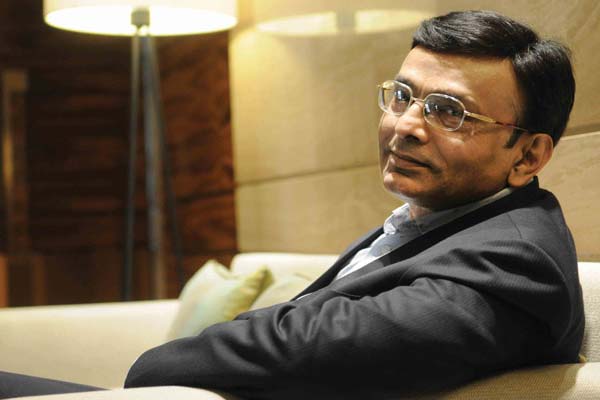
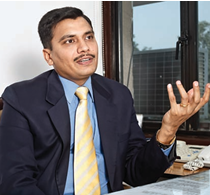
Gyaneshwar Singh: In India, fortunately or unfortunately, the spread of airports is very large. There are 80 airports, ranging from ones with just three flights a week to those with hundreds of flights a day. Some airports are international, some cater to domestic operations and some to general aviation flights. Airports are categorized as non-sensitive, sensitive and hyper-sensitive. We have 13 hyper-sensitive AAI airports and 45 sensitive ones. The security depends on the categorization. Our directorate’s mandate is basically to supervise and coordinate everything regarding security with the infrastructure and equipment being infused.
The second aspect is manpower-related. It involves coordinating with all the agencies, the CISF and state police. Along with this, the basic security documentation has to be done, training has to be provided and we conduct regular audit and inspections for various facilities at the airport level. Generally, it’s working well. The last hijack incident was in 1999.
gfiles: What is the mandate?
GS: That would refer to secret policy decisions of the government so I cannot speak on that. We are in a phase witnessing a paradigm shift in terms of structure and legal framework. We have this aircraft security Act but did not have aircraft security rules. Rules are coming up that will specify penalties and areas. So there will be a shift in approach. Now implementation will be better. This is the change in the legal framework.
If you talk in terms of organizational structure, our regulator, BCAS, is in revamping and expansion mode. When I joined, our set-up included corporate headquarters and regional offices. We have five regional offices, four in metros and one in Guwahati for the Northeast. Though we have been facing economic turmoil like other industries, the management agreed to give security personnel from this directorate to every AAI airport. So we will have a representative of this directorate at every airport in maybe a couple of months. This will strengthen us at the ground level.
So far we have been affecting the policy at corporate headquarters level or maybe interacting with the Ministry and guidelines were being given for airport directors to implement. But it was felt that there was room for improvement. At many airports, there is a multiplicity of agencies. We have airport operators, airlines, various vendors, security agencies, and all the personnel involved have to be trained regularly. Their awareness level has to be high. So this training and updating of certain basic documents like airport security manuals has to be done regularly. These tasks will be handled better when we have our representatives at the airports.
Then, there is the feeling that we should have an Aviation Security Force. We have the Railway Protection Force, so why not an Aviation Security Force? We need skilled security personnel to cater to our specific needs. It is more of a service industry, there is an element of public dealing. We have to keep customer satisfaction in mind.
gfiles: How does India compare with other countries?
‘Airport authorities are going in for parameter intrusion detecting system. The moment somebody climbs this parameter wall, you get a message in the control room, the CCTV follows that person and gives signals to the quick reaction team’
GS: We have the oldest form of frisking here. But we are going forward in a big way. For example, on the perimeter we have a boundary wall, fence, lighting, watch towers and armed securitymen. Now, airport authorities are going in for parameter intrusion detecting system. The moment somebody climbs this parameter wall, you get a message in the control room, the CCTV follows that person and gives signals to the quick reaction team which follows up.
Advanced technology is being introduced for CCTVs within the terminal buildings also. Then we have people passing through the metal detector after being frisked. Again, frisking is a policy decision by the regulator and the CISF. But abroad you have RTVS (Real Time Viewing Systems), which is a portable X-ray kind of machine. Instead of physically verifying each and every thing, you just view things. Suppose there is an object which is a confirmed threat, you call the bomb disposal squad team from the state police to dispose of the explosive. We will also be going in for remote control vehicles which can pick up the confirmed threat and put it into a container that can contain the blast. There are issues of operational efficiencies and revenue considerations but we are catching up with other countries. But again it’s a policy decision and the basic idea is not to compromise on hijack threats. There are privacy issues with body scans and people have objections. So, as per present guidelines, the security personnel are supposed to frisk.
gfiles: What about your manpower at airports across the country?
GS: They are supposed to carry their passes. They display passes every time they frisk. When I visit any airport, they frisk me. I’m inspecting the facilities, still I’m frisked. Everybody has to undergo it. To get the passes, they need security clearance and antecedents check. Antecedents are not verified only for temporary permits of less than three days, for instance for casual labour when some work is going on in the airport.
gfiles: Which airports are under major threat perception?
GS: Generally, hyper-sensitive and sensitive airports lie in proximity to international border areas, Naxalite-prone areas, Jammu, the Northeast and so on. Now the whole security affair will be more technology-driven and human intervention will be less, monitoring will be more. True, monitoring and detection will be done more by gadgets but reaction and response will always require human intervention.
gfiles: What kinds of gadgets are you going to have?
‘We brought in the inline baggage screening system. The passenger hands over the bag at the beginning and it goes to the respective airlines. This is being adopted at major AAI airports.’
GS: As you must have seen in Delhi, earlier luggage was scanned and tagged and then the passenger would hand it over to the airlines. So there was a chance that, after screening, somebody would put something in a bag. To avoid that, we brought in the inline baggage screening system. The passenger hands over the bag at the beginning and it goes to the respective airlines. This is being adopted at major AAI airports. Another area is BDDS (Bomb Detection and Disposal Squad). We are catering to a whole range of BDDS measures. One area of focus is counter-terrorist measures. We have site contingency plans for terrorism-related activities. Those X-ray and BDDS equipment, quick reaction team vehicles and so on. In terms of vehicles, upgradation is happening. All the airports are being provided with quick reaction teams. Then, perimeter intruder detection systems take care of the perimeters. These are major areas of focus currently. Right now the response mechanism has a mix of the CISF, the state police which is supposed to take care of the periphery or the catchment area, and the National Security Guard. NSG is trained to tackle hijack situations.
gfiles: Are you developing any model for contingency, considering that you handle 10 million passengers a month? How much deployment is there in airports?
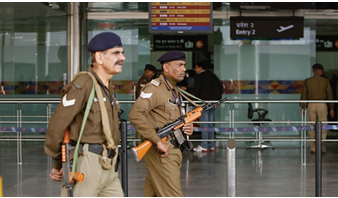
GS: We have 15,000 or so CISF personnel at all the airports, while the state police should be around 4,000 and then there is the NSG. So 10 million passengers are being handled with 20,000 personnel.
gfiles: How much do you want to spend on security?
GS: Apart from AAI’s own budget, there is the component of the passenger’s service fee. Out of this, a portion is for security. So we cater to all the needs like salaries, equipment and infrastructure. There is the concept of a fully-equipped control room at the airport with all available technology like biometrics. Setting up the system will take some time and some financial muscle. We are in the process of introducing biometric access for our own employees to begin with.
Delhi, Mumbai, Hyderabad, Bengaluru, Nagpur and Kochi airports are not with us. The security at these airports is looked after by the CISF but they have their own security set-up as per the BCAS mandate. The AAI has practically no role in the security at these airports.
gfiles: Do you have any manual or rule-book?
GS: There is the NCASP and an airport security programme as well as contingency plans and SOPs for every airport. These are the basic documents which lay down all the security functions and responses.
