























The unconventional warfare involved in tackling insurgents brutalizes the hapless soldier
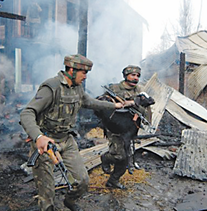
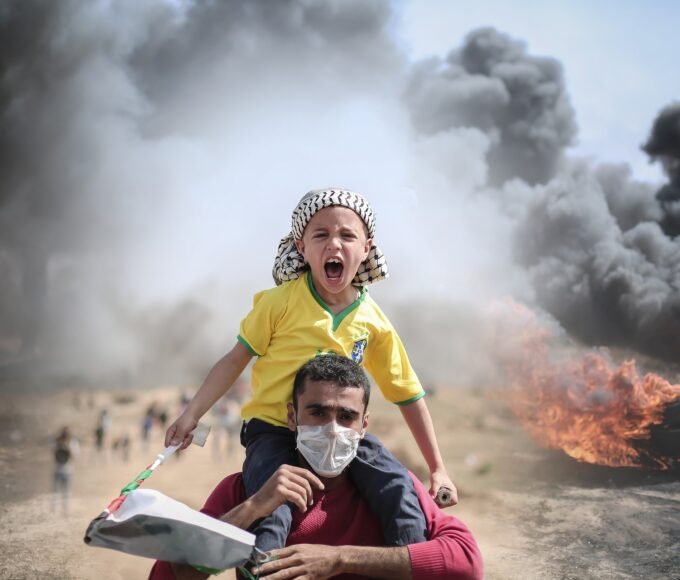
Armies face a thankless task if they are called upon to fight insurgents – a section of their own people. The media is often more sympathetic to the plight of the population affected by the operations than the problems faced by the soldier. Troops feel both the public and media are unfair to soldiers doing their duty. Their grouse is understandable because the guerrilla operates among the people and only a thin line divides him and his sympathizers among the population.
Invariably, troops employed in counterinsurgency tasks face charges of human rights abuses. It is no consolation that this is a universal phenomenon. It is frequently reported in Afghanistan and Iraq. Nearer home, Sri Lanka is a prime example of this phenomenon. We can also see such cases in India, Pakistan, and Bangladesh.
Troops fighting insurgents at home run into twin problems – professional and cultural and this takes a toll on their performance. The soldier is trained for conventional warfare. He is taught to shoot to kill first, use overwhelming firepower, and destroy enemy defences to retain the initiative at all times. Military training has a high degree of regimentation. Everything is reduced to a drill. So a soldier’s response under fire is reflexive rather than deliberate. In short, armies are trained to become killing machines of a conventional war. The soldier’s training gives him an abounding faith in his weapon and in his skill to kill his foe. And the macho culture of armed forces encourages this phenomenon.
I remember an instance in 1989, while serving with the Indian Peace Keeping Force. I was attending a party in Colombo on the lawns of the Indian High Commission to celebrate Republic Day. The Pakistani naval adviser chatted me up when he learnt I was a senior staff officer of the IPKF. “Colonel, I believe you’re having problems with employment of Madras Regiment units in Sri Lanka operations,” he said. Clearly, he was needling me because I am Tamilian.
In 1965, Pakistan had made a clumsy propaganda effort to play up the so-called South-North divide among some of the South Indian prisoners of war. It not only failed miserably but boomeranged when the Pakistanis were shooed out by the jawans. In reality, the Madras Regiment fought with thorough professionalism during the Jaffna operations. So to reply to him was easy: “Commander, I don’t know about your army, but I know our army. If I ask a squad of soldiers to open fire on the passing traffic on Mount Road (in Madras) they will do just that. They would not show any hesitation.” This is the level of conditioning our soldiers have.
The soldier in counterinsurgency operations is supposed to take on the militant hiding among ordinary people without hurting others who are in the location. This is a Herculean task for the soldier because he has to overcome his professional training routine for conventional warfare. So the soldier has to be retrained in counterinsurgency warfare techniques before fighting insurgents. But retraining is not always possible when situations overtake planning – as happened in Sri Lanka.
In counterinsurgency, troops rarely confront the enemy face to face. The attacks are indirect and the methods unconventional. Troops exposed to such nerve-wracking experience over a long period develop a strong animal feeling of insecurity
In counterinsurgency, troops rarely confront the enemy face to face. The attacks are indirect attacks and the methods are unconventional. Troops exposed to such nerve-wracking experience over a long period develop a strong animal feeling of insecurity. During a confrontation, self-preservation becomes their sole priority, overtaking all other considerations. Their nerves are on edge and the use of force is instantaneous at the slightest suspicious move. In other words, they get brutalized in the process of fighting the insurgent in the midst of the population over a period of time. Often those who order the use of the Army in a knee-jerk response in areas where insurgents thrive do not bother to understand this occupational hazard of the soldier.
The My Lai massacre in the Tet offensive in the Vietnam War in 1968 is a classic example of brutalization of forces. US Army soldiers massacred over 500 civilians, including women and children. In the trials that followed the massacre, the conscience of the world was touched. In his testimony, Private Dennis Bunning said, “I would say that most people in our company didn’t consider the Vietnamese human… A guy would just grab one of the girls there and in one or two incidents they shot the girls when they got done.” This statement explains the brutalized mindset that sets in among soldiers who feel insecure even in the midst of civilians in such circumstances. And the world of armies in action has only marginally improved.
Rotation of troops can partly reduce brutalization. In Jammu and Kashmir, the Army has raised Rashtriya Rifles battalions especially for fighting insurgency. Soldiers are not permanently posted to such units, they serve by rotation
Rotation of troops can partly reduce brutalization. In Jammu and Kashmir, the Army has raised Rashtriya Rifles battalions especially for fighting insurgency. Soldiers are not permanently posted to such units, they serve by rotation. But rotation of troops can only partly reduce the problem of brutalization.
The typical Indian soldier comes from ruralia into the strange world of the armed forces. He also comes with a baggage of prejudices and perceptions of rural society. He hardly understands human rights because he has not experienced them first-hand in his conservative society. He sees the world in tones of black and white, right or wrong. The Army takes charge of his life 24×7 – it tells him not only how to shoot to kill, but also how to obey orders without question, dress and eat properly. The Army is his mai-baap (mother and father). And, unlike urban cynics, he still believes in old-world values like loyalty to the hand that feeds you.
At times, a promotion gives him a status never known earlier because of his low caste, poor education, poverty, or lack of urbanity. The officers are no exception to this, though they might speak English and come from an urban middle class background (this variety is dwindling). They may grumble and whine but do what their superiors tell them with little consideration for other things, just like their soldiers.
Security forces living this schizophrenic existence in counterinsurgency theatres fail sometimes and succeed at other times. Either way, military operations make good copy because war makes news. If they fail, everybody bays for the blood of the soldier. The soldier has a difficult time understanding this kind of behaviour. Public expectations of the armed forces are very high because they are supposed to uphold the rule of law, justice, order and discipline. If we want the Army to live up to such expectations, other limbs of government and society have to show at least incremental improvement. Otherwise, the task may well be too big for the Army.