
















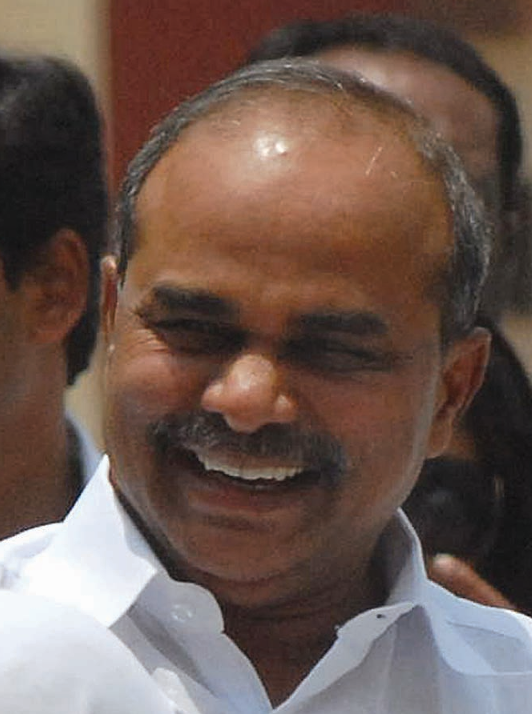
Sneers of a default win and a negative vote notwithstanding, the simultaneous elections in Andhra Pradesh saw Chief Minister YS Rajasekhara Reddy impressively retain power for the Congress in the state (159 out of 294) and also secure 33 out of 42 Lok Sabha seats. Undeterred by detractors saying that YSR, as he is popularly known, has taken corruption to new levels – doling out favours to his son, captains of industry and supporters – he is now in full throttle in his second stint in power.
YSR owes this electoral success to a multitude of welfare policies. Yet, ironically, he is indebted to his bête noire – Telegu Desam Party supremo and former Chief Minister Nara Chandrababu Naidu. YSR and Naidu joined politics at the same time. As Congress colleagues, they served as Ministers under old warhorse T Anjaiah. Naidu acknowledges Anjaiah as his mentor, though he was later to join father-in-law NT Rama Rao’s TDP.
Emulating Marxist stalwart Jyoti Basu, Naidu introduced a series of economic measures during his stewardship of Andhra Pradesh for two consecutive terms from 1994. These measures began to bear fruit from 2004 onwards, when the Congress regained power after a gap of nine years.
With Naidu’s spadework leading to overflowing coffers, the Budget presented by the Congress in 2004-05 had more than doubled to a whopping 1 lakh crore of rupees. This gave YSR free rein to spend
With Naidu’s spadework leading to overflowing coffers, the Budget presented by the Congress government in 2004-05 had more than doubled to Rs 1 lakh crore. This gave YSR free rein to spend. The Indiraamma Housing Scheme was a runaway success and had more houses on paper than the targetted group for whom it was meant. Then there was the “White” Ration Cards for those below the poverty line. At last count, over 1.6 crore White Ration Cards were issued to less than 1.5 crore people said to be below the poverty line. Everyone was aware of massive bungling in the scheme but the majority chose to turn a Nelson’s eye as it enabled poor families to get food at extremely cheap rates. YSR also launched a number of irrigation projects which are far from completion. Sceptics observe wryly that the work could take another decade and there are no prizes for guessing who benefits.
Irrespective of all this, YSR remains unscratched by the anti-incumbency factor.
It is evident he does not want to lose this tag of mascot of welfare schemes – with the latter affecting every “Telegu bidda”, and there are 9 crore of them in the massive Deccan region spread over 2,12,000 sq km. In his second tenure, with funds in short supply owing to the economic slowdown, he has less fluidity with money. So, till the economy picks up, YSR is hoping to influence the Congress-led Central government to undertake largescale irrigation projects in his state.
Ruthless in guarding his kursi, he has been accused by partymen of having had a hand in the defeat of some Congress candidates in both Assembly and Parliamentary elections
Ruthless in guarding his kursi, he has been accused by partymen of having had a hand in the defeat of some Congress candidates in both Assembly and Parliamentary elections. Prominent among these leaders, who could have posed a threat to his supremacy, was APCC president D Srinivas. A backward class leader, he failed to win the Assembly poll from Nizamabad. However, observers say Srinivas has himself to blame for his loss. With his defeat, any opposition to YSR in the faction-ridden Andhra Congress is clinically over.
This has left YSR supremely confident and his Delhi sojourn in June was to consolidate his grip on Andhra Pradesh.
There are those who point out that YSR won on a negative vote as the Praja Rajyam Party of actor Chiranjeevi and some smaller regional parties split the opposition vote. YSR had been forecasting this for the past six months. He had also predicted that the Congress would get 33 Lok Sabha seats. This led to doubts in some quarters that the Electronic Voting Machines might have been manipulated – a theoretical possibility. The Assembly election vote count went thus: Congress – 1.45 crore; TDP – 1.15 crore; and PRP – 70 lakh.
Described by an observer as “a Christian by religion, politically a Reddy and culturally an Andhraite”, YSR is a second-generation Christian. His father, Raja Reddy, while serving in the military in Burma, came across Christian missionaries and converted to Christianity. When he returned home, he was shunted out of his village. The Church of South India was formed in 1947 and Raja Reddy attended the services until he was killed by a rival Reddy clan in intra-caste Reddy wars.
Now 60, YSR has been in politics and in the Congress for the last quarter-century. Admired for forthrightness and frankness, his actions are unconcealed. At the same time, he has openly rewarded his supporters. Having made them wealthy, he expects them to respond positively when he is in the dumps. He has a reputation for winning elections and has never lost the Assembly fseat of Pulivendala in Cuddapah district as well as the Lok Sabha seat from Cuddapah. His brother, Vivekananda Reddy, is a fundraiser and represented the Cuddapah constituency in the Lok Sabha.
He has weathered any number of controversies but no mud has stuck so far. The India Today “Mood of the Nation Today Poll” in 2006 named him as the most popular CM in the country. A qualified doctor, YSR is married to Vijayalakshmi and has a son and daughter.