
































The approvals process for private firms entering defence production may improve soon but streamlining is a long way off
In May 2001, when the Cabinet opened up the defence sector to 100 per cent private investment and 26 per cent foreign direct investment (FDI), it could hardly have visualized that teething troubles would persist for so long. Yet, even today, private companies aspiring for a foothold in the defence sector face a number of obstacles. The foremost problem is that they have to wait a minimum of several months for security clearance from the Ministry of Home Affairs (MHA). The more unlucky ones wait a year or two, while for still others the ordeal is even longer.
It is perfectly in order that a corporate firm seeking involvement in the defence sector is required to go through a process of security clearance. The company, its shareholders and board of directors are all vetted and kept on the intelligence radar even after the initial security clearance. But is it right to make these private companies wait inordinately for the clearance?
Apart from security issues, licensing delays and project slip-ups have stalled several projects of both Indian private companies and multinational corporations (MNCs). These projects span a wide spectrum, from humble hand grenades to ultra-modern air defence missile systems.
Another constraint for the private sector is the stipulation that the management of joint ventures should be in Indian hands and the FDI stake should be limited to 26 per cent. But the government has not yet put in place a safeguards mechanism regarding the direct or indirect involvement of foreign companies in Indian private sector projects. Its regulations on this issue are evolving at a snail’s pace.
Then there’s lack of transparency, which continues to be the hallmark of the private sector’s participation in this strategic business. Information about the total number of letters of intent issued, the status of implementation of approved projects, and the business interface between implemented projects and the armed forces is hard to come by.
The Department of Defence Production (DDP) has not made public the Vijay Kelkar Committee report of 2005 that proposed reforms in defence production. A major recommendation, accepted by the government, was granting of the status of Raksha Udyog Ratna (RUR) to select private companies that would compete on a level playing field with public sector producers in the field of large defence systems projects. Similarly, the DDP has not made available the report of the Prabir Sengupta Committee appointed to select RURs in 2006. It has never disclosed why it aborted the RUR concept.
Yet, private companies are perceiving a dim light at the end of the regulations tunnel as a result of some recent developments.
In March, the Parliamentary Standing Committee on Defence disapproved of the Defence Ministry’s attempt to obfuscate the issue of creating a level playing field for the private sector vis-à-vis the Ordnance Factories Board (OFB) and defence public sector companies (DPSUs). The Standing Committee wants the private sector to have a share of technology transfer and indigenization of equipment in the government’s mega purchases of military hardware. It said: “The Committee understand that it would always be safer to nominate DPSUs/OFBs as the primary receiver of such technology. However, the total denial of the opportunities to the private sector in this regard is not justified particularly when the specific provision has been made in the DPP (Defence Procurement Procedure). In view of this, the Committee while reiterating their earlier recommendation would like the Ministry to take concrete steps to involve the private sector.”
Earlier, in January, Defence Minister AK Antony had promised improvement in defence procurement from the private sector. Noting that the defence market is too big for both public and private sectors to flourish, he told an international seminar: “In this year’s amendments (in the) DPP 2010, we must take two aspects seriously. One is avoiding delay in the procurement process. That is one aspect we are going to examine this time seriously; you can also do the same. Another is to speed it up judiciously. So I am sure DPP 2010 will address further your concerns.”
Yet another ray of hope for the private sector has emerged from Udyog Bhavan. The Chairman of the Licensing Committee, an inter-ministerial panel serviced by DIPP, recently echoed applicants’ growing frustration over delays. At a Committee meeting on March 10, the Chairman, who is also DIPP Secretary, expressed concern about inordinate delay in issue of letters of intent. The Chairman’s exasperation was due to DIPP’s stock refrain in the case of over half-a-dozen applications that were put up for consideration at the meeting: “In spite of repeated reminders, the comments of MHA have not been received so far.”
The MHA is now required to give security clearance to an applicant company within three months…. If the MHA needs more time, it will have to seek an extension for each case from DIPP. If no request for extension is received, the Licensing Committee will presume clearance has been accorded.
The Chairman laid down a new procedure for processing of applications at the meeting. The MHA is now required to give security clearance to an applicant company within three months from the date of receipt of reference from DIPP. If the MHA needs more time, it will have to seek an extension for each case from DIPP. If no request for extension is received, the Licensing Committee will presume clearance has been accorded.
The new procedure also requires DIPP to place before the Licensing Committee all cases recommended by DDP. The committee will take a call on these cases after MHA scrutiny.
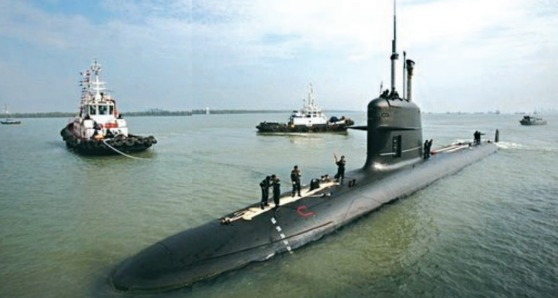
Yet, the MHA has had a positive role to play. It was MHA vigilance that led to the Licensing Committee and the Project Approvals Board (PAB) deferring a decision on Bharat Electronics Limited’s twin applications for production of defence communication equipment in technical collaboration with France’s Thales Communications S.A. (TCSA). The Thales group is bribes scam-tainted. A public interest case seeking institution of a criminal case against Thales Avionics S.A. in India’s $3 billion Scorpene submarine deal is pending before Delhi High Court. A notable though belated move on the MHA’s part was the advice to DIPP that it should seek the Defence Ministry’s guidance on specifying security and auditing procedure for the applicant firms. The MHA also proposed scrutiny of the supply chain to be used by the applicant.
The guideline says, “Adequate safety and security procedures would need to be put in place by the licensee once the licence is granted and production commences. These would be subject to verification by authorized Government agencies.” This guideline is as lax and vague as the one on civilian-use explosives that frequently land up in the hands of terrorists and Naxalites. The guarding of explosives, from manufacture to delivery, is in the hands of company-hired private security guards. MHA guidelines stipulate escort of the explosives-carrying vehicle by at least two armed guards without elaborating further. It is anybody’s guess whether the guards should be from private agencies or from the State police that hardly provides personnel with regular fire-arms training.
If the government does not put in place stringent security measures for private defence armament units, then grenades, anti-aircraft missiles, undersea mines, radio-equipment jammers and other warfare gear would easily slip into the hands of anti-national elements.
As for the supply chain scrutiny, there is a real risk of foreign vendors embedding espionage software in the microelectronics components of electronic warfare and telecom equipment. It is anybody’s guess whether Indian intelligence agencies are geared to take on anti-nationals in this endless game of dirty tricks. The acid test for foreign suppliers of technology, components and equipment would be only during war or during border conflict. The votaries of self-reliance believe alien investors, technology and component suppliers, and maintenance service providers would let India down when war clouds gather.
In this context, a case unrelated to the defence sector is yet pertinent for its direct relevance to national security since many multinationals operate in both the industrial engineering and defence segments. US corporate giant General Electric, which produces gas turbines for power plants as well as aircraft, stopped sending its technicians to India when Indo-Pakistan tensions reached a flashpoint. This significant fact lies buried in the 2001-02 annual report of Search Chem Industries (later renamed United Phosphorous).
The report says: “The engine of power plant has been re-commissioned on natural gas on 10th June, 2002 and is in operation since then. The power plant could have been started a bit earlier but GE, USA had banned travel by technicians to India, firstly because of disturbances in the State of Gujarat and secondly because of tension on the Indo-Pak border and as a result the technicians from USA could not come for alignment and installation of the engine of power plant. Ultimately, as per the proposal of GE, USA, the Company engaged the services of GE-trained Turkish experts from Turkey for re-commissioning of power plant.”
Can we then be assured that Western MNCs would depute their technicians to India to repair sophisticated military gear during war? Do the technical tie-up and joint venture agreements incorporate provisions for uninterrupted supply of vital components and technical services by MNCs in wartime? What would India do if the MNCs violate such provisions, even if incorporated?
The government must resolve such core security concerns while streamlining regulations for private sector participation in manufacture of defence equipment and police armaments – for which a separate policy is in the works.
Endless circles
When companies demerge their defence divisions into separate subsidiaries, they have to apply afresh for a letter of intent/industrial licence. Thus, they have to repeat the process of approval, including securing fresh clearances from the MHA as well as Department of Defence Production (DDP).
A case in point is that of Mahindra & Mahindra (M&M). Last year, the company demerged a part of Mahindra Defence Systems (MDS) into a wholly-owned subsidiary – Mahindra Defence Land Systems Private Limited (MDLSL). When M&M recently requested transfer of three licences for manufacture of mobile surveillance systems, military simulators and light armoured multi-role vehicles, the Department of Industrial Policy and Promotion (DIPP) told the company to apply for fresh licences. This is because the Industries (Development & Regulation) Act, 1951 does not include a provision on transfer of existing licences from the parent company to a new subsidiary.
Also,when the projects are not implemented in time, companies have to apply for extension of validity of the letters of intent. They then have to go through the process of approval all over again.