
























Indian responses to situations like the Australia attacks are reserved when they should be tough

Media coverage of repeated attacks on Indian students in Australia has hurt the collective conscience of the nation. On an average, two or three attacks per week have been taking place since 2004. According to the Victoria Police Commission, 1083 cases of robbery and assault were reported against Indians in 2007-08 and 1447 in 2008-09. The Indian government and the High Commission were fully aware of the increasing atrocities but decided not to intervene.
The credit for highlighting the plight of Indian students goes to the media. Amitabh Bachchan declined to accept an honorary doctorate from the Queensland University of Technology, stating “My conscience does not permit me to accept this decoration from the country where citizens of my own country are subjected to such acts of inhuman horror.” Bollywood has decided not to shoot in Australia till the Australian government takes effective steps.
The reaction of the Indian government is typically timid. It has taken no concrete action even as the attacks continue and the Australian government refuses to accept it as racist violence. While urging the Australian government to prevent such attacks, India counselled its students to exercise restraint. Australia branded India unsafe for the Davis Cup tie recently. India could have easily forced the Australian government on the backfoot by issuing an advisory against visiting Australia on similar grounds. In any case, Australia is no great friend of India’s. It opposes Indian nuclear policy vehemently and has steadfastly declined to export uranium to India.
India’s foreign policy has been a chronicle of abject servility, timidity, and inexplicable reticence. It is characterized by a lack of aggressive protection of Indian interests. The Ministry of External Affairs appears more concerned about the sensitivities of other nations than its citizens’ welfare. While masquerading as a growing superpower, it behaves like a weakling in foreign affairs.
In January 2008, the Indian Prime Minister was advised not to visit Tawang (an integral part of India), lest China get irked. There cannot be a more shameful example of the dismal surrender of India’s sovereign rights over its own areas. Similarly, India went overboard to ensure safe passage of the Olympic torch in April 2008 as China had expressed its disapproval of pro-Tibet protests.
Last year, India’s envoy to Beijing was summoned in the middle of the night for absurd reasons. Even a banana republic would have taken offence. But, India is different. Its ambassador to Beijing promptly reported to the Chinese foreign ministry without a whimper of protest. Let South Block try the same with the Chinese Ambassador in New Delhi. Even a lowly staffer of the Chinese embassy will not respond.
A look at India’s foreign policy record with respect to Pakistan is equally revealing. The Kashmir issue was taken to the Security Council when India was on the verge of ejecting all aggressors and reclaiming the whole state. The strategic Haji Pir Pass was handed back to Pakistan in Tashkent in the misplaced hope of placating it to behave like a responsible neighbour. The hard-won victory in the 1971 war with Pakistan was lost on the negotiating tables of Shimla. India returned over 80,000 Pakistani soldiers while Indian soldiers continue to waste away in Pakistani jails. The naivety of Indian foreign policy framers has ensured that all gains made in the battlefields are frittered away subsequently.
Let us take a look at the Pakistani response to such Indian gestures. Pakistan captured an Indian patrol led by Lt Saurabh Kalia in May 1999 from the Indian side of the Line of Control in Kargil. Defying all conventions on the treatment of Prisoners of War, the Pakistanis chopped off limbs and other parts of the hapless Indian soldiers besides inflicting physical and mental torture. After 22 days of torture, the soldiers were ultimately shot dead.
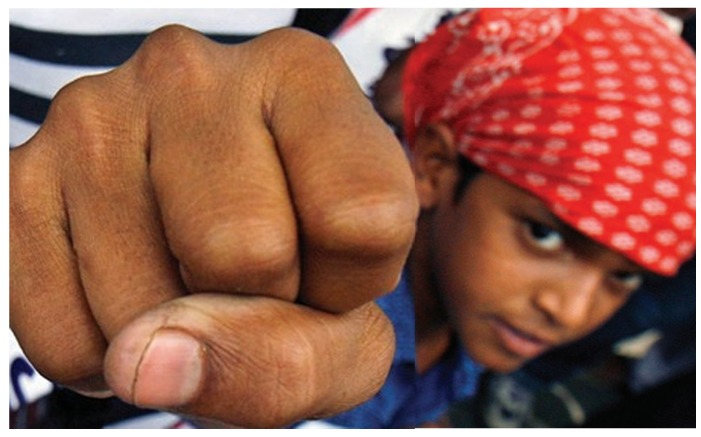
Had such treatment been meted out to Israeli soldiers, Israel would have made Pakistan pay dearly for it. If American soldiers were brutalized in this manner, the US would have obtained custody of the guilty and tried them in the US for war crimes. Instead of hauling Musharraf before international law commissions for crimes against humanity, India allows him to roam free in India as an honoured guest to propagate his anti-Indian views.
Recently, over 50 Indian passengers flying Air France were subjected to blatantly racial treatment and kept in inhuman conditions for 28 hours at Paris airport with little food and water. Any self-respecting country would have punished Air France for its misconduct. But the Indian government remained apathetic.
Indian embassies and High Commissions are notorious for their unhelpful attitude and indifferent demeanour. Every Indian visitor is considered a nuisance and shunned from one desk to the other. Most of the staff remains busy managing VIP visits.
Pretensions to being an emerging power must be matched by a determination to safeguard national prestige. Great nations are distinguished by their self-confidence and self-respect
Pretensions to being an emerging power must be matched by a determination to safeguard national prestige. Great nations are distinguished by their self-confidence and self-respect. India fares miserably on both counts. The MEA would do well to remember the old saying: “If you behave like a doormat, you will be treated like one.” It is time the MEA mandarins show some spine. Let no country dare to take India lightly and inflict insults on its citizens.
Bending over backwards
There are four main reasons for the inability of the MEA to safeguard Indian interests:
• Lack of Accountability. Like all bureaucratic organizations, the MEA has no concept of fixing responsibility. No one was sacked for the ill-advised military intervention in Sri Lanka. Similarly, the Indian envoy in Beijing was not questioned for embarrassing the country by responding at midnight. The list is endless.
• Burden of Obligations. It is common knowledge that almost all MEA functionaries are personally obliged to Western countries. Their children have been granted green cards and citizenships as favours. Even academically mediocre offspring are accommodated in foreign universities with liberal scholarships. It would be highly revealing if complete data on all such “diplomatic gratifications” is made public. It would give credence to the widespread notion that external influences govern Indian foreign policy.
• Networking for Future. All bureaucrats crave lucrative appointments in the UN, World Bank and other international organizations. They know that their candidature would need support from the developed nations. Therefore, they never say or do anything to irk them. The need for continued “good behavior” renders Indian diplomats incapable of taking up Indian issues forcefully.
• Servile Attitude and Slavish Mindset. Despite the fact that India has been independent for over six decades, it still suffers from an acute inferiority complex when it comes to interacting with the developed nations. It is a most disgusting sight to see Indian officials clasping a foreign dignitary’s hand with both hands rather than shaking hands in a normal manner. Such slavish mindset prevents objective and forthright conduct.
