




















Youngsters aspiring to become future civil servants as well as those who are studying at the IAS academy in Mussoorie prior to taking up their first district or foreign postings would do well to pay heed to this issue’s cover story featuring Textiles Secretary Rita Menon.
And not only for the content which is rich with unique insights and analyses of this key sector of the Indian economy but also for what it tells us about the degree of difficulty in functioning effectively as a senior bureaucrat. With economic growth now the politically correct watchword as well as an imperative of survival in a rapidly globalizing world, a civil servant running a department or Ministry must be a combination of administrator, technocrat, market analyst, corporate boss, star gazer, trouble shooter, arbiter and trendsetter.
This may sound intimidating but it is today’s stark reality that needs to be dinned into the heads of IAS probationers as well as those who tutor them in training academies and refresher courses. Most people imagine that the life of an IAS officer at the district level is no more than collecting revenues, performing magisterial functions and inspections, maintaining law and order and collecting data on food production, procurement and distribution. That was true when India lived in simpler times. Today’s national agenda requires a massive reorientation, starting at the district level.
The demand for separate small states may be growing for political reasons. But the reality is that the Indian economy, with the thrust towards spurring rural participation in national growth, has never been so integrated. With virtually every economic segment – small and large – having become an inseparable cog in the turn of the growth wheel, there needs to be a guiding and balancing hand to ensure that India’s increasingly unfettered market is kept free and well oiled as well as the receptacle of technology and innovation that keeps it globally competitive with benefits flowing to all players.
Ensuring an India First win-win scenario, yet balanced with a level playing field for competitive domestic as well as foreign players, is now one of the prime tasks of the modern bureaucrat – or supercrat. Menon presents the face of the new bureaucrat. If you think that the textiles industry means factories spinning yarns (pun unintended) or the export of tie-dye and jute fabrics, think again. As Menon, in what is arguably high-tech talk, explains, the industry is complexity personified. And it is for this reason that it cannot be left in the hands of an industrial oligarchy or cartel.
This 10-12 per cent annual growth sector involves weavers, jute growers, fashion institutes, the conflict between synthetic and natural fibres, banana, pineapple, pulp and wheat industries, silk, cotton, Technology Upgradation Fund Scheme, FDIs, the running of mega PSUs like NTC, medical textiles, agri-textiles, defence-related and infrastructural applications.
This is only one example of the formidable knowledge needed in order to run any Ministry in today’s India. Nobel laureate Amartya Sen is right when he says that the state must play an increasingly responsible role in balancing interests and promoting equity in all spheres of economic activity.

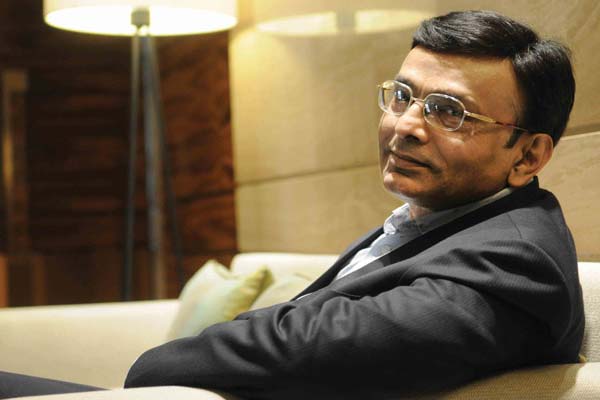
Inderjit Badhwar
Inderjit Badhwaris a veteran journalist, novelist and the former editor of India Today. He has written for various Indian and American newspapers and magazines, including The New York Times and Outlook. Now based in New Delhi, Badhwar heads gfiles, India's first magazine on the Civil Services of India.