

























In its befuddled approach towards a governance mantra for natural resources, the ruling political elite harps on the rich-poor divide. Be it land, metals, or oil and gas, the bias against the well-off is becoming ever more pronounced. Wealth generation and ownership evokes derision. The trend is manifest in the proposal to statutorily reserve 26 per cent profit of mining companies for the local populace of the mining area, apart from providing handsome compensation, jobs, and basic amenities to those who yield their land. It is also discernible in the recent decisions against prospecting and harnessing of natural resources, including hydropower, uranium, coal and metals, if it hurts the local sentiments and, of course, the environment.
The most blatant case in point is the Cabinet decision to scrap the environmentally-compliant 600MW Loharinagar-Pala Barrage Project on the Bhagirathi river in Uttarakhand. A few hundred crore rupees invested in the project by public sector company NTPC have gone to waste.
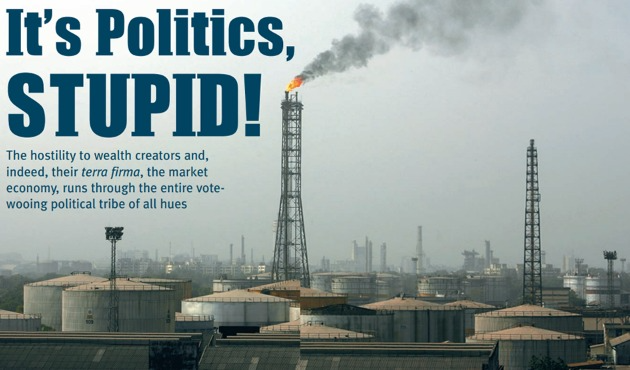
The hostility to wealth creators and, indeed, their terra firma, the market economy, runs through the entire vote-wooing political tribe of all hues. This onslaught is clouding the prospects for governance of natural resources in a holistic and rational manner. The resulting ad hoc regulatory framework is apparent in even the pricing of petroleum products – primarily derived from crude oil, 80 per cent of which is imported.
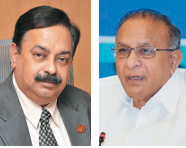
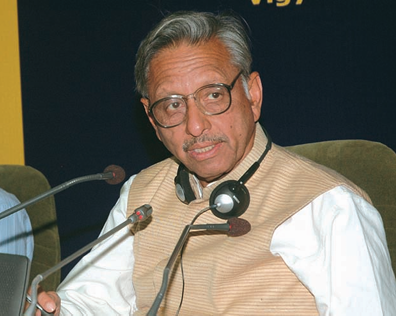
The phenomenon was recently articulated the other day by Mani Shankar Aiyer, former Minister for Petroleum and Natural Gas, who advocated energy security for the aam aadmi as being integral to national energy. “So long as there are obscene distortions of income and wealth in our democracy, the stability of that democracy demands differential pricing of essential articles of daily consumption, including essential petroleum products such as kerosene and LPG,” he said, delivering the Lovraj Memorial Lecture, organized by the Petroleum Federation of India (Petrofed). Aiyer warned that market-driven pricing (MDP) of petroleum products would put these products beyond the reach of 800 million Indians. “Our current administered price regime disproportionately benefits the remaining 200 million Indians who can and should pay market prices. In short, the aam aadmi is being short-changed, and the khaas memsahib is being privileged. Subsidized LPG for the memsahib is doing far greater harm to our economy than subsidy leakages for kerosene,” rued Aiyer. He added, “We do need to move beyond differential pricing of the ad hoc kind we now have.”
Aiyer thus advocated a shift to a different kind of ad hocism. He suggested LPG be charged at full rates from all urban consumers not living in slum areas and be provided virtually free to people living in forests and remote habitations. Diesel should be subsidized only for transport trucks and buses. Petrol should be totally de-regulated.
The significance lies in the fact that Aiyer, like any other Indian politician, loves ad hocism in the pricing of politically sensitive products (PSPs) such as liquefied petroleum gas (LPG), kerosene, diesel and petrol. Barring these four PSPs, the pricing of all other petroleum products is market-driven and is influenced by the movement in prices in global markets.
The present government jacked up petroleum prices twice this year – through budgetary imposts on February 27 and through a hike in the prices of the four PSPs on June 25. The government decided that the pricing of petrol and diesel would be market-determined. This decision was applied immediately to petrol. But the government has kept the nation in the dark as to when diesel will be decontrolled. To start with, it had merely allowed increase in retail selling price of diesel by Rs 2 per litre in Delhi with corresponding increases in other parts of the country.
What was overlooked was the fact that market-determined pricing (MDP) had been introduced for diesel way back in September 1997. It did not honour this decision in the same way as it backtracked on targets for phase-out of subsidies.
In March 2002, the government reiterated that the LPG and kerosene subsidy would be borne out of the Consolidated Fund of India. It said: “After adjusting the flat rate of subsidy, the retail prices of these subsidized products will vary with the price of oil in the international market.” It notified that LPG and kerosene subsidies would be phased out in three to five years. The phase-out deadline has been tinkered with time and again. It was last re-extended to March 31, 2014 from March 31, 2010.
The urge to intervene and create uncertainty due to political compulsions is evident in the price hike release. It stated: “Further increases will be made by the public sector oil marketing companies (OMCs) in consultation with the Ministry of Petroleum & Natural Gas. It has also been decided that in case of a high rise and volatility in international oil prices, the government will suitably intervene in the pricing of petrol and diesel.”
The petrol price decontrol is yet to pass the litmus test of global price turmoil. With the international crude prices showing only modest variations, the need for periodic and frequent hikes in petrol prices has not risen. Market leader Indian Oil Corporation thus raised the prices by only a few paise on September 21.
The word ‘ad hoc’ spells magic for politicians of all hues who increasingly want to be seen flogging the rich to help the poor. They don’t mind turning blind to the rabbit-like pace at which the poor procreate, thereby nullifying all benefits of economic development and perpetuating the poverty-population explosion-crime rate nexus. This is because they don’t want to trample on such ‘human rights’ even in the supreme interest of the nation.
The government has lurched from one ad hoc pricing arrangement to another since the so-called phase-out of administered price mechanism (APM) in April 2002. Under this, the government retained partial control over the price of domestic LPG and PDS kerosene.
The phase-out did not really result in MDP as the crucial elements of reforms – rationalization of indirect taxes and setting up of price stabilization fund (PSF) – were never put in place.
Each ad hoc arrangement has thus proved to be short-lived, harming both the oil companies and the economy. At best, the government has also tried to balance conflicting interests of different stakeholders while contriving such transient to cope with global oil price volatilities.
As put by Aiyer, “When international crude prices rise, equitable burden sharing between upstream companies, Central and State governments, and the consumer should provide the guiding principle.”
That is almost impossible to achieve with the Centre and States always trying to protect their tax revenue. Moreover, the government does not have the political will to uniformly and rationally distribute the burden among all players, including private sector companies. It has been doing different permutations and combinations of subsidy-sharing burden ever since the BJP government halted MDP in October 2003 with an eye on the Lok Sabha polls.
For equitable distribution of oil price shocks, it would have to invoke the relevant provisions of the Essential Commodities Act, which would mean a return to APM.
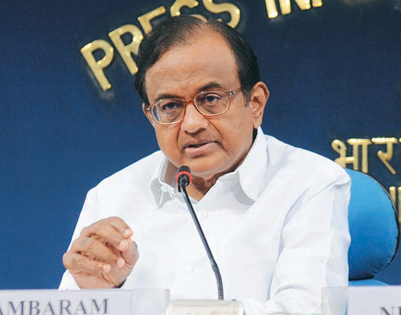
Taxes and subsidy should never co-exist, say industry sources. No less a person than P Chidambaram, then Finance Minister, said so in January 2005. Voicing concern over this paradox, he stated that “taxes and subsidies in the sector are in conflict with each other.” He felt that it was paradoxical to have both taxes and subsidies on the same petroleum products.
If the Centre and States agree to abolish all taxes on petroleum products, there will be no need for subsidy. The fiscal deficit will decline. So will prices.
The petroleum sector’s contribution to the Central and State exchequers aggregated a whopping Rs 183,861 crore in 2009-10, which is more than three times the projected subsidy of Rs 53,000 crore for four PSPs to be jointly borne by the Centre and public sector undertakings (PSUs) in the current fiscal!
Subsidization of 4 PSPs is thus a myth perpetuated by tax-greedy governments that have repeatedly failed to honour their own commitments in the area of hydrocarbon reforms.
The blame for prices-subsidy complexity lies more with greed for taxes than with the global oil price shocks. Successive governments manipulated taxes periodically to garner additional tax revenue. They never bothered to set aside a part of petroleum tax revenue to create PSF.
The dogged refusal to set up PSF is the primary cause for abortion of MDP. In the APM era, the global price volatility was cushioned by Oil Pool Account (OPA), which was disbanded in 2002 as a part of the APM phase-out.
PSF, which was proposed by an official experts’ committee in 2001, has found an echo in the joint study by Petrofed and IIM, Ahmedabad, titled “A Study of the Fiscal Regime for the Petroleum Sector in the Context of Rising Input Prices, of the Changes Required in the Sector, and of a Plan of Action to Achieve the Same”. Completed in December 2009, the study recommended setting up of crude stabilization fund as a second option under hydrocarbons reforms, the first option being total price decontrol. It suggested the government pay kerosene and LPG subsidy directly to the people living below the poverty line as vouchers, smart cards or in any other appropriate manner.
It was proposed that decontrol should be accompanied by restructuring of all central indirect taxes into a value added tax (VAT) and allowing input credit for all registered intermediate users of petro products. The study feels the Union government can protect its revenue by working out a revenue neutral value VAT. It estimated this rate as 110-120 per cent of value added uniformly to all segments in the industry. “Such a tax regime would also be neutral to the degree of vertical integration and remove the biases in the use of products,” the study suggests.
Its most interesting conclusion is that “Prices of all major products would settle down to around today’s diesel prices with very little difference between petrol, diesel and kerosene closing the large price arbitrage options (diversion and adulteration) that exist today.” It has also proposed abolition of all state taxes such as entry tax and turnover tax that are not currently vatable. Sales taxes which are currently vatable and are under VAT should continue as such with far greater uniformity across States. The Centre should try for outright uniformity through a standard VAT rate.
A similar reforms recipe has been proposed by the International Energy Agency (IEA) in its study titled “India’s Downstream Petroleum Sector Refined product pricing and refinery investment International Energy Agency’ published in April 2010. It says that price reforms would facilitate cost-efficiency in refining industry and reduce subsidies, apart from encouraging fuel conservation and substitution. “This will simultaneously reduce India’s crude import costs, and, as substitution to cleaner fuels occurs, greenhouse gas emissions will be reduced as well while boosting energy security. For each of these reasons, the GoI should move in the direction of market-based reform in petrol, diesel, LPG and kerosene markets. It should do this, however, while employing effective policy tools, such as price ceilings and highly targeted subsidies that provide energy market access for poor Indians, especially in LPG and kerosene markets,” it suggests.
The key to hydrocarbon reforms should emerge in the coming months from the joint decision by the Centre and the States on the extent and manner in which the proposed goods and services tax (GST) is applied to petroleum products. With rational application of GST, pricing of petroleum products would continue to remain in the domain of political expediency.