




























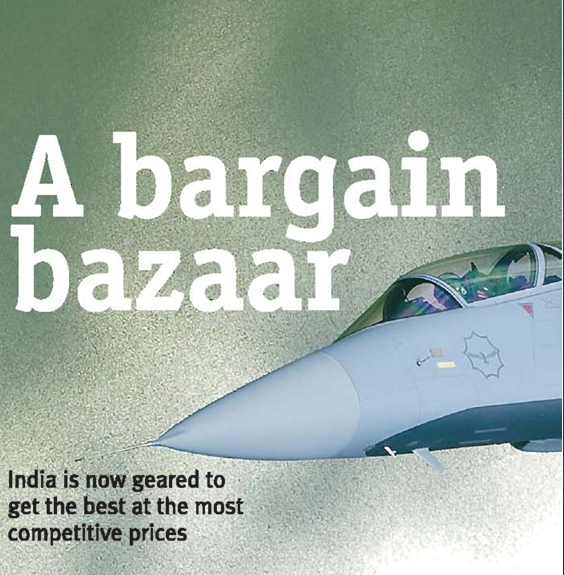
India, emerging as one of the world’s biggest arms buyers, proposes to spend over $30 billion in the next five to seven years for defence procurement. Given this projection, nearly all the arms giants from the US, UK, France and Russia, among others, have set up shop in India to corner a share of this huge market.
Realizing its growing clout, the Indian government has gradually fine-tuned its defence procurement policies to get the best at the most competitive prices. Moreover, the coming years will see a pragmatic leadership using defence procurements to achieve diplomatic goals and rub shoulders with the advanced countries as an equal.
Also, India is keen to expand its own defence industry infrastructure and no longer wants simply a “buyer-seller” relationship with the exporting countries. Instead, India is now promoting joint ventures involving private and public sector undertakings with foreign vendors, joint development and manufacturing of weapon systems for in-house use, and exports and research in strategic weapon systems.
The BrahMos supersonic cruise missile is one such successful example of joint development by the Indian and Russian industries. The countries have now signed an agreement for joint development of fifth-generation strike aircraft and medium-size transport aircraft.
Starting with the NDA regime, successive governments have opened up the defence sector for foreign players. An elaborate Defence Procurement Policy was formulated in 2005 to attract foreign direct investment(FDI). Ensuring transparency, the policy aims at providing a level playing field to foreign vendors and the Indian private sector. The government will now keep changing the procurement procedures every year given the dynamic nature of the industry and changing global trends.
A major feature of the procurement policy is offsets. Any foreign player bagging a contract over Rs 300 crore will have to plough back a percentage of the contracted amount in the Indian industry. The aim of offset is to get hold of cutting-edge technology and enlarge the local industrial base rapidly.
India is likely to get over Rs 40,000 crore as offsets in the next five years with a major portion of this going to the fledgling local aerospace industry. It is an accepted fact that the US, UK, France and, to an extent, Russia became world leaders once their aerospace industry grew. Our political leadership has realized that a robust aerospace industry will propel India into the developed nations league.
Russia remains our biggest and most trusted defence and strategic partner. Over 70 per cent of the inventory, including tanks, guns, fighter jets, ships and related equipment used by the Indian armed forces is of Soviet and Russian origin. The last decade witnessed some problems cropping up in defence relations between the two countries after the disintegration of the Soviet Union. The Indian armed forces faced problems of supply of critical spare parts for tanks, planes and warships as many original manufacturing units were based in the Ukraine, which became an independent nation after the Soviet break-up.
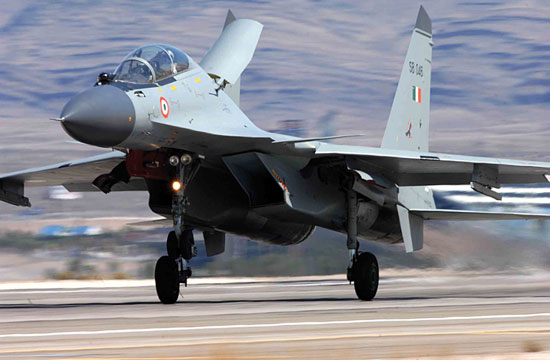
Besides, industries in Russia were not in a position to meet India’s demands due to political uncertainty. Matters improved once the then President, Vladimir Putin, starting taking a personal interest in India-Russia defence ties. An estimated $15 billion worth of deals are now in the pipeline, including aircraft carrier Gorshkov, rechristened INS Vikramaditya, 45 MiG-29K fighter jets, 230 Su-30 MKI jets, six Talwar class stealth frigates and 660 T-90 main battle tanks.
The bulk of platforms will be imported in operational condition from Russia, but the rest will be manufactured by the public sector undertakings here as per technology transfer agreements. This will enable the local industry to master the technology and help the ancillary units, mostly in the private sector, to grow rapidly.
The US companies vying for the Rs 45,000-crore deal for 126 medium multi-role aircraft for the IAF have offered to invest in a big way in India if they bag the contract – billed the ‘mother of all deals’
The US companies vying for the Rs 45,000-crore deal for 126 medium multi-role aircraft for the IAF have offered to invest in a big way in India if they bag the contract – billed the “mother of all deals”. Rated as the biggest-ever defence deal, six companies, including two from the US and one each from Sweden, France, the UK and Russia, are in the race. The US companies, for the first time, are willing to share the latest technology in critical sectors like electronic warfare with India and set up units to manufacture planes within India.
While several countries are emerging as our defence partners, with Russia retaining the top slot, Israel has emerged as the second biggest defence exporter with annual trade pegged at $8-10 billion. Unlike others, the Israel defence industry maintains a low profile despite bagging major contracts. In fact, India-Israel defence ties have grown by leaps and bounds since diplomatic relations were established between the two in 1990.
Israel has some of the world’s best industries in the field of hi-tech equipment, including electronic warfare, communications, upgrades and counterterrorism. In one of the biggest deals with India, it is now supplying Phalcon airborne early warning radar systems (AWACS).
Defence relations between the two countries strengthened when Israel came forward to help the Defence Research and Development Organization (DRDO) in some strategic programmes, including the Agni missiles. The Israeli-made radars successfully launched the missiles two years ago and scientists from the two countries are now working on at least 30 important projects.
Israel came forward without any strings attached during the 1999 Kargil war and supplied weapons to India at very short notice. India also favoured Israel as it transfers and shares technology with the local industry without fuss. Many key projects were stalled due to technology denial over the past two decades and ties with Israel revived them.
The Israeli-made thermal imagers and electronic surveillance systems installed at the LoC fence have reduced infiltration by 70 per cent since the fence was erected five years ago
The 750-km anti-infiltration fence along the Line of Control (LoC) in Jammu and Kashmir is an example of defence ties between the two countries. The Israeli-made thermal imagers and electronic surveillance systems installed at the fence have reduced infiltration by 70 per cent since the fence was erected five years ago.
The US is also slowly making its presence felt. All its arms manufacturing companies are aggressively marketing their products here. As of now, India has not opened up in a big way to the US due to its stringent laws relating to technology transfer for state-of-the-art systems. Despite these blocks, India and the US have gone ahead with deals through the foreign military sale (FMSA) route. The government-to-government transaction has seen India getting ANTPQ-37 fire-locating radar and the USS Trenton for amphibious warfare. Two other deals through the FMS route are in the pipeline, including C-130 planes for our Special Forces and C-17 heavylift transport planes.
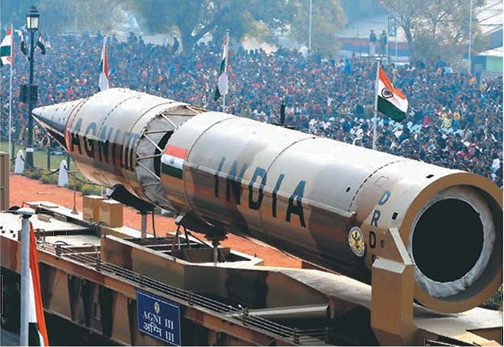
India-US defence relations are expected to be on the upswing once the nuclear deal becomes operational and the US industries start doing business here. Sharing latest technology in the nuclear power generation sector will assure the US decisionmakers of India’s impeccable record and curbs on technology transfer in the defence sector will be relaxed.
The forthcoming international defence exhibition in New Delhi in February will see nearly all the countries manufacturing and selling weapons showcasing their merchandise. Defence Minister AK Antony, who will inaugurate it, will face a pertinent question from the participants – on the long gestation period before a defence deal is inked. The delay seriously affects the pace of modernization and operational preparedness of the armed forces and the Service chiefs have openly stated this.
Wary of the political fallout since the Bofors gun deal controversy, the government now insists on transparency in procurement procedures. It has led to military and civil bureaucracy shying from taking decisions as they fear persecution later. This state of affairs has not improved much despite all parties realizing the folly of exploiting the controversies surrounding deals for political gain.
Backed by a clean political track record, Antony will have to assure the industry and his officials that he will not allow a witch hunt and give them a free hand to deliver the goods.