





























In the landmark judgment of the division bench of the Supreme Court on May 23, 2008 (CA No.7631/2002) in the case of Dev Dutt Vs. UOI & Ors, the principle of natural justice has been explained and expanded. The judgment held “that fairness and transparency in public administration requires that all entries (whether poor, fair, average, good or very good) in the Annual Confidential Report of the public servant … must be communicated to him within a reasonable period… This … is the correct legal position even though there may be no rule/G.O. requiring communication of the entry, or even if there is a rule/G.O. prohibiting it, because principle of non-arbitrariness in State action as envisaged by Article 14 of the Constitution … requires such communication. Article 14 will override all Rules or Government orders.”
In para 37 of the order of the Supreme Court, it has been further held “that when the entry is communicated to him the public servant should have a right to make a representation … authority concerned must decide the representation in a fair manner and within a reasonable period. We also hold that the representation must be decided by an authority higher than the one who gave the entry, otherwise the likelihood is that the representation will be summarily rejected without adequate consideration as it would be an appeal from Caesar to Caesar. All this would be conducive to fairness and transparency in public administration, and would result in fairness to public servants. The State must be a model employer, and must act fairly towards its employees. Only then” would good governance be possible.”
Yet, bureaucrats, in total disregard and contempt of the SC ruling, have been sending proposals to the Union Public Service Commission (UPSC) for Departmental Promotion Committee (DPC) meetings by submitting the Annual Confidential Reports (ACRs) with “good” entry, without communicating the same to the public servant. Such DPC meetings have been held subsequent to the date of the order of the Supreme Court. The UPSC too, in total disregard of the decision of the Supreme Court, has processed the proposals and has held officers unfit for promotion on the basis of such uncommunicated “good” entries. In the process, many senior officers in various departments, including the Income-tax Department, have been superseded. This has affected the morale of the officers who, because of some personal grudge of the reporting officers, obtained one isolated “good” entry.
No less than 50 officers of the rank of Joint
Secretaries were forced to file cases in the Central
Administrative Tribunal and faced the humiliation of
working under officers junior to them.
No less than 50 officers of the rank of Joint Secretaries were forced to file cases in the Central Administrative Tribunal (CAT) and had to face the humiliation of working under junior officers. In spite of these cases pending with the CAT or decided by the CAT directing the concerned department to communicate the “good” entry, the departments have continued to submit more proposals and the UPSC has continued to hold DPC meetings on the basis of ACRs which were not communicated to the public servant.
In the Income-tax Department, more than 10 Commissioners have been denied promotion to Chief Commissioner of Income-tax because of such illegal proposals sent by the Central Board of Direct Taxes (CBDT) and illegally approved by the UPSC. Such DPC recommendations have been vetted by the Appointments Committee of the Cabinet (ACC) even though the public servants have brought the illegality to the notice of the Revenue Secretary, Finance Secretary, Cabinet Secretary, Finance Minister and others. Not a single authority ever cared to respond to the appeals made by the public servants.
THERE is yet another bench decision of the Supreme Court in the case of Abhijeet Ghosh Dastidar dated 22.10.2008 wherein the decision in the case of Dev Dutt has been reiterated and it has been held that where reporting officers and reviewing officer stand retired the uncommunicated “good” entry shall be ignored and an earlier ACR shall be considered. Even this decision has met with the contempt of the CBDT and Commissioners and Additional Commissioners have been denied promotion due to one uncommunicated “good” ACR.
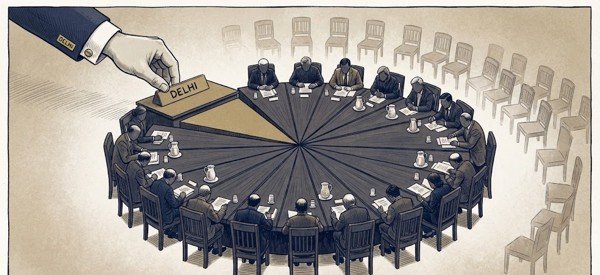
The callousness of the DPC is further evident from the fact that the officers in whose cases a “good” ACR stood upgraded by the Competent Authority after detailed perusal of the representation made by such officers, as directed by the CAT, have again been found unfit for promotion by the DPC with a simple observation that the Competent Authority has not given vital justification for such upgradation. One limb of the government upgrades the ACR and another limb cancels the upgradation! The ACC too has acted arbitrarily by granting promotion to some officers found unfit by DPC and not promoting some others who were similarly found unfit, without making available the reasons for such differential treatment. The ACC has also ignored the binding decisions of the Supreme Court.
An Office Memorandum (OM) issued by the Department of Personnel & Training (DoPT) on February 18, 2008 has been relied upon by the DPC in the meetings held after the decision in the Dev Dutt case. The OM lays down that for promotion the benchmark would be all five ACRs being “very good”. This OM can at most be applied to ACRs written for the financial year 2008-09 and onwards. The DPC has made it applicable to the ACRs of 2002 03 to 2006-07. This is again illegal.
The morale of the officers of the level of Additional Commissioner and Commissioner can now be restored only if those who have suffered the injustice are promoted with retrospective effect with all consequential benefits without referring their cases again for review to the DPC and appropriate action is taken against the concerned officers who were responsible for breaking the rule of law by submitting illegal proposals and approving or vetting them. This would end all the litigation pending before various courts. The rule of transparency in governance will be revalidated. Otherwise, the tall claims made by the DoPT will prove hollow