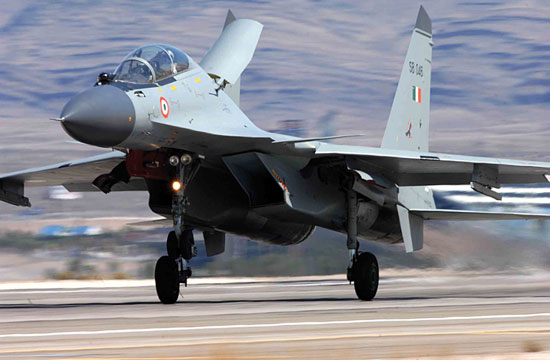































During the early 1990s, when the global defence industry, especially the US, was devising strategies to respond to a massive downturn in demands for weaponry, thanks primarily to the end of the cold war, India was witnessing a move towards an open market economy. India’s leadership, assessing the “quest for self-reliance in defence”, noted a dependence on imported weaponry as state-owned defence enterprises were far short of meeting demands. The problem was thrown into sharp relief when Chief of Army Staff General VP Malik famously said during the Kargil conflict that his forces would fight with whatever weapons they had. Since then, the defence sector has witnessed a series of reforms whose impact is slowly being felt.
Starting from structural changes in the higher defence organizations to the defence production and procurement sectors, the past few years have unleashed several challenges as well as opportunities. Consider this: India opened up its defence production sector for private participation in 2002 and allowed 26 per cent FDI. In the past seven years, the Indian defence procurement procedure has been revised five times, the latest one carried out as a set of amendments to the DPP-2008 in October 2009. New policy initiatives like defence offsets, ToT conditionalities, and offset banking have come in. Apart from the GoM report, which serves as the starting point of reforms in national security management, many committees – under Vijay Kelkar, Probir Sengupta and, the latest, P Rama Rao – have submitted their recommendations, which are being implemented.
India has opened up its basket of choices in military procurement and, thanks to a growing Indian arms market, we are witnessing hectic military business activities involving Indian and foreign companies. Exhibitions like Def Expo and Aero India provide excellent platforms for interaction
The cumulative impact of largescale reforms initiatives take time, but India is also undertaking a comprehensive military modernization drive which is likely to continue beyond 2020. Over seven years, India’s military procurement budget has gone up from Rs 12,000 crore in 2002-03 to nearly Rs 54,000 crore in 2009-2010 (estimated) – an increase of 450 per cent. India is likely to purchase over $100 billion worth of weapons systems in the next decade. To get the best value out of such massive outflow requires prudence, which is slowly becoming evident through various reforms initiatives in the defence production sector. India has opened up its basket of choices in military procurement and, thanks to a growing Indian arms market, we are witnessing hectic military business activities involving Indian and foreign companies. Exhibitions like Def Expo and Aero India provide excellent platforms for interaction among such stakeholders.
The quest for self-reliance in defence has produced mixed results. Some of the lessons of the past 60 years are pertinent. First, the technology gap has facilitated scope for acquisition of production technology rather than design technology. Second, private participation in the defence industrial sector has come after long. This is attributable to several factors, ranging from the protective nature of the defence sector to fears of “security diffusion”. However, institutions like CII argue that the government should come out with a clear “roadmap” for the private sector participants in defence. Third, the government is now encouraging the defence industry to have more independent joint-design, and development and production collaborations to reduce dependence on imports. Fourth, the government is also contemplating a viable strategy for exports of arms. The recent announcement of export-related incentives, including subsidies, for the industry is an example of this strategy.
It is also necessary to evaluate the current defence procurement policy. On the positive side, DPP-2008 entails the following. First, it clarifies distinctions between normal as well as extraordinary military procurement procedures. Second, “request for proposal” (RFP) will now have an elaborate format which will include detailed technical and commercial requisites to enable vendors to know what the end-user wants. Third, it tries to streamline evaluation procedures – technical, field and commercial – for large military acquisitions to avoid delays. It also tries to put a realistic time frame for each acquisition, depending on the nature and size of requirement. Fourth, it tries to avoid single-vendor situations by injecting a competitive spirit right from the “request for information” to the “solicitation of offer” stage. Fifth, it tries to distill “required” and “desirable” military technologies from a basket of choices by stipulating that all requirements will be examined by defence production, procurement and R&D boards, and final choices will be approved by the Defence Acquisition Council. And, lastly, it emphasizes offset obligations for vendors primarily through transfer of technology (ToT) routes.
However, these same provisions, cited as improvements, contain enough complexities to need in-depth examination and hence will necessitate further refinement. First, it is not the normal acquisition but exigency-based acquisition which will invite scrutiny. Second, under normal conditions the vendors know what the end-user wants as all essentials are elaborated in the RFP. What prospective vendors need to know are the nature, size and qualitative aspects of the Indian defence market. An adequate roadmap of military acquisitions is necessary not only to attract the best companies but also to create space for them for a long-term stake in the Indian defence industry. Third, time line is still a challenge for Indian planners, and the integrated defence staff office as well as the civil bureaucracy must take necessary steps to avoid delays.
Fourth, the evaluation process is justifiably lengthy as systems go through rigorous evaluations under different climatic conditions. However, eleven steps to military acquisition still have scope for time reductions. A re-look is in order at steps like initial screening, technical and staff evaluations and commercial negations, for which a time frame should be set at the very outset. And provisions like offsets and transfer of technology should be clearly laid down. At the moment, vendors are clueless about offset obligation modalities. The objectives of offsets are three-fold: bringing back a portion of money spent on acquisition through industrial compensation routes, helping the Indian defence industry to raise its standard, and achieving self-reliance in military technology through collaborative as well as indigenous efforts. While offsets could bring in the desirable results in acquisition costs as well as help build the defence industrial infrastructure, it is unsure whether it would help raise the domestic standard in critical military technologies. DPP-2008 should not be looked at as a mere procedural document but an evolving guide to address complex issues and provide transparent solutions.