

























The events and developments of the past couple of years should leave no doubt in any decision-maker’s mind as to what India’s threats are and what it has on the ground to counter them. It is ironic that it took India’s rogue neighbour’s pet anti-India resource, the Lashkar-e-Toiba’s Mumbai attack to shake New Delhi out of its torpor but, a year and a quarter later, there has been very little forward movement towards meeting the urgent requirements for the country’s external and internal security.
The Defence Ministry took about half a century after Independence to open its windows to Indian industry. Almost a decade-and-a-half later, marked by an increasing response from Indian industry and despite exhibitions, expos and so on, and repeated assurances about easing and speeding up of defence purchase procedures, India’s defence services are seriously under-equipped and under-modernized, denying them the vital cutting edge they had till 1971. Meanwhile, Pakistan and China have been stocking up with the latest versions of weapon systems.
Admiral Sushil Kumar told me, “Kargil may have happened a decade ago but all indications are that alarm bells are ringing for our mainline security forces who have to cope with a double jeopardy situation, with the Naxal menace inside and the belligerent Chinese knocking on the door. Our military credibility remains suspect. We should honestly ask ourselves – how did we reach this sordid impasse, when all was hunky-dory until the 1971 victory over Pakistan.”
A recent CII-KPMG report titled “Opportunities in the Indian Defence Sector: An Overview” analyses opportunities in the defence and aerospace sector about which Indian industry is upbeat. Eager to grow its capabilities in this space, industry is looking to the government to continue its process of developing and fine-tuning the procurement regime and industry-drivers that will enable growth of a robust and sustainable defence industry in India. The report attempts to analyse the evolution of the defence procurement process, defence industrialization strategy, and defence taxation regime while suggesting some measures.
The Army, being personnel-heavy, accounts for 50 per cent of the budget, of which only approximately 25 per cent of expenditure is incurred under the capital head with the remaining being spent on maintenance of equipment and personnel
India’s defence spending has grown manifold since the country announced its first defence budget in 1950. While the Army accounts for a majority of the budget, the Air Force has the largest procurement programme. The Army, being personnel-heavy, accounts for 50 per cent of the budget, of which only approximately 25 per cent of expenditure is incurred under the capital head with the remaining being spent on maintenance of equipment and personnel. Unlike the Army, the Air Force and the Navy spend the majority of their budgets on capital expenditure.
India maintains an extensive defence industrial base with 40 Ordnance Factories and eight DPSUs engaged in manufacture of state-of-the-art weapons and systems for the armed forces, aiming to achieve self-sufficiency and indigenization of defence manufacturing. In terms of value of production, DPSUs account for over 65 per cent of the total industrial output of all defence public sector entities in India. During 2007-08, the value of production by DPSUs totalled nearly Rs 192 billion – an increase of over 20 per cent over the previous year.
The private sector in the Indian defence industry is still evolving. Major industrial houses like Tata, Mahindra, Kirloskar, and Larsen & Toubro have diversified into the defence sector, forming joint ventures with foreign companies on both strategic and product-specific bases. In over six decades, the only worthwhile participation of Indian industry in the defence sector is supply of vehicles, equipment, spares, ancillaries, radars, electronic systems and the like, and not any weapons or munitions. The closest to these are missile launchers and platforms made by L&T.
The Defence Procurement Procedure was created in 2002 to formalize the procurement process. Fast Track Procedure was promulgated in September 2001 to ensure expeditious procurement for urgent operational requirements foreseen as imminent or for a situation in which a crisis emerges without prior warning. A major new policy of DPP 2006 was the introduction of “offsets” in defence procurement, a tool to indigenize the defence industry.
The structures and processes for long-term planning and procurement have also been revised to provide greater transparency. “Buy” would mean outright purchase of equipment. Based on the source of procurement, this category would be classified as “Buy (Indian)” or “Buy (Global)”. The former would mean Indian vendors only and the latter foreign as well as Indian vendors. “Buy (Indian)” must have a minimum of 30 per cent indigenous content if the systems are being integrated by an Indian vendor. “Buy and Make (Indian)” means a minimum of 50 per cent indigenous content on cost basis. Acquisitions covered under the “Make” decision would include high technology complex systems to be designed, developed and produced indigenously.
During the CII-organized Technical Seminar on Internal Security in February 2009, Anita Choudhary, Additional Secretary (CS), Ministry of Home Affairs, pointed out that terrorism, left-wing extremism and insurgency in the Northeast are major threats to India’s security. She said there was a greater need for development of a domestic manufacturing base for sophisticated security technology and added that increase in the number of business establishments had increased the need for security. This, in turn, presented scope for security business establishments to help in building capacity in the security domain, including mobility equipment, communication devices, security equipment, forensic mechanism and so on.
Shaun Hipgrave of Forensic Telecommunications, UK, told me that education in the field of telephone forensic measures is a major requirement. Prior to 26/11, there was neither much knowledge nor consciousness about such equipment in India. Shortly before the Mumbai attack, he had met the head of the Maharashtra Anti-Terrorist Squad, Hemant Karkare, who was exploring the market for urgent requirements.
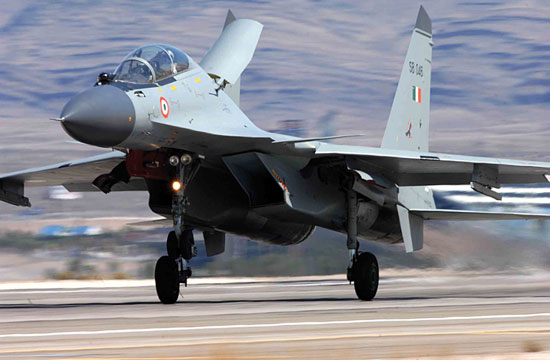
Artillery and anti-aircraft guns as well as many other crucial deficiencies of the Army have not been made good even 10 years after Kargil. In many cases, acquisition is scuttled despite the Army’s approval, given after successful trials. Despite the assurances mentioned, there seems to be no doubt that from somewhere or the other, powerful pressure is being exerted to ensure that India ’s armed forces are not effectively re-equipped. The Air Force needs more aircraft; the needs of the Navy and Coast Guard as well as other organizations involved in coastal security are multifarious and urgent.