

























gfiles: How do you describe your Ministry and what is the present scenario in the textile sector?
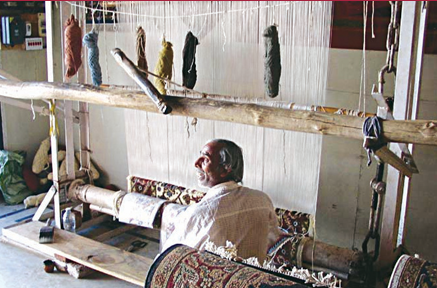
Rita Menon: In February 2009, when I took over, there was some gloom in the textile industry; 2008 and 2009 have been somewhat bad, compared to earlier years. And the first few months of 2009-10 also were not so great. The greatest visibility was in the organized mill sectors because they are looking to policy and looking to support to bring in change faster than the other sectors. At the same time, a handicraft has also taken a dip because with the recession in the US starting in 2007-08, export of hand-knotted carpets has taken a plunge. The challenge was to restore confidence, act together on how we could get the sector back to the 10-12 per cent growth rate of previous years. It is a complex Ministry because it deals with the whole range of fibres apart from cotton.
We have a big arena for synthetic textiles, notably in Maharashtra and Surat. Then there is this question of fibres and how we reconcile the needs of the fibres industry and jute. Jute is a major issue because of the Jute Technology Mission where we are dealing with the whole range of fabrics, jute, silk, wool. This is also the sole Ministry with the responsibility for promoting handicrafts and handlooms – a big task. Then we do a lot of referred development and education through the institutes of handloom technology, the Weavers Service Centres, Common Facility Centre and the university in Coimbatore, the eight Textile Research Associations and National Institute of Fashion Technology (NIFT). New NIFTs are coming up and new points like technical textiles are coming up. So, it is a vast Ministry and extremely exciting canvas which touches the life of every Indian.
gfiles: You have varied experience at the State and Centre. Apart from field and corporate work, you have held sensitive jobs at the Union Ministries ranging from Defence, Home, Finance to Health and Family Welfare. What is the most common and challenging administrative problem you have faced?
RM: On a macro organizational level, turning around UP’s Finance Corporation was a huge challenge. So was drawing new investment into Greater Noida for industries in UP. In Defence, there was a challenge: to get orders for these companies and to see they were executed. Sometimes, even to stop imports or calibrate imports. I’ve fallen in love with each assignment. In Finance, I found a very regulatory department like expenditure highly exciting.
gfiles: How does the current assignment differ?
RM: It’s partially regulatory because we have two sorts of policy – fiscal intervention and interventions relating to foreign trade. It involves a lot of implementation because of NTC’s turnaround stories.
For driving the NIFTs, Textile Research Associations and Sardar Patel Institute of Textile Management, we’ve got to be very active in terms of vision and foresight. So it is part regulatory, part facilitator, part implementer, part hand-holding and a great deal of monitoring.
gfiles: A jumbo 72-strong Working Group under your chairpersonship is formulating the National Fibre Policy. Has the group completed its report and what are its main recommendations?
RM: Not yet. There is manmade fibre, natural fibre, banana, pineapple, pulp, wheat from which the fibre has been extracted. Then we have cotton and silk. In silk there are many conflicting stories. The South Indian Karnataka belt wants a particular dispensation and the Banarasi belt wants some other particular dispensation. The area under silk has gone down because of infrastructure reasons. There are different groups for technical textile, for apparel, retail garment, jute, silk, pulp and cotton industry. That’s why there are a lot of members, we’ve tried to make a broad base so that the stakeholders from the industry have their free say.
gfiles: A month before the constitution of this working group, National Manufacturing Competitiveness Council (NMCC) had re-invited bids for undertaking a study to evolve a Comprehensive Fibre Policy for the textiles and garments sector of India. Why this overlap in policy formulation?
RM: There is no overlap. My predecessor had perhaps requested the NMCC to formulate the fibre policy. The Minister and I felt that the massive details relating to the sector were really with us along with very much greater clarity about who the stakeholders are so NMCC’s V Govindarajan was very happy to pass on whatever they had done to us. They were rather happy with the idea of Ministry of Textiles doing it because they don’t have much staff and further it would have meant the double effort of calling us and calling stakeholders and getting their act together. So, it was actually by mutual consent and it is a very natural responsibility of the Ministry of Textiles.
gfiles: Are you working towards tax and regulatory parity for all natural and manmade fibres? If so, what is the time-frame for unleashing full and fair competition among all fibres? Will the proposed policy just be fibre-centric or a comprehensive textiles policy that will replace the one announced in 2000?
RM: This is a difficult question. The ideal would be a fibre-neutral policy. I feel that the imperatives of taxes are different and along the line chemicals become polymer, polymers become fibre, yarn becomes fibre, fibre becomes a weave, weave becomes cloth, cloth becomes a processed cloth, processed cloth becomes a garment, garments are worn. There have to be downstream effects of basic indirect taxes. With everyone being on a par, the needs of the revenue department relating to custom and excise at the source itself really come in the way of reducing the duties along the way. Because duty has to be carried and when you export, it has to be minus the baggage.
gfiles: Will it ever be possible to have a level playing field for all segments in this faction-ridden textiles sector?
RM: I don’t think it’s faction-ridden. It is really a case of where the market lies. For example, jute has been perceived in everybody’s mind as an unromantic fibre. But through our jute diversification programmes, we are bringing it into the drawing rooms. We are enabling Self Help Groups to make diversified products which are entering living rooms and bedrooms. Saris are made with mixtures of jute, there is fabric made with jute and there are home textiles being converted by jute. So it’s not faction-ridden. It’s a question of prioritization. Dayanidhi Maran has brought all the segments covered by the Ministry of Textiles into the looking glass. We are supporting handlooms and handicrafts as much as we are supporting jute, wool and silk. We certainly know that the textile organized sector is a major revenue earner, and major export revenue earner. We would like to give great emphasis on all aspects. We also know that NIFT has brand acuity. We have to make the NIFTs grow and proliferate in every state. Everybody can coexist happily. The focused product scheme of the foreign trade policy was never mentioned for handicrafts and handlooms, and jute. For the first time, in foreign trade of 2009-14, they’ve been included. Slowly, a lot of the segments of the textiles industry are coming under not protection but under growth perception. I think it’ll continue. I see a great future for this Ministry.
gfiles: How do you reconcile the ever-conflicting interests of different segments, say, cotton exporters versus cotton yarn producers and between synthetic fibre producers and textiles mills?
RM: By discussion and understanding each other’s problems. Positioning the difficulties as assessed for their moderation. I’ve been in dialogue with every council very actively. I think that has brought about a lot of trust. The deliberations of the national fibre policy are meant to bring forth a common document on what the textile Ministry perceives as the needs and perceptions of each of the segments of the industry which will be open to public scrutiny and which will also be seen by the State governments. So that there is an adequate amount of education on what we feel.
gfiles: On the issue of cotton exports, the Confederation of Indian Textile Industry (CITI) has been making noises for quite some time. On November 3, 2009 it demanded suspension of cotton exports.
RM: There is some panic this year compared to last year because international prices for cotton have increased steadily and sharply. Last year, because of recession abroad and virtually no recession here because the domestic industry supported the textile industry to a great extent, it could be mitigated. Along with that, there were floods here in 2009. The demand for cotton in the international world has grown and thus the international price has gone up which is why the domestic prices have also gone up. There was apprehension the crop would come down a lot this year. But it is going to be 305 lakh bales. Last year, it was 280 lakh bales. We are in a secure position relating to cotton supplies. There are apprehensions about trading in cotton, that good cottons will go overseas. But I think the numbers show that we are all right.
gfiles: Are you allowing cotton export?
RM: It’s a free trade. There are no barriers and the Minister has been very clear in telling the councils there is no tampering with the policy at present. We are in a comfortable cotton crop. The arrivals are as per the schedules and there is no need for the industry to panic because the amount they can consume and utilize is already with us.
gfiles: How much for domestic utilization?
RM: The government’s stand is very clear. It’s a free market price which is determined by domestic arrivals, prices in the mandis, prices in the international markets and the collective prices of all the international markets which come by about one o’clock in the afternoon. It’s a question of demand and supply. The government has nothing much to do with the pricing. There has been no regulation of the cotton prices. So some sections of the industry are nervous and they bring their concerns to the Minister, who is very accessible. This is all a dialogue and there is no change in the policy.
gfiles: What has been the impact of two fiscal stimuli on the textiles sector announced in 2008-09 and of the package under the 2009-10 Budget? Has the industry come back to the earlier growth momentum?
RM: It has. The September-end figures have been very heartening. The industry has bounced back. The government helped with 2 per cent interest subvention. There was continuation of the rate on the duty entitlement passbook. We had Technology Upgradation Fund Scheme (TUFS) which we are going to cover later in the interview. Here is what we did to help the industry. The industry had a lot of TUF demand. TUFS carry on year on year for eight years. I purchase machinery, I get the margin money or capital subsidy as the case may be and interest subvention of 5 or 4 per cent goes on over eight years through my repayment pattern. Because there were unmade demands, thanks to non-provisioning of the finances, we were happy that we got extra allocation for TUFS this year. From an average allocation of Rs 2,500 crore, we were able to get Rs 4,500 crore. And about extra Rs 2000 crore for TUFS. It was released to the industry within 72 hours. It’s basically driven by the commercial banks. The commercial bank appraises the scheme and sees if the internal IRR is adequate and sees the credit worthiness of the company. They take a call about financing them for the investment. Then we come in because we give the subvention. We have to make the money available to commercial banks or the lending agency. We don’t handle the money.
gfiles: Both the Ministry and CITI are broadly targeting 16 per cent growth per annum to take the textiles sector to $115 billion from $52 billion in 2006. The objective is to increase India’s share in the global exports market to 7 per cent from 4 per cent during this period. Are we on track and will these targets be surpassed?
RM: As far as the export targets are concerned, certainly we can. As far as textile growth percentage is concerned, I’m confident that with the investments taking place and which will continue to take place, and the interest generated for foreign direct investment, we certainly will be able to do it. A calibrated, concerted and focused effort has begun only now. In October-November 2009, the Minister led a high-level delegation to Switzerland, Italy and Turkey, which are the three focus points to begin with other than France, Germany and US. He led a delegation of a few Ministry people, 26-28 top-line businessmen. There was great respect for the India story, for what the Minister had to say and the businessmen who came to hear him were about 170-75 in Italy and in Turkey. Switzerland, which is an area for capital goods, basically a machine-making area, had about 55-60 businessmen hearing him with attention. Looking at the follow-up of these initiatives, there will be a lot of partnerships, mergers and a lot of people might set up shop in India. It is not an overnight or one-offer fair but trends are very positive.
gfiles: The government has recently announced a policy to list all PSUs that have been earning profits during the last three years in a row. Is there any PSU under the Textiles Ministry that meets this criterion?
RM: The National Handloom Development Corporation, which is basically the implementer for the Mill Gate Price Scheme and Yarn Depot Scheme, has been making profits. Cotton Corporation of India has been making profits and has been declaring dividends over the past few years. I don’t think that in the Ministry of Textiles, PSUs are on the radar as yet. When they come we’ll obviously go along with government policy but I’ve not yet had any kind of communication asking for these details about any company. Besides, their profits are not so large. After all, they are basically trading or implementing agencies. Central Cottage Industries Corporation and HSGC are hardly that strong.
gfiles: Have you given any thought to asking NTC to list its 19 joint ventures on the stock exchanges with the ultimate objective of unlocking the value of its investments?
RM: The joint ventures are very fresh and very new. They are only in the last fiscal. The question of listing them doesn’t arise. We don’t have 19 joint ventures, we have five plus 11 – 11 have not yet taken off and five that have been entered into are very fresh. They are still getting their act together on getting the machinery and the directions. Listing them at the moment is out of the question but yes, as soon as the NTC turnaround companies are of stable vintage. They are doing well and operating profits. NTC is getting no support for wage assistance in the fiscal year 2009-10. The moment they turn around, we certainly will think of listing them. Because they do have lots of assets.
gfiles: The Ministry has achieved a silent revolution in restructuring of a mega PSU (NTC) by closing 76 units out of 119, giving a golden handshake to 60,384 employees out of 78,000 employees in 2000-2001, by transforming 19 units into joint ventures and putting in place a land sale-based self-financing revival plan for the company. Can the NTC restructuring model be applied in other over-manned and loss-incurring PSUs such as Air India?
RM: I don’t know if a company like Air India can be put on a par with NTC. If you recall, NTC has something like 122 mills. We had a tradition of manufacturing and we had the tradition of yarn supply. So we are not a service industry, we are a service industry to the extent that we supply yarn to the textile manufacturers. And NTC yarn is respected. So we are certainly not like Air India. This pattern could not be matched by Air India because there is no manufacturing. A service industry has very strict criteria and is very susceptible to global and national trends whereas yarn in any case is a raw product or raw material for a very big industry. Certainly the example of NTC and the success we’ve achieved could be taken up by some State textile sector companies because all States have set up textile units in the past. In UP, State textile corporations were running at one time and producing a lot of yarn.
gfiles: What’s the formula to reinvent and rejuvenate all these corporations?
RM: The formula is, one, passion and hard work; two, government support by way of waiver of the large interest burden, accumulated losses and Cabinet decisions to that effect; three, fast-track mechanism which the Cabinet orders through a Group of Ministers that meet very frequently to monitor the progress of these mills; four, dedication by the NTC family.
The government did not give us any money for the rejuvenation. The government gave permission to NTC to use its surplus assets, unlock them and utilize in the rejuvenation formula. So that’s really how the NTC story unfolded. NTC cleared the dues of its employees through VRS very fairly. We don’t have too many court cases nor do we have any stays by the Supreme or High Courts. The pain of a labourer who is laid off through a settlement package is something you and I can’t understand. He can always be a deterrent to the whole process.
gfiles: An official release in September 2009 quoted you as saying that the government is considering providing a regulatory framework to achieve 25 per cent growth per annum of technical textiles against business-as-usual growth of 11 per cent. Please enlighten us on this emerging area.
RM: Technical textiles is a very new area. We had positioned a technology mission to the Finance Minister in this Budget. But he was very right in saying that we should do some homework on the matter and we could take it up in the next Budget. We have to identify four areas: 1. Medical textiles like heart valves, cottons, bandages, gloves, gowns; 2. Agri-textile i.e. by using greenhouses for achieving higher productivity and higher yields from more seasons; 3. Security or protective technical textile like bulletproof jackets, firemen’s outfits, anti-fire kits and all those things specially for the military, paramilitary and security forces; 4. Infrastructure technology which means using technical textile to make roads better, the Prime Minister’s Gram Sadak Yojna, utilizing them in brick ticket projects, where we know there is investment. We have identified four textiles research associations as centres of excellence and given them funds for research and laboratory facilities.
We are happy that the Navy and CRPF have accepted and notified our standards. So we now see it as the next leg of the journey and this is growth of consumption, not growth of technical textiles. We are consuming only 4 per cent technical textiles in India though it’s a huge market. The developed world is using 25 per cent of its total technical textiles. We want to reach this figure and what we pitch is roughly 16 per cent. We are moving in that direction. The fibre policy encompasses the way ahead for technical textiles.
gfiles: The farmer growing cotton in the field – how is he being benefited?
RM: The minimum support price for the crop last year, which ended in October 2009, was 45 per cent higher than the last year’s price.
gfiles: But input has also increased. What is new in this?
RM: Have paddy and wheat prices increased in this ratio? The last year cotton was grown on 94.06 lakh hectares, now on 102 lakh hectares. If it is a loss-making proposition, who will grow cotton?
(with inputs from Naresh Minocha)
Anil Tyagi is a distinguished Indian journalist. An alumnus of the Delhi School of Economics (M.Com) and the University of Delhi (LL.B), he brings decades of rich experience to journalism. He presently serves as Editor of gfiles.