






















Both sides were so keen to show a negotiated end to the impasse that they forgot some elementary aspects. Will India pay the price?

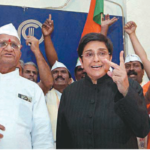
The entire political system submitted to blackmail by an individual, who enjoyed a high reputation as an ardent follower of Mahatma Gandhi, because he brandished a threat to his own life unless his proposal for a legal body to probe the corruption of high office-holders in the system of governance was accepted. His vision of eradicating corruption from the political system, though laudatory, does not fit into the Constitutional scheme. But he was able to arouse passion and gain momentum because a large section of the young population fears that, unless the world is shown that India is sincere about curbing its rampant corruption, their careers will be in jeopardy. The media followed the rising public unrest in support of the cause without examining the implications of the unreasonable demand.
Anna Hazare believes that a legal body with powers to inflict stringent punishment is the solution to increasing corruption within the political system. The concept he envisions is apparently not in sync with the existing judicial system though the proposed body would encompass three functions rolled into a single authority. The individual holding the office of the Jan Lokpal would be an investigator with the authority to take up cases on his own and without needing sanction from any other authority to prosecute and deliver his verdict of stringent punishment for the guilty. Unless the body is kept out of the purview of the existing judicial system, it would be merely a decorative piece for public consumption without real authority over and above the subordinate court subject to review by the Supreme Court. That would render its independence futile. If it is indeed established as independent of the system, it will be a body created without Constitutional sanction. In this case, the Supreme Court might not find it acceptable, even if it was willing to go along with the current public sentiment, as it would militate against the concept of natural justice. Legal pundits may be able to justify the scheme in highly technical legal terms but it would not gel in public perception.
The several scandals involving huge sums of money in recent months have naturally disturbed many. The delay in follow-up action in a few cases was even more disconcerting and spurred Hazare to undertake a fast unto death in the national capital. People were virtually waiting in disgust at the growing corruption for someone to come with a blazing torch so that they could identify themselves with him. Hazare became a hero not only for socialites but several movie personalities who sent messages of support though not one declared that he or she would give up dealing in unaccounted for cash. It is a known fact that most business in the movie world is done in large part in unaccounted for money. One can only conclude that the extent of revulsion over corruption was such as to make even them come forth to support the cause.
The campaign was against the political class as a whole – something the opposition, elated at the discomfiture of the Congress in general and of the government in particular, failed to realize. Hazare’s self-appointed lieutenants at Jantar Mantar did not allow politicians access to him. They did not want any association with politicians.
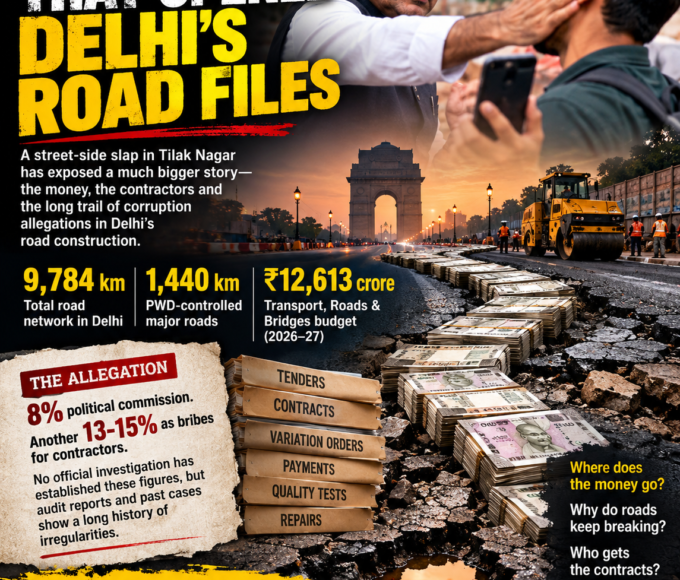
There was no expression of concern for the spread of corruption at lower levels of society. Everyone seeking to engage in honest work at the roadside, such as a cobbler, shoeshine boy, tailor, mechanic, vegetable hawker, or the vendor of food, soft drinks, juice or even pan at a roadside joint has to pay regular amounts to both the beat constable and the personnel from the civic licensing department. Underhand payment is required even to get a voter’s identity card, which is a basic right of every adult citizen. Who will campaign against the low-level corruption that directly affects the lives of the poor?

Next, the negotiations that were launched were between two unequal sides. The Hazare supporters, elated by the evident momentum of public support, particularly from the upper middle class, and the government that wilted under the pressure of the rising discontent were both disconnected from the harsh realities. They did not dwell on the basic issue of whether any piece of legislation or legal body empowered to mete out stringent punishment was capable of rooting out corruption. The concept of the body is merely a punitive measure, not a preventive one.
Legislation cannot eradicate corruption in any society unless ethics and morality are inborn and inherent. For 30 millennia, religion has strived to rationalize human nature to eliminate avarice and desire for self-aggrandizement at any cost. Hazare and his supporters hope to cleanse the human mind with the threat of stringent punishment. But ethics and morality as well as compassion cannot be instilled through legislation or even threat of punishment.
However, some holes can be plugged by improving the administrative structure as well as by making changes in the basic law-making process. As it is, if the law tries to curb the human urge for creativity, people will find ways to get around such prohibition. In fact, prohibitions imposed on private participation in the nation’s economic activities without valid permits and licences were mainly responsible for the germination of corruption in our society. The British had vested interests in preventing the growth of Indian creativity. But the rulers who took over did not behave differently because of their own preferences and prejudices. They wanted the public sector to be at a commanding height but without a precautionary mechanism to prevent exploitation, believing that those put in authority would behave differently than private individuals. Such pious hopes were dashed in less than two Five Year Plans.
To overcome the slow pace of growth, India has thrown open its gates to market forces. But no market force has ever been known to have accepted social responsibility for the people among whom they operate. Even the US has not been spared, though it is where the concept of market forces originated after President Woodrow Wilson propagated the free market principle at the Paris peace conference in 1919.
The negotiators at Jantar Mantar were bogged down by the idea of achieving results. The government wanted the public unrest to end while the campaigners wanted an immediate kill and believed that the inclusion of five men of their choice on the panel for drafting the new piece of legislation amounted to a grand victory. They achieved their aim but ended up exposing their limited thinking. They could not find a single woman to sit on the proposed panel. It’s as if women are unaffected by corruption. And, they could not find a single academician or reputed legal mind. It settled on a father and son lawyer duo. However, a man whose assets beyond measure have caused controversy could publicly challenge the composition of the panel because he had stood by the agitating Gandhian.
Hazare now wants to turn the panel into a religious icon by insisting on transparency in the framing of the law and putting this on public display through videography of the sittings. In a way, it would be the ideal show for the world to watch. But can the panel strike terror in the hearts of those holding office or those seeking illegitimate favours? Will it lead to their developing the consciousness and conscience to deter them from indulging in corruption? Or would it merely lead to corruption becoming even more exacting in terms of cost due to the risks involved? Human tendencies are hard to change. Hazare may well have to return and threaten his own life because his ideal has failed to deliver the desired result.
There are many who argue that someone has to start somewhere to end corruption. Hazare took up the cudgels and began marching to lead the nation. But what about the possibility that his march could end in a cul-de-sac? Is India in for yet another great disappointment?