


























Accountability has dislodged sectarianism – that is the message behind the Congress revival in UP
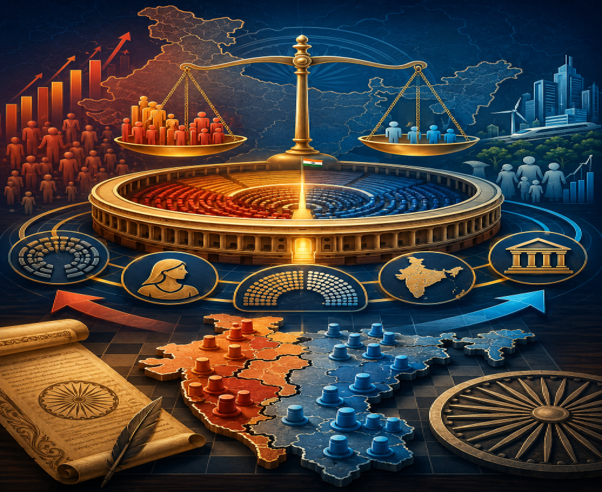
During the past two decades, the Congress, which had always had a strong base in Uttar Pradesh, India’s most populous state which contributes 80 members to the Lok Sabha, found its influence waning in both urban and rural areas. The political arena had been usurped by casteist and communal elements and the fragmentation percolated to all walks of life. Even the media could not escape it. The political bosses did not hesitate in branding even journalists with their respective caste or community. On its part, the media neither resisted nor abhorred these communal motifs. Few believed that the Congress, considered a party of gentlemen, would ever occupy centrestage again, especially in UP.
Now, post-election, the question is whether this astonishing revival of the Congress is temporary. Will the party retain its preeminence in the country’s politics?
In the 1960s and ’70s, Lucknow was considered the second most important city or political capital of India after Delhi. It was the era of Ram Manohar Lohia and Raj Narain. It was the cradle of the socialist movement. In neighbouring Bihar, Jayaprakash Narayan had launched his famous JP movement, sampoorna kranti (total revolution), for cleansing society of rampant corruption. The word “socialist” was respectable, symbolizing the aspirations of the modern forward-looking generation.
Another feature of those times was the evolution of a narrow political interpretation of the santana dharam or Hinduism by the Jan Sangh, predecessor of the Bharatiya Janata Party (BJP). The Jan Sangh thrived on sometimes accurate but more often imagined perceptions regarding pro-Muslim policies of the ruling Congress. Refugees from Pakistan, who had suffered immensely during the Partition in 1947, were in the forefront of the Jan Sangh. Its ideological base was built on the philosophy of the Rashtriya Swayamsewak Sangh (RSS). Since the RSS believed Mahatma Gandhi and the Congress pursued a policy of Muslim appeasement, it boosted this new political outfit. Both the RSS and Jan Sangh received a much-needed political boost and a new identity during their participation in the JP movement.
Meanwhile, the anti-incumbency factor was quietly eating into the broad support base of the Congress. It also lost its all-encompassing constituency, receiving the first blow when party strongman Charan Singh defected on April 1, 1967. It was the beginning of nearly 50 years of caste politics in northern India. In his bid to retain power, he sought support from the socialists. Although Lohia believed in an egalitarian social order, under his social umbrella the middle caste became more and more organized. Charan Singh had scant regard for socialists, but he provided an outlet to get political power to the socialists. Within the Congress, the final split took place in 1969. The old guard was ultimately sidelined. The Congress faction under Indira Gandhi became the main Congress platform.
The country experienced the first non-Congress government under the Janata Party in 1977. The Janata Party was a patchwork of disparate political elements comprising socialist factions, the Jan Sangh and Charan Singh’s outfit, the Bharatiya Lok Dal. Morarji Desai, a veteran Congressman dumped with the old guard, headed the government. Chandra Shekhar, a well-known socialist, was appointed president of the Janata Party.
It may not readily appear so but most people in India appreciate fair play and accountability in governance. Under British rule, the rule of law became a pivotal point of the administration. Even during the Mughal period, the rulers were known for their sense of justice. The psyche of the ordinary voter continues to appreciate professional governance. Misrule is considered a passing phase of bad luck.
Charan Singh, known for his honesty and integrity, had a massive support base among the educated urban middle classes. His decline began when he started indulging in caste politics. Mulayam Singh Yadav, a veteran socialist, indulged in promoting his caste. Even Chandra Shekhar became a thakur (Kshatriya) in his constituency of Ballia, in eastern UP.
Caste politics peaked when Kanshi Ram floated the Bahujan Samaj Party (BSP) in the 1980s. The Scheduled Castes, the political backbone of the Congress, shifted to this new party. The Muslims were alienated from the Congress following the destruction of the Babri Masjid at Ayodhya in Faizabad, about 110 km from Lucknow. The BJP was in power in UP under Chief Minister Kalyan Singh but it is widely believed that Congress Prime Minister PV Narasimha Rao did little to prevent the demolition.
Thus the social base of the Congress eroded, with the upper castes rallying around the BJP, the middle caste and Muslims drifting to Mulayam Singh Yadav’s Samajwadi Party, and the Scheduled Castes deriving their own political outfit in the BSP.
Education and information technology has changed the vision of ordinary voters. Also, with the deployment of paramilitary Central forces, voters cannot be intimidated
Vis-à-vis the results of Election 2009, both the media and political analysts, prisoners of their own set notions about caste politics, did not realize that education and information technology has changed the vision of ordinary voters. Also, with the deployment of paramilitary Central forces, voters cannot be intimidated. The defeat of mafia dons or candidates with criminal backgrounds is a clear message.
Mayawati’s BSP has failed because her government could not offer a responsible, clear system of administration. She had fielded candidates with shady backgrounds. Her party managers based their strategy on caste, forgetting that the ordinary voter now wants candidates to be accountable and none can claim a political position because of calculations based on social permutations and combinations.
Both the Congress and the BJP have the onus of burying deadwood. The former has to consign its allies in Lalu Prasad Yadav and Ram Vilas Paswan to history, the latter has to jettison its old guard. Our political Gen Next will chart the course. For the Left and the socialists, the message is that the era of rhetoric is over. Caste and communal politics have lost their steam, but today’s voter is more demanding. Accountability is in, corruption is out.


