
























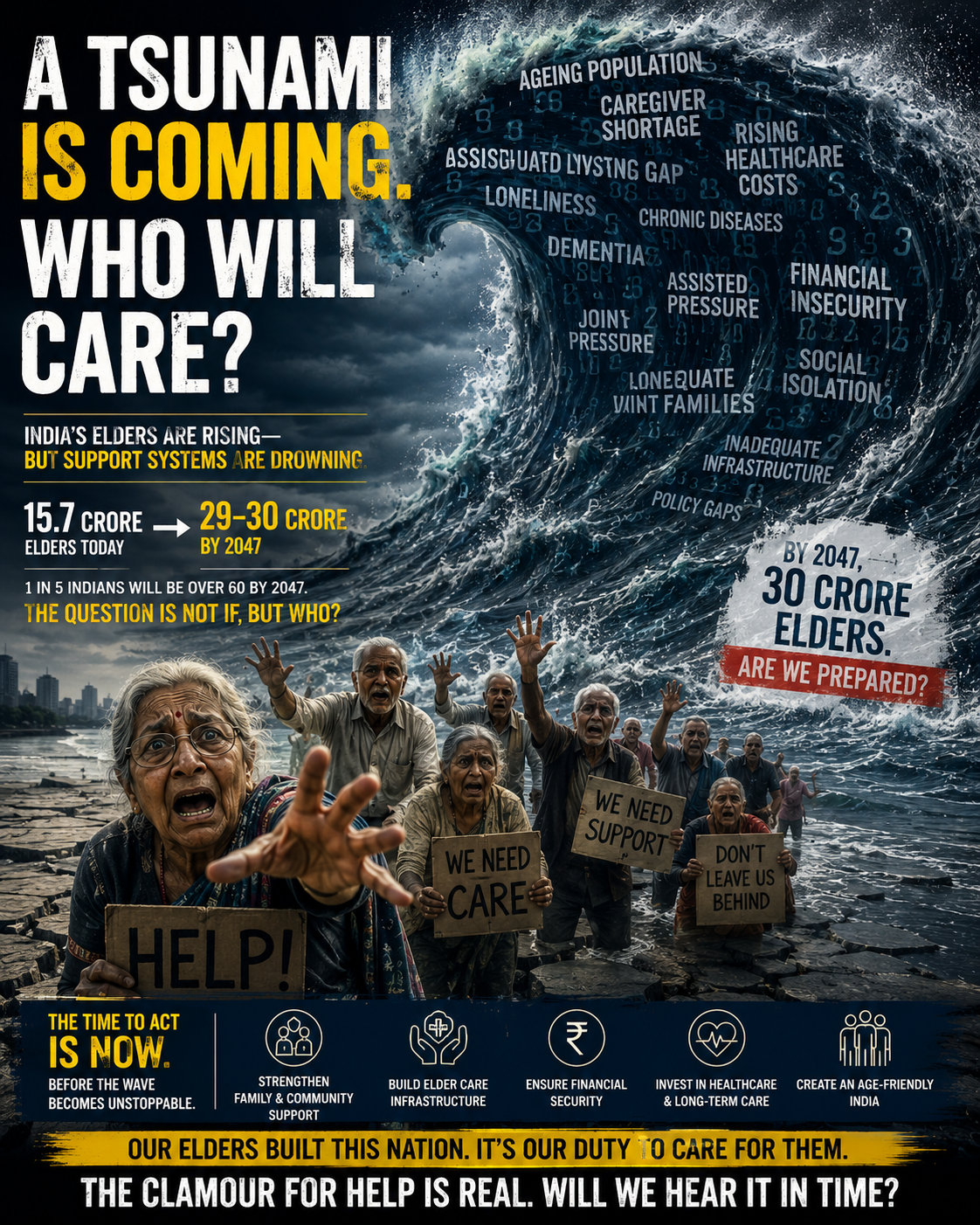
India is on the verge of a historic demographic transformation. While the country currently has about 15.7 crore people aged 60 and above, this number is projected to nearly double to around 29–30 crore by 2047, when India marks 100 years of independence. In other words, nearly one in every five Indians could be a senior citizen. This rapid ageing of the population raises a critical question that receives far less attention than jobs, education, or economic growth: who will care for India’s elders? Traditional family-based support systems are weakening due to smaller families, urbanization, migration, and changing social structures. At the same time, demand for healthcare, long-term care, assisted living, pensions, home nursing, and social support will rise sharply. The challenge is not merely demographic but social, economic, and moral. As India prepares for its centenary, creating a sustainable elder-care ecosystem may become one of the nation’s most important public policy priorities.
During my tenure as an IAS officer in Haryana, for about fifteen years I used to regularly visit an elderly couple in Chandigarh who lived all alone because their children were abroad. I used to share stories and incidents with them, and listen to their concerns, joys and sorrows.
Inspired by the time I spent with them, I studied ‘Long Term Elderly Care in India’ for fourteen years. I submitted my thesis to the Indian Institute of Technology, Delhi, and was awarded a PhD degree on “Managing and Planning of Long-Term Care of Elderly”.
I interviewed 321 elderly persons and 307 caregivers personally, and also studied Elderly Care in Japan, Europe, USA, as well as at the International Institute of Ageing in Malta.
While studying the conditions of elderly people in Japan, what struck me was the amount of relevant data available. In India, the central government and various state governments too need to collect, collate, and analyse data in order to formulate various schemes for the welfare of the elderly.
In Japan, 26.5% of men and 25.4% of women in the marriageable age group of 18-34 years prefer to remain single. Only 46.4% of men and women in their 30s are hopeful of getting married.
This is a very significant change from only 2.3% of men and 4.1% of women in the mid 1980s, just before the onset of the economic bubble. The number of babies born in Japan in 2021 fell by 29,231, or 3.5%, from the previous year to a record low of 811,604. The number of marriages in 2021 fell by 24,391 to 501,116, the lowest figure since the end of the second world war.
The reasons for choosing to remain single for Japanese women are loss of freedom, financial burdens, housework, and the long working hours in Japan that lead to loss of work-life-balance.
Japan is over 91% urbanised, and a range of economic and cultural factors contributed to the decline in childbirth during the late 20th century, such as a) later and fewer marriages, b) higher education, c) urbanization, d) increase in nuclear family households, e) poor work-life balance, f) increased participation of women in the workforce, g) a decline in wages and increase in temporary employment ( almost 40%) rather than lifetime employment, h) small living spaces and i) the high cost of raising a child.
Similar parameters must be studied for India too in order to formulate central and state government schemes for the welfare of elderly persons.
A major cause of concern nowadays is that young people do not stay in the same premises as their elderly relatives. There have been numerous instances of elderly people passing away, and being discovered only after foul smell started emanating from their houses.
During my studies in Europe of elderly people, I came across several instances. In Croatia, a woman died in her Zagreb apartment, and her body was left completely undisturbed for 42 years before police discovered it in 2008. In Rotterdam, a 74-year-old woman lay dead in her apartment for nearly a decade. Because she was not officially registered as deceased, her pension and bills were paid automatically every month, allowing her absence to go completely unnoticed by authorities and neighbours.
This set my mind rolling about the future of elderly people in India, more so as longevity increases and children move out for work. Currently Remaining Life Expectancy in India for someone who has reached the age of 60 years is 19.6 years for Females and 17.3 years for Males (Overall 18.4 Years after 60 years). Life Expectancy varies among States and Rural/Urban locales, and is heavily dependent on the medical facilities available.
The question that arises is whether people must just live longer or have an active healthy lifestyle in their old age.
One key starting point is how the long-term care of bedridden elderly people , who are around 12% of all elderly persons, (65+ years), will be managed in India.
First we have to get the numbers right to identify the size of the problem. Also, whether the elderly person is the head of the household, stays alone, or with someone else, is very material.
The government of India, in its elaborate, nationwide door to door census exercise looks at all these issues. The age-wise data of population, along with sizes of households, is available from the census office even down to the town and block levels.
When it looks at disability, even age related disability can be accounted for if the census enumerators are instructed and sensitised properly. At the state government levels, this data would have to be disaggregated ward wise so that Healthy Ageing action plans can be formulated for each rural and urban ward.
The Census statistics can also reveal the occupations of the elderly population, and whether they are financially dependent, or independent financially, as Heads of Households.
The number of existing Old Age Homes / Day-Care Centres is something that needs to be counted. But this can be done only if we ask at the time of House-listing whether the house is being used for Old Age Homes /Day-Care Centre purposes.
If some elderly person is unable to live at home, or is being abused, at present there is no data about the availability of any old age home nearby.
Also, the bed-ridden elderly / handicapped (divyangs) must be counted so that the demand for care infrastructure and care giving personnel can be estimated using Census or SRS data.
It is high time that a database of senior living facilities is generated and made accessible to persons in need. Community social workers and the police must also be made aware of such institutions.
Once we have accurate figures of the number of elderly persons, and their ailments, then the demand and supply of Long-Term Care infrastructure at each ward level needs to be estimated and arranged. Arrangements for providing care can be on hourly basis or day-long basis.
Appropriate action plans need to be formulated to train and certify professional caregivers as well as family caregivers. Recognition of Prior Learning (RPL) route can be used to certify those who already have experience of providing care.
Domestic Workers Skill Sector Council, Health Sector Skill Sector Council, and Beauty & Wellness Skill Council can run suitable courses.
Transgenders can be caregivers for both males as well as females, have huge employability, and could be a starting point of mobilisation for training.
G-RAM-G (earlier MGNREGA) / Construction Worker Cess / CSR Corporate Social Responsibility Funds can be used for mass scale training of caregivers.
Giving dual certificates to trained caregivers like General Duty Attendant / Home Health Aide, apart from Geriatric Caregiver / Care Companion also will ensure that they always have a job either as Caregiver or as an attendant at a Health facility.
India has a requirement of four crore caregiver jobs by 2047 and we must start working on that straight away using the RPL route.(Recognition of Prior Learning)
But the crucial question remains as to who will pay for the care? Approximately 40% to 50% of the elderly lack any source of regular personal income, with 70% being dependent upon their own children for living expenses.
The central government provides base monthly pensions of Rs 300 for those between 60 to 79 years, and Rs 500 per min for those above 80 years, and living below the poverty line (BPL) under the Indira Gandhi National Old Age Pension Scheme.
Most State Governments add to these pensions, to make it Rs 2000/- per month for instance in Kerala; 2,500 in Delhi, Rs 3,000/- in Haryana; Rs 2,316 in Telangana and Rs 1,500 in Punjab. States often have their own income and age criteria for eligibility to get the pension.
Furthermore, under Ayushman Bharat (AB PM-JAY), all senior citizens aged 70 and above receive free health coverage up to ₹5 Lakh per year, regardless of their income.
Earlier Senior Citizens (60 to 79 years old) used to have tax exemption if they had income upto ₹3 Lakh and Super Senior Citizens (80 years and older) had it upto ₹5 Lakh.
But now tax exemption is same for all, and income upto Rs 12 Lakh is tax free. But these amounts are not enough to fund the long-term care of elderly which, for individual attention costs at least Rs 15,000 to 20,000 per month.
Amongst the states, only Kerala gives a Caregiver allowance of Rs 1,000 per month for pensioners who are bed ridden, or who suffer from severe disabilities (75% or higher).
One option could be to have Day Care centres / clubs that will go a long way to reduce the demand for Long Term Care dependence.
We can have local Municipalities and Gram Panchayats start Day Care Centres / Clubs where elderly people can get together daily and spend positive time together. This will also help in fighting abuse of elderly persons.
For Day Care centres / clubs, the biggest problem faced would be finding real estate. For that we may earmark primary schools/ creches/ other offices becoming surplus for Day Care Centres / Old Age Homes.
A simpler option would be to refurbish old 40-feet shipping containers, make them air-conditioned and furnish them with folding beds and chairs, and provide facilities for games like carrom, chess, cards, table tennis, library, newspapers etc, and male and female toilets.
They can be picked up by E-rickshaws and dropped back each evening. Meals can be provided at subsidised rates.
A Physiotherapist / Rehabilitation Therapist / Yoga Trainer can attend to them during the day, and weekly a medical specialist can attend the OPD for specific complaints.
At a very old age maintaining one’s house becomes very difficult, especially, if the elderly person is living alone. Therefore, we can motivate Religious Organisations to start Old Age Homes and Day Care Centres.
As longevity increases we will have to plan for special hobbies and games for the elderly, trips, Elderly Meals Service, Digital Literacy campaigns, and coaching youngsters using the knowledge resources of the elderly.
Falls can be life threatening or severely reduce the independence of elderly persons. 35% of elderly individuals fall every year, and this percentage increases to 55% for those above 80. So it is crucial to make houses must be fall-proof.
In Europe many Governments give 5000 Euros to make the home Fall Safe once a person turns 60 years. In India, the central government must give an Income Tax rebate of Rs two lakhs to all elderly persons to make their homes fall-safe.
Market places and public spaces must be audited and certified as Elderly Friendly or at least as Fall-Safe.
We must make Mobile based Groups of Elderly with emergency button on their phones for calling a Helpline. In Europe if you have emergency you can call for help by pressing just one button your phone. They call back you and two of your relatives numbers given to them, and if necessary an ambulance comes to help you.
We can also start identifying and marking “Elderly Friendly Locations and Public Spaces” with the help of Local Bodies / Panchayats.
Similarly, Elderly friendly products and services can be given and “Elder Mark” so that they give a visible boost to the Silver Economy.
Given India’s excellent medical facilities, we can also develop Long Term Care Stations and Special residential areas where elderly persons from other nations can come and spend their old age with good care and services. Thus, India can become the Elderly Care-Capital of the World.
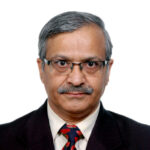
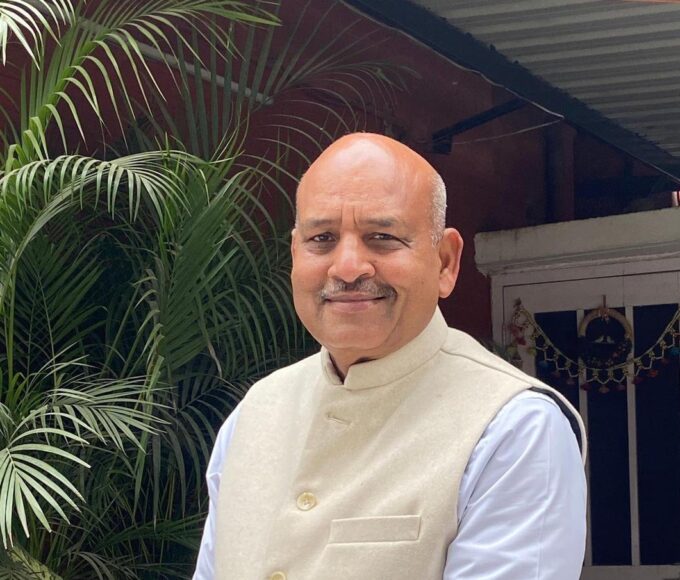
Sunil Gulati
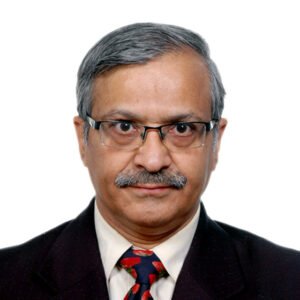
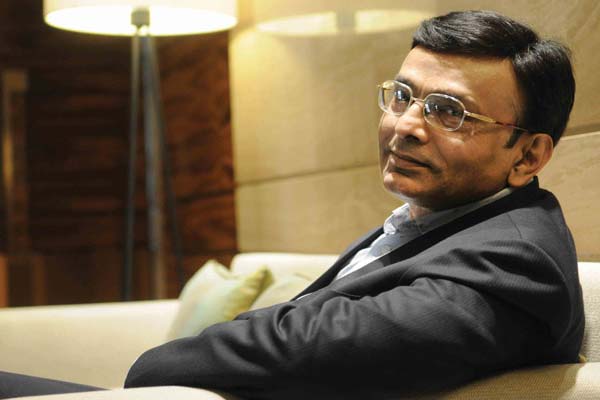
Sunil Kumar Gulati is a retired IAS officer of 1984 batch of Haryana cadre. He served as Special Chief Secretary of Haryana Government. He has a B.Tech degree in Mechanical Engineering from IIT Kanpur, an M.Tech in Systems and Management Studies from IIT Delhi, and an MBA from IIM Bangalore. A formally trained naturopath, he was awarded a Ph.D by IIT Delhi on “Managing and Planning of Long-Term Care of the Elderly”. He has authored fifteen books and 28 research papers.His wife is an internationally acclaimed artist. He may be contacted at SunilAOL@gmail.com +(91) 9650334888