




























A workshop on urban planning warns that the government must resist real estate lucre in the interest of the people
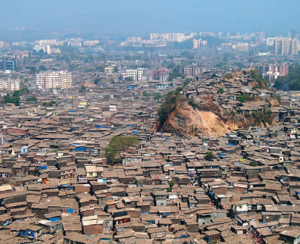
Everyone involved tends to pay lip service when it comes to implementing the provisions of the 74th Constitutional amendment relating to development plans for a city. Under the provisions, every citizen who has the right to vote also has the right to participate in formulating a city’s Development Plan (DP). At a recent workshop in Mumbai organised by Urban Design Research Institute (UDRI), Pankaj Joshi, the institute’s executive director, pointed to how this provision is ignored when DPs are made. “The Development Plan is first drawn up by the bureaucrat and then the people are invited to make their suggestions within two months on a plan that is going to have a long-term effect on their lives.” Joshi said priority is accorded to Housing, Health, Water and Sanitation, but not in the same measure to urban planning. He pointed out that in some of the most densely populated areas of south Mumbai like Bhendi Bazaar there is less than 2 sq m of space available per person. No thought is being given to development of the waterfront and open spaces.
Lashing out at the government’s construction of skywalks in Mumbai, Joshi remarked, “They come out of nowhere and seem to go nowhere. The general situation is that there are hardly any users for them.” He was also critical of the government’s cluster development policy, arguing that in many slum redevelopment projects there is hardly five feet of space between eight- or 10-storeyed buildings.
Dr Anita Patil-Deshmukh, executive director of Pukar, emphasized the link between urban planning and public health. She cited studies showing the high standard of hygiene and sanitation in properly planned areas.
Even planned cities like Navi Mumbai or Charkop in Mumbai have slum pockets. Yet, no solutions are on offer on putting an end to newer slums from coming up in cities. Shirish B Patel, who planned the city of Navi Mumbai, admitted that his team had never envisioned slums in a planned city. Sheela Patel, SPARC director, argued that unless and until cities plan for the poor, they are bound to encroach upon public space.
All the speakers pointed out that the slumdwellers are the service providers for building residents – milkmen, bakerywallahs, vegetable or fruit vendors, laundrywallahs and so on. So it is not possible to banish them from cities or prevent their migration. There is also the political angle to it, with outfits like the Maharashtra Navnirman Sena (MNS) agitating against migrants from outside the State.
Students from the Harvard School of Design also participated in the workshop and visited the Dharavi slum. Following the success of Slumdog Millionaire, slum tourism appears to have taken off among the urban rich. For the experts and the government, slums seem to be a potential draw of funds for urban renewal. Yet no one looked at how much progress had been achieved by the government’s flagship programme – the Jawaharlal Nehru National Urban Renewal Mission (JNNURM).
Another issue that was discussed was the problem of land availability in Mumbai, especially south Mumbai. Former Brihanmumbai Municipal Corporation Commissioner Jamshed Kanga joined Patel in saying the solution was to reclaim land from the sea.
Speaking on “Urban Form for Mumbai”, Vijay Sane of Surbana International Consultants criticized the government for failing to evolve a national policy on open spaces. Sane, who is assisting the Maharashtra government in redrawing Mumbai’s Development Plan, said there is just 1.5 sq ft of recreational space for people in the metropolis. He added that the government has made no attempts to properly list heritage structures within the Mumbai Metropolitan Region and many of them are being demolished.
He said the Rent Control Act and Cessed Building Act have compounded the problem of refurbishing heritage structures and redeveloping cessed buildings as owners are not bothered.
Patel remarked that the 4 Floor Space Index (FSI) in the Rs 15,000 crore Dharavi Redevelopment Project was “unworkable” and called the Mukesh Mehta plan for redevelopment of Asia’s largest slum “even worse”. Patel argued that the redevelopment project would actually add more slums and more people to the locality as free housing is being promised.
The chief planner of the Mumbai Metropolitan Region Development Authority (MMRDA), VK Phatak, said that until 1964 FSI had no real value. In 1995, it began to be treated as currency. “Money is now being made out of FSI. In 2008, the government came up with a new FSI norm of 1.33 for redevelopment. It meant that one had to pay more for the 0.33 extra FSI. Despite the court striking it down, the government reintroduced the concept by issuing a fresh ordinance,” he said. He added that FSI should not be treated as a substitute for money.
Qutub Mandviwala of the Saifee Burhani Charitable Trust said the organization has drawn up an ambitious redevelopment plan for about 16,000 people living on a 16.25-acre plot in Bhendi Bazaar.
The norm of seeking the consent of 70% of the slumdwellers in any rehabilitation scheme is carried out only where the land cost is high, said Simpreet Singh, RTI activist and founder of Ghar Bachao Ghar Andolan. He said the World Bank had stipulated participation of the people who are to be affected by the Mumbai Urban Transport Project (MUTP). Around 20,000 families have been displaced but no thought has been given to what kind of resettlement they want.
He said the people’s consent for the Metro Rail car shed project at Laljipada in Kandivali was a “sham”. Referring to the Metro Rail project, he said that the State government, instead of implementing the project under the provisions of the Indian Railways Act, chose to do it under the Tramway Act, 1860, to retain the ownership of the project. He pointed out that even the British government, while framing the Tramway Act, had called for taking note of the views of the people to be affected by the tram route.
More criticism of the government followed as Ravindra Punde, principal of the Academy of Architecture, argued that, by forwarding the Public-Private Partnership model, the government was actually trying to get rid of its own responsibilities. Amid all the talk of TDR and FSI, no thought was being given to building theatres, schools, hospitals, gardens and public places. “The state itself has now become the developer,” remarked Punde.
Several speakers harped on the importance of involving the people. Social activist and lawyer Gautam Patel pointed out that if people are left to themselves to take care of their own precincts, they tend to do a better job. The Development Plan should be broken down into smaller, ward-wise plans and people should be allowed to decide what they want.
And Ana Gelabert Sanchez, planning director of Miami city in the US, said the people were told to decide if they wanted the public space and where it should be located. If they wanted it in a certain part of the locality, they had to follow prescribed construction norms. By following them, they stood to get twice the size of open space they had got earlier.