


































Executive Summary
Compliance dashboards have become the default proof of good governance — yet the boards that trust them most are often the last to see trouble coming. Dashboards measure the presence of process, not the health of judgment. Every additional reporting layer built to reassure a board can, paradoxically, widen the gap between what it sees and what is actually happening inside the organization. This piece follows one composite boardroom — the managing director of an Indian public-sector bank, its board chair, and the branch credit officer whose early warning about a stressed loan never made it upstairs — built from governance patterns that repeat across regulated industries, to show exactly where that gap opens, and what boards can do to close it.
- The finding: more reporting architecture does not reliably produce more risk visibility — past a certain point, it produces less.
- The recommendation: treat every green metric as a claim to be tested, not a fact to be filed, and build a standing habit of asking what the dashboard cannot show.
- The call to action: at your next board meeting, ask the one question no dashboard can answer — what is the one risk we would only discover if something failed today?
The Screen That Lied
Anjali Rao had reviewed the numbers three times before the board meeting. Every panel on Bank of Meridian’s risk dashboard was green — asset quality at 97% standard, NPA ratio comfortably within threshold, audit findings closed on schedule. Nothing suggested trouble. Eleven weeks later, the bank disclosed that a large corporate loan had turned non-performing — the end point of a governance failure that had been building for over a year. It never once triggered a flag on Anjali’s screen. Anjali, Bank of Meridian, and the people in this story are a composite — but the dashboard is real in the sense that thousands of them look exactly like this every quarter. This is not a story about bad data. It is a story about a screen that was never built to hold the truth.
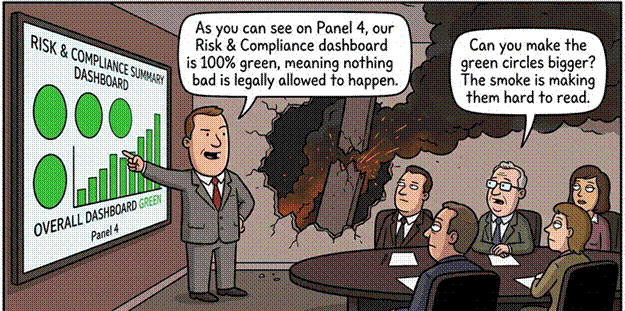
The illusion of control is comfortable. It is also, without anyone intending it, dangerous.
Garbage In, Green Out
A dashboard is a map of an organization, not the organization itself. Maps simplify by design — they select what matters and discard the rest. That is their value, and their danger. Anjali’s dashboard showed what had been measured, not what had been missed. Across 25 years advising boards in automotive retail and global logistics, I’ve watched capable executives make the same mistake Anjali made: mistaking a well-designed map for a complete one. A regional freight company I advised learned this when its ‘fully compliant’ vendor-safety score turned out to be tracking paperwork, not actual truck maintenance. The map always looks calmer than the territory — in a fleet, in a factory, or in a loan book.
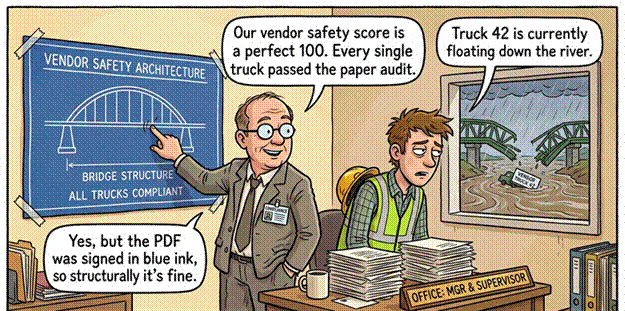
The map always looks calmer than the territory.
Lost in Translation: The Telephone Game
Three months before that board meeting, a branch credit officer named Vikram Nair flagged irregular cash-flow patterns in a large corporate borrower’s filings. His note went to the zonal office as two pages of specific concern. The zonal office summarized it into one line for the credit committee. The credit committee rolled it into a single ‘Standard Asset — Monitor’ rating for the quarterly report. By the time it reached Anjali’s dashboard, Vikram’s urgent observation had become a green cell beside the word ‘Standard.’ This is the telephone game, played with consequences. Every layer between the branch and the boardroom is a translation, and every translation loses something. Nobody lied. Everybody simplified. The result was indistinguishable from a lie.
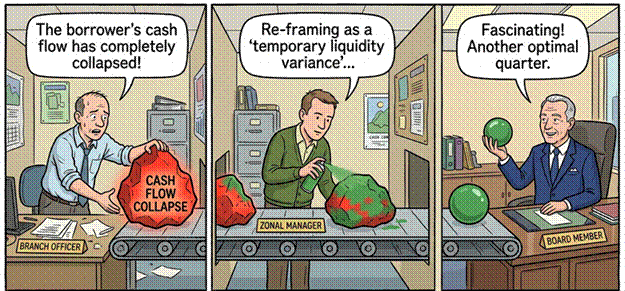
Every layer between the frontline and the boardroom is a translation. Translation always loses something.
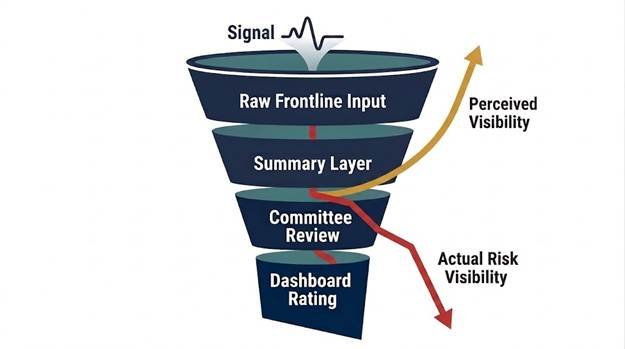
As reporting layers increase, boards typically feel more informed even as their actual line of sight narrows.
The Iceberg Beneath the Interface
Every dashboard metric is a symptom sitting above the surface. Underneath it is architecture — incentive structures, reporting relationships, unwritten rules about which bad news is safe to escalate. At Bank of Meridian, branch and zonal targets rewarded loan-book growth and clean classification ratios, not underlying credit quality — so Vikram’s zonal office resolved his flag the fastest way available: monitoring, not downgrading. Nobody built that incentive to hide risk. It quietly did anyway. Boards that manage symptoms treat every red flag as an isolated event to be resolved and closed. Boards that manage architecture ask why the same category of flag keeps resurfacing under a different name each quarter.
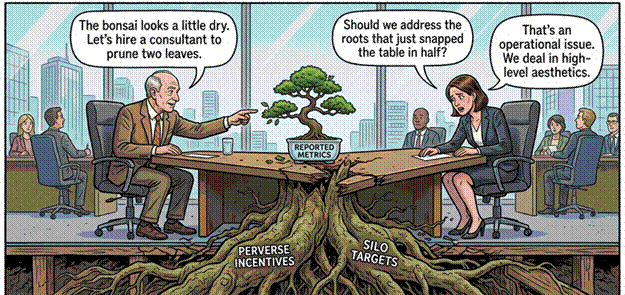
Boards that manage symptoms treat every red flag as an isolated event. Boards that manage architecture ask why the roots keep cracking the table.
Culture Eats Compliance for Breakfast
Bank of Meridian’s governance manual said exactly what every governance manual says: escalate early, report accurately, disclose promptly. Documents codify intent. Culture decides outcomes. Priya Kapoor, the bank’s board chair, would later admit the manual wasn’t wrong — it just wasn’t real. The culture Vikram actually navigated rewarded a clean classification over an honest one. I’ve advised a logistics firm where the opposite culture took hold: a warehouse lead was thanked publicly, in front of the whole regional team, for flagging a near-miss that made that month’s numbers look worse. Eighteen months later, that habit of thanking bad news caught a supply-chain problem that would have cost the company millions.
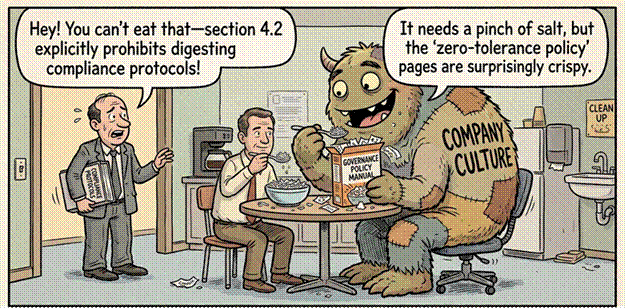
Documents codify intent. Culture decides outcomes.
No News Is Good News (For All the Wrong Reasons)
Ask any board what they want from their people: early warning. Ask Vikram what happened the one time he escalated loudly instead of quietly, and the answer is more instructive. He wrote directly to the credit risk committee about the borrower, bypassing the usual zonal channel, and was pulled aside afterward for ‘not following process.’ He never skipped a channel again. Aviation solved this problem decades ago: under a ‘just culture’ policy, a pilot who reports a near-miss is protected, not punished, because the industry learned that punishing honesty guarantees silence exactly when it matters most. Most corporate boards have never built the equivalent protection. No metric captures the report that was never filed. The most dangerous risks are rarely the ones marked red. They are the ones nobody marked at all, because the last person who tried learned exactly what that cost him.
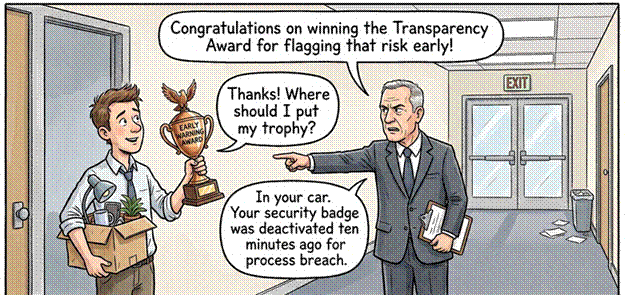
The most dangerous risks are the ones nobody marked at all, because the last person who tried learned exactly what that cost him.
The Third Question Boards Never Ask
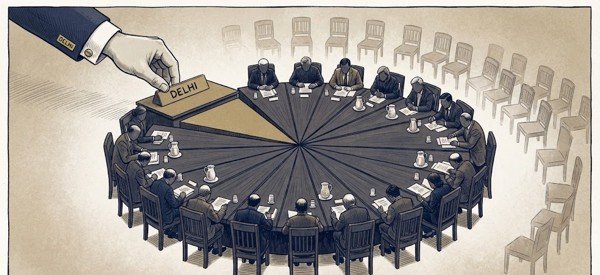
Most board reviews stop at two questions: what happened, and what are we doing about it. Anjali’s board asked both, every quarter, diligently. Neither would have caught Vikram’s flag. The question that would have is the third one — what does our current answer assume, and who benefits if that assumption goes unchallenged? It’s the same question a generation of global bank boards failed to ask in the run-up to 2008, when ‘AAA-rated’ quietly came to mean ‘nobody has re-examined this assumption lately.’ Priya started asking it eight months after the disclosure, in every committee meeting, whether anyone wanted to hear it or not.
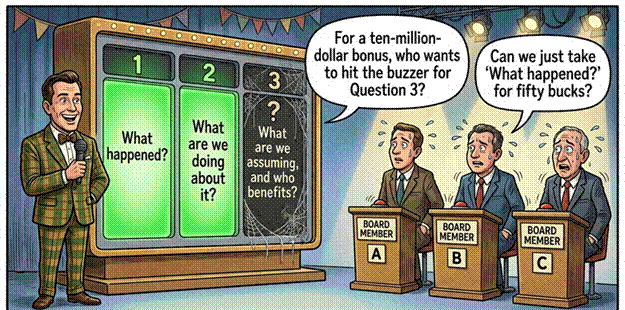
Two questions inform a board. Almost nobody buzzes in for the third one.
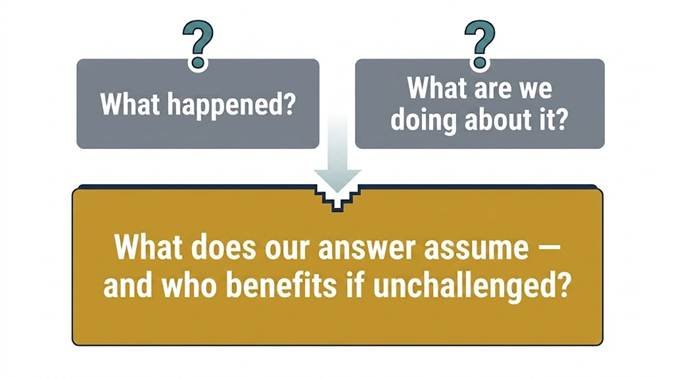
Two questions inform a board. The third one governs.
Gravity Always Wins
Gravity pulls organizations toward the path of least resistance, and an unguarded dashboard becomes an instrument of that gravity. It is easier to build a metric that can be hit than to fix the process that produces it. Bank of Meridian’s branches found it easier to quietly extend a stressed account’s repayment schedule — resetting the clock on when it would have to be classified as non-performing — than to recognize the loss and move on. The same gravity shows up on a car dealership’s service drive, where a repeat repair is easier to log as a fresh concern than as a comeback — the technician’s metric stays clean, and the underlying quality problem never gets counted. Over time, without deliberate counterpressure, every reporting system drifts toward flattering the people who feed it. A board that assumes its own dashboard is immune to this drift is, almost by definition, the board least likely to notice when it happens.
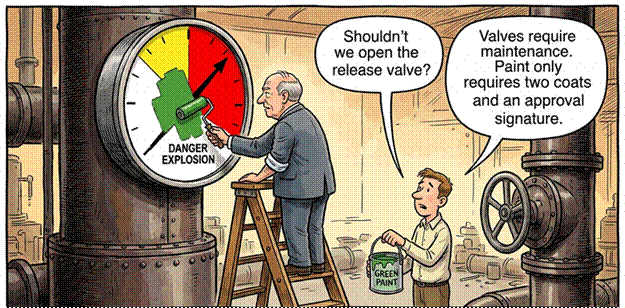
It is easier to catch the metric than to fix the process that produces it.
From Reporting to Reasoning: Redesigning the Board’s Toolkit
None of this argues for abandoning dashboards — only for demoting them from verdict to evidence. Eighteen months after the disclosure, Bank of Meridian’s board packet looks different. Every metric now sits beside its blind spot: what this number cannot tell us, and what we’d need to ask to find out. Priya rotates a ‘challenge seat’ through every major credit review — one director whose only job that quarter is to argue with the data. And Vikram, the branch officer whose flag started all of this, now presents large-exposure accounts directly to the board risk committee twice a year, in his own words, with no translation layer in between. The goal was never more information. It was better judgment, applied consistently enough to survive a calm quarter.
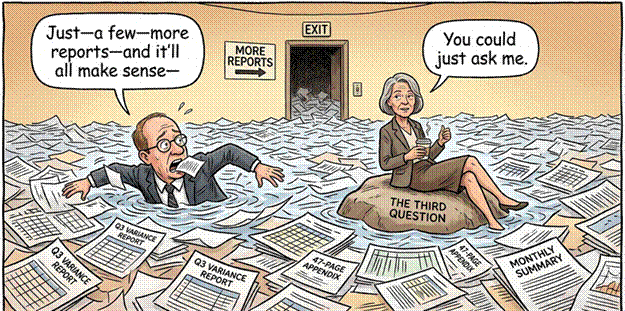
The goal was never more information. Most boards already drown in it.
Recommendations for Boards
- Treat every green metric as a claim, not a fact — ask what evidence would falsify it.
- Build a standing ‘Third Question’ item into every board cycle: what are we assuming, and who benefits if it goes unchallenged?
- Protect early bad news structurally — reward the messenger before you ever need the message.
- Confirm the people closest to a problem have both the authority and the confidence to act on it before it becomes a board-level crisis.
- Rotate a dissenting or challenge voice into major reviews rather than relying on consensus alone.
- Audit the architecture behind repeat flags, not just the flags themselves.
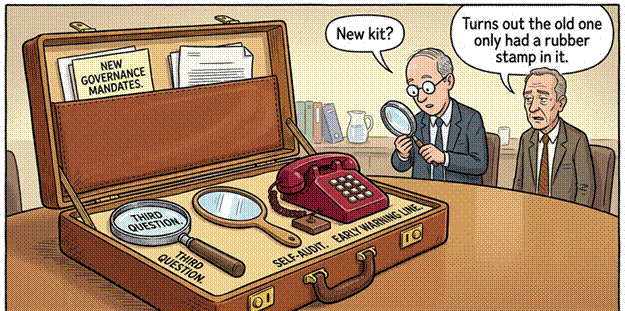
The goal was never more information. It was better judgment, built into the tools a board already reaches for.
The Bottom Line: Control Is a Verb, Not a Screen
Control is not something a board possesses because a dashboard says so. It is something a board practices, continuously, by asking what the numbers cannot show and by building the kind of culture that lets people tell the truth before it becomes a headline. Anjali still reviews her dashboard every morning. But now she also asks Priya’s question, and every so often, someone like Vikram answers it honestly, in a meeting where that answer earns a thank-you instead of a follow-up about process. The illusion of control feels like governance. Real governance is less comfortable, less green, and considerably harder to automate — and it’s the only version that sees trouble while there is still time to do something about it.
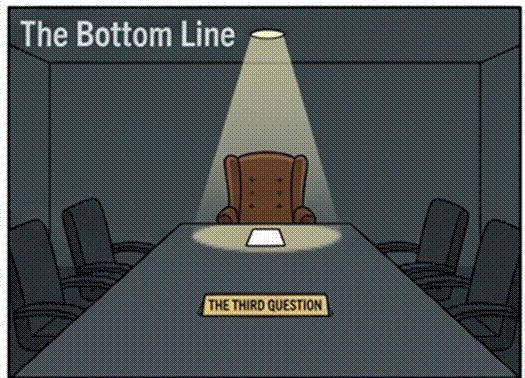
The illusion of control feels like governance. Real governance keeps a seat reserved for the third question — whether or not anyone’s usi

John M Birchbauer
John M. Birchbauer is a Strategic Diagnostician and Independent Board Advisor with more than 25 years of experience across automotive retail and global B2B logistics. He is the founder of Paradise Group LLC, an independent advisory practice, and held senior leadership roles at JM Family Enterprises, where his work included the AAX acquisition, the Retail Suite platform, and the VIN Explosion Tool — bridging algorithmic intelligence with frontline dealership operations. He currently holds a Chairman role with INVESTARMS PLC and is co-founder of Definait, an early-stage AI fintech venture with planned operations in Dubai.
His advisory practice centers on his "Third Question" diagnostic framework — a governance methodology built on a simple premise: most boards stop at what happened and what they're doing about it, when the question that actually changes outcomes is what the current answer assumes, and who benefits if that assumption goes unchallenged. He mentors entrepreneurs through MicroMentor, including participation in a joint World Bank and Caribbean Climate Innovation Center international pilot program.
He is based in Waukesha, Wisconsin, USA.





Leave a comment