






























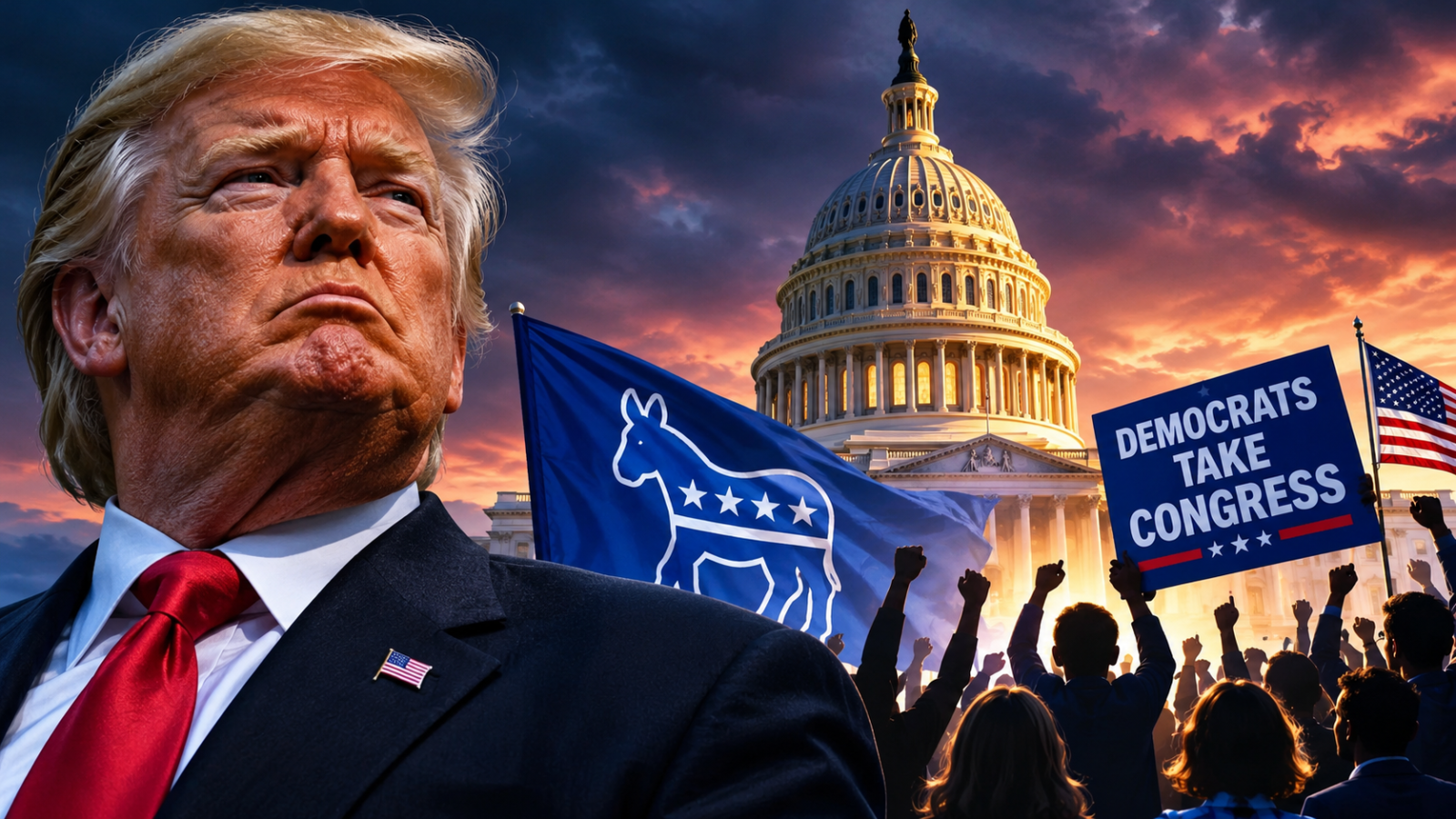

America’s midterm elections have shattered Republican control of Congress. From Texas to South Carolina, voters have overturned political strongholds, exposing the fragility of Trump’s electoral coalition. The economy, Iran war, demographic shifts and Trump’s own candidate choices have combined to produce a stunning political reversal.
Trump Without a Mandate: The American Revolt Against Its Own Political Strongman
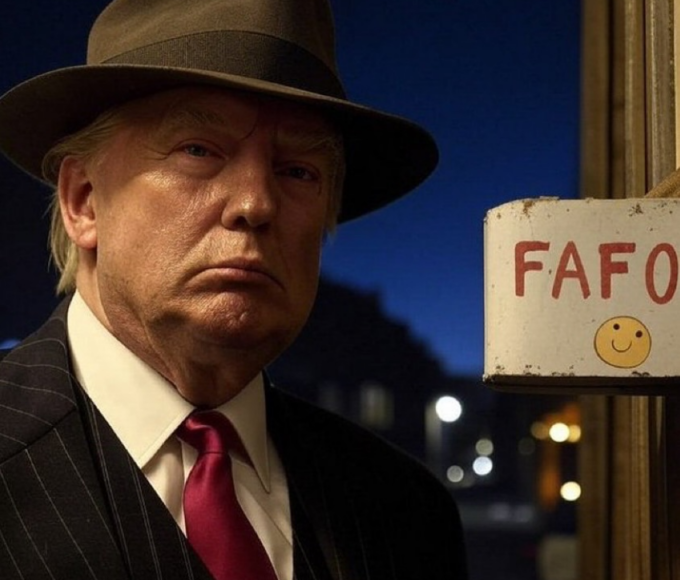
Washington has changed colour. Donald Trump has lost both chambers of Congress, Republican strongholds have fallen, and the coalition that carried him to the White House in 2024 is coming apart. The midterm verdict is more than an electoral setback; it is a warning that political dominance has a shelf life.
America has delivered its verdict, and Donald Trump has received the bill. The November 3 midterm elections have turned Washington’s political arithmetic upside down. Democrats have captured both the House of Representatives and the Senate, breaking the Republican grip on Congress and delivering a stunning rebuke to a president who had made himself the centrepiece of the campaign. The scale of the reversal is extraordinary. Texas, South Carolina, Kansas, Ohio and North Carolina, once considered safe or comfortable Republican territory, have swung towards the Democrats. The Trump machine, which promised an uninterrupted political revolution, has run into an electorate that appears increasingly unwilling to pay its price.
Texas is the earthquake. Democrat James Talarico defeated Trump-backed Ken Paxton in the Senate race, ending a Democratic drought in statewide Senate elections dating back to 1988. The state also elected Gina Hinojosa as its first Latina governor, defeating Republican incumbent Greg Abbott. Texas had voted for Trump by nearly 14 percentage points in 2024. A state that Republicans treated as their political fortress has suddenly become a battlefield. South Carolina delivered another shock, with Annie Andrews defeating Republican Senator Darline Graham. Kansas went Democratic for the first time in a Senate election since 1932, while Maine, Ohio and North Carolina added to the Republican humiliation. Sherrod Brown returned to the Senate in Ohio, Troy Jackson unseated Susan Collins in Maine, and Roy Cooper captured North Carolina. These were not marginal victories on the electoral map; they were cracks in the foundations of Republican power.
The revolt was not confined to Congress. Democrats captured governorships in Texas, Georgia, Iowa, Ohio and Nevada, according to projected results. Georgia elected Keisha Lance Bottoms, the first Black woman to become a US governor. Ohio chose Amy Acton, Iowa elected Rob Sand, and Texas turned to Hinojosa. Democrats have also moved ahead of Republicans in the number of governorships held nationally, a reversal of the political balance that had favoured the GOP for years. The red wave of 2024 has met a blue counter-wave in 2026.
What drove it? The answer begins not in the White House, but in the supermarket. Groceries, petrol, housing and household bills proved more persuasive than campaign slogans. Nearly nine in ten voters considered the cost of living a major factor, according to Reuters’ election analysis. The AP Voter Poll, based on roughly 80,000 voters, found that the economy and democracy dominated the national conversation; cost of living and government corruption weighed heavily on congressional choices. Around six in ten voters disapproved of Trump’s presidency, while roughly seven in ten wanted Congress to do more to check presidential power. For millions, the ballot was not a referendum on ideology. It was a monthly account of what life costs.
The demographic arithmetic has also shifted. The coalition Trump assembled in 2024 was built partly on gains among young voters, Hispanic voters and sections of the working class. That coalition did not travel intact into the midterms. The AP voter analysis found that around seven in ten voters under 30 backed Democratic House candidates, as did roughly six in ten Hispanic voters. The Latino vote, once a source of Republican optimism, became a warning light. In parts of Texas and the border counties, the swing was particularly striking. Immigration rhetoric could not drown out concerns about jobs, prices, housing and the future. The kitchen table defeated the campaign stage.
Trump’s candidate-selection strategy compounded the damage. His endorsement had become a political command within the Republican Party; this time, it looked more like a liability. Ken Paxton in Texas and Republican candidates in other key contests carried the weight of Trump’s backing but could not convert it into votes. The president had tried to make the election a personal test of loyalty. Voters accepted the invitation, but not the answer he wanted. The Republican Party now faces an uncomfortable question: can it win beyond Trump, or has it become so dependent on him that it cannot distinguish its own political interests from his?
The redistricting gamble failed too. Republicans had redrawn congressional boundaries in several states, hoping to manufacture an advantage and protect their narrow House majority. But maps cannot vote. The party lost targeted seats and surrendered control despite its efforts to reshape the electoral battlefield. The result exposed the limits of political engineering when public anger is running deeper than constituency boundaries. A favourable map can help a party; it cannot make voters forget the price of petrol.
Then there is Iran. The war has become a domestic political liability, bringing foreign policy into the American kitchen. Vice-President JD Vance went further than most administration figures, declaring that the war was the reason Republicans lost. His blunt assessment opened an extraordinary breach inside the Trump camp. If the war cost the party control of the Senate, the question is no longer merely whether the military campaign is succeeding. It is whether its political price is sustainable. Trump himself acknowledged that the conflict had contributed to the result. The president’s foreign-policy choices are now exposed to a Congress controlled by his opponents.
The consequences begin in January 2027, when the new Congress takes office. Hakeem Jeffries is positioned to become Speaker of the House, while Chuck Schumer will lead the Democratic Senate majority. Congressional committees will gain subpoena powers and the authority to investigate the administration. Cabinet and judicial nominations will face a far tougher Senate. Budgets, spending bills and Trump’s legislative programme will become bargaining contests rather than executive commands. Impeachment may return to the conversation, although a House vote alone cannot remove a president; conviction requires a two-thirds Senate majority. Trump retains the veto and the powers of the presidency, but the political runway has narrowed.
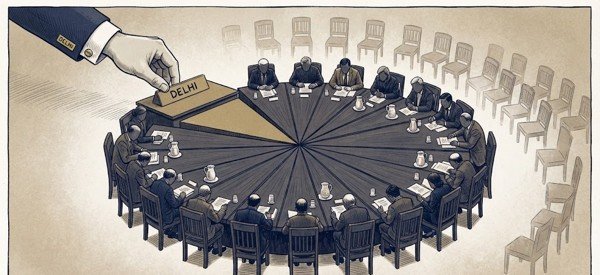
For India, the implications deserve close attention. Trade and tariffs could face sharper congressional scrutiny; immigration and H-1B visas will remain politically sensitive; defence cooperation may continue, but under more intense oversight. The Iran conflict and sanctions could complicate India’s diplomatic calculations. On China, bipartisan strategic concerns may survive the change in congressional control, but the tone and tactics of Washington could shift. A Democratic Congress does not automatically mean a softer America towards India. It means a more contested one.
The larger battle, however, is already moving towards 2028. JD Vance faces the challenge of inheriting a wounded Trump coalition while explaining the cost of the Iran war. Marco Rubio remains an influential Republican foreign-policy figure. On the Democratic side, Gavin Newsom and Kamala Harris will inevitably enter conversations about the party’s next presidential standard-bearer. None has secured the nomination; all will operate in the shadow of this election.
The midterms have not removed Trump from office. They have removed something more politically valuable: the appearance of invincibility. In 2024, he assembled a coalition powerful enough to reclaim the White House. Two years later, the economy, the war, demographic movement and his own political choices have exposed its fragility. The Republican Party must now decide whether it belongs to a movement or to one man. Democrats, meanwhile, have won the keys to Congress but inherited the burden of proving they can govern.
America has not yet chosen its next president. It has, however, reminded the present one that power is borrowed, not owned. And even the loudest political orchestra cannot keep playing when the audience walks out.

Anil Tyagi is a distinguished Indian journalist. An alumnus of the Delhi School of Economics (M.Com) and the University of Delhi (LL.B), he brings decades of rich experience to journalism. He presently serves as Editor of gfiles.
Leave a comment