






















From Defence Secretary to Tata Chairman: The Unanswered Questions
The journey of a second-generation bureaucrat from Madhya Pradesh’s corridors of power to the Defence Ministry and Tata boardroom raises questions about patronage, public authority and the revolving door between government and corporate India.
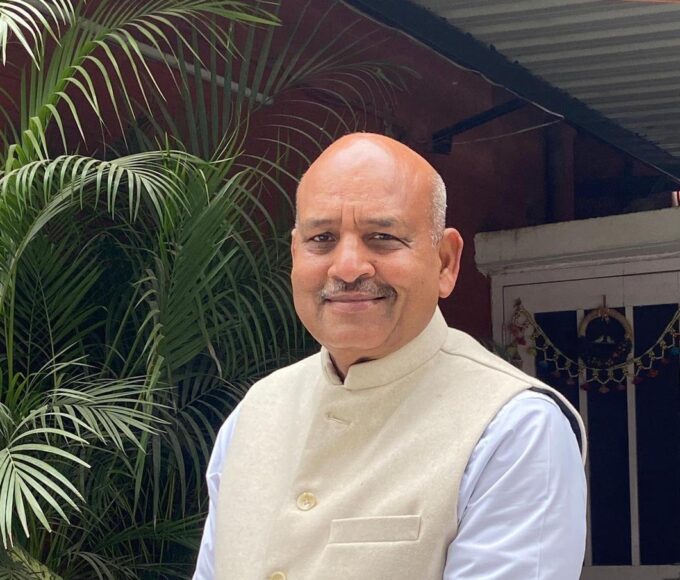
In India, a bureaucrat’s career can be a study in the art of climbing. One day, he occupies the Collector’s chair; decades later, he may sit at the commanding heights of a corporate empire. Vijay Singh’s journey—from Madhya Pradesh’s district administration to the Defence Secretary’s office and eventually the Tata boardroom—is a remarkable illustration of that passage. But behind the impressive résumé lies a story of political connections, administrative power and questions that deserve to be asked.
The story begins a generation before Vijay Singh entered the IAS in 1970. His father, Lallan Prasad Singh, was an officer of the Indian Civil Service (ICS), the elite service of British India. He became Chief Secretary of Bihar, served as Union Home Secretary and later held gubernatorial responsibilities, including Governor of Assam. The family was therefore familiar with the highest levels of India’s administrative establishment long before Vijay began his own career. This background does not establish that his father’s position secured him appointments, but it provides an important context for understanding the world in which he grew up.
Yet the most disturbing portrait of Vijay Singh comes not from a government file or a corporate annual report. It comes from Gwalior.
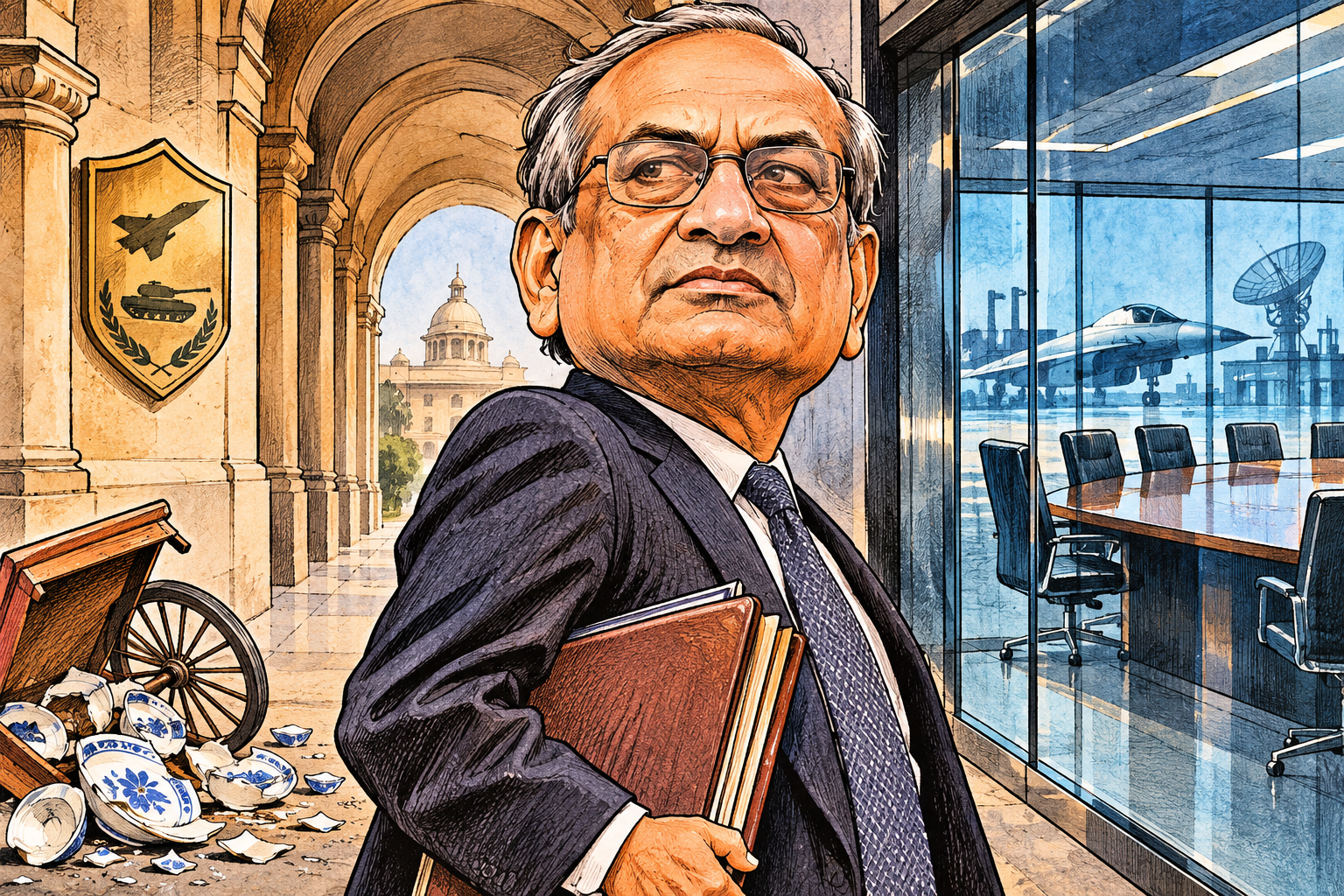
A senior journalist has told Gfiles that, when Singh was Collector of Gwalior, his treatment of poor street vendors could be brutal. The journalist recalls personally witnessing an incident outside Regal Talkies in which Singh overturned a handcart loaded with crockery. The merchandise crashed onto the road. The poor vendor, watching his goods shattered and his livelihood destroyed, broke down and wept.
From his early career in Madhya Pradesh and the Festival of India to the Defence Secretary’s office and Tata’s boardroom, Vijay Singh’s remarkable journey carries a trail of unanswered questions about power, patronage and accountability.
The journalist further recalls that Singh would arrive in an official Tempo Trax, creating fear among roadside traders. These are the journalist’s firsthand recollections; the incident has not been independently corroborated by a second witness. But the image is difficult to forget: a powerful district officer standing over a broken cart while a poor man cries over the wreckage of his livelihood.
For the vendor, the cart was his capital, his daily income and perhaps his family’s only means of survival. For the administration, it may have been an encroachment to be removed. The difference between those two perspectives is the difference between the exercise of authority and the human consequences of that authority.
Singh’s early career then took a significant turn. According to information supplied to Gfiles, he was regarded within Madhya Pradesh’s administrative circles as a protégé of the powerful Chief Minister Arjun Singh. The timing is notable: Arjun Singh was Chief Minister from 1980 to 1985, and Vijay Singh moved from the Madhya Pradesh cadre to the Government of India in 1982.
The official record confirms the move. Singh became associated with the Festival of India programme, serving in the international cultural initiative involving the United States, France, the Soviet Union and Japan. The surviving archival record includes correspondence bearing his name and a file titled “India Book – Vijay Singh”. It was an assignment that took a relatively young state-cadre officer into the national establishment and gave him exposure well beyond district administration.
Another figure in that establishment was S.K. Misra, a senior Haryana-cadre bureaucrat who had served closely with Chief Minister Bansi Lal and later became Secretary to Prime Minister Chandra Shekhar. Misra occupied an important position in the Festival of India machinery, in which Singh also worked.
The question is not whether these officers worked together; their association is documented. The question is how Singh was selected for the assignment and what role the Madhya Pradesh government played in his release and deputation. Gfiles has received information that Singh was also a Thakur, as was Arjun Singh. Whether social affinity intersected with political patronage in his early career remains a hypothesis requiring independent corroboration. The original personnel and deputation files would be far more revealing than speculation.
In 1987, Singh returned to Madhya Pradesh and moved through senior assignments, including Commissioner of Jabalpur Division, Commissioner of Indore Division and Home Secretary. His handling of communal tensions in Indore following the demolition of the Babri Masjid in 1992 was praised in accounts of his career. He subsequently became Chief Secretary of Madhya Pradesh in October 2004.
His tenure as Chief Secretary also demonstrated that bureaucratic relationships with political power can be complicated. Singh defended IAS officer S.R. Mohanty in correspondence with the Centre during a controversy involving the Madhya Pradesh State Industrial Development Corporation. After Shivraj Singh Chouhan became Chief Minister, Singh was removed as Chief Secretary in January 2006. His career cannot therefore be reduced to a simple story of political patronage: the same officer could enjoy one establishment’s confidence and become inconvenient to another.
On 31 July 2007, he became Defence Secretary of India. And here the corporate chapter begins. In October 2007, seven defence industrial licences associated with Tara Systems & Technologies—the Tata entity that subsequently became Tata Advanced Systems—were issued. The licences covered a wide range of defence capabilities, including military communications, electronic warfare, combat systems, radar, missiles, aircraft-related systems and unmanned platforms.
The dates deserve scrutiny. Singh had become Defence Secretary only months earlier. But a licence issued during an officer’s tenure does not establish that he personally approved it or influenced the decision. The proper investigation lies in the original applications, processing notes, committee recommendations and approval chain. Until those records are examined, the chronology is a legitimate investigative lead, not proof of impropriety.
Singh retired as Defence Secretary in July 2009 and subsequently served as a member of the Union Public Service Commission. He joined the Tata Sons board in 2013. In 2018, he became Chairman of Tata Advanced Systems.
The journey had come full circle. The former Defence Secretary was now leading the defence and aerospace business of one of India’s most powerful corporate groups.
That transition raises questions about the movement of senior public officials into industries they once helped administer. It does not, by itself, establish wrongdoing. The issue is whether any decisions taken during Singh’s government service intersected improperly with the corporate interests he later served. That can be answered only through documents, not insinuation.
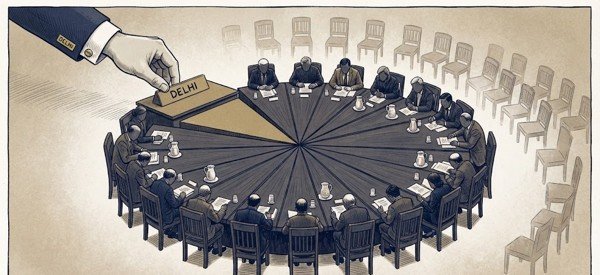
The latest chapter places Singh inside a different kind of power struggle: the battle over the governance of Tata Trusts. By October 2026, he had emerged as a central figure in the dispute, serving as Vice-Chairman and trustee of the Sir Dorabji Tata Trust. Along with Venu Srinivasan, he raised objections concerning aspects of the Trust’s administration and decision-making. The dispute has moved into the regulatory arena, with competing positions being presented to the Maharashtra Charity Commissioner.
Tata Trusts are not ordinary shareholders. They are central to the ownership structure of Tata Sons, the holding company at the heart of the Tata empire. The dispute therefore concerns more than personalities: it touches the relationship between charitable trusts, corporate governance and control of one of India’s most influential business groups.
The contrast nevertheless remains striking. A career that began in district administration, passed through the highest offices of government and culminated in the leadership of Tata’s defence business has now brought Singh into the contest over the governance of the trusts that underpin the Tata empire.
There are two images of Vijay Singh in this story. One is the senior bureaucrat whose career advanced through important administrative offices, culminating in the Defence Secretary’s chair. The other is the Collector remembered by a journalist standing outside Regal Talkies in Gwalior, watching a poor vendor weep over shattered crockery.
The two images do not prove each other. Nor does the first cancel the second.But they raise a question about power that is larger than one individual. What happens when authority exercised against ordinary citizens becomes part of the résumé of a man who later enters the highest circles of corporate India? And how should the public examine the passage of senior officials from government to businesses operating in sectors they once oversaw?
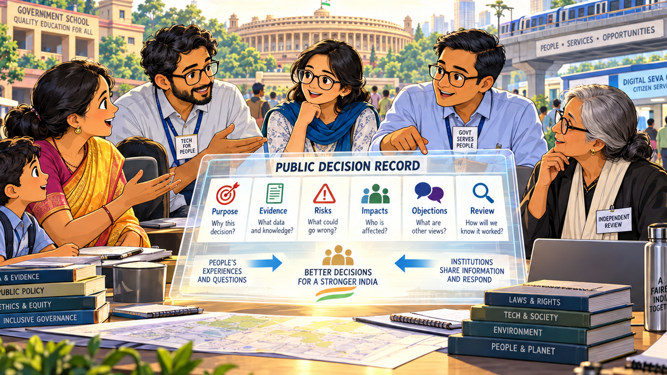
The answers lie in the records: the deputation file of 1982, the postings that followed, the defence licensing papers of 2007 and the documents now shaping the Tata Trusts dispute.
In India, the nameplate changes—from Collector to Secretary, from Defence Secretary to corporate chairman. The real test is whether accountability travels with the man.
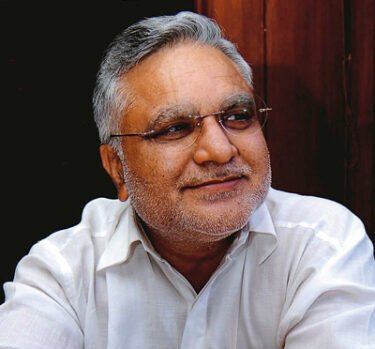
Anil Tyagi is a distinguished Indian journalist. An alumnus of the Delhi School of Economics (M.Com) and the University of Delhi (LL.B), he brings decades of rich experience to journalism. He presently serves as Editor of gfiles.


Leave a comment