






















In the summer of 2026, a satirical Instagram post about being called a cockroach turned into one of India’s most talked-about youth movements in years. It forced a Union minister to resign, put lakhs of anxious and angry students on the streets, and reminded the country, once again, that agitation is one of its oldest and most reliable political instruments.
Five years earlier, at the borders of Delhi, another kind of crowd had gathered—older, quieter, more disciplined— sitting in makeshift tents and agitating on tractors through two winters until the government repealed three farm laws. The Kisan Andolan and the NEET agitation look, on the surface, like they belong to different worlds. One was rural, unionised and slow-burning; the other was urban, decentralised and viral. But set them beside India’s two great twentieth and twenty-first century precedents — the JP Movement of 1974-75 and Anna Hazare’s anti-corruption stir of 2011 — and a pattern begins to emerge. Indian protest has a grammar of its own, and every generation seems to relearn it in its own idiom.
Four Movements, One Family
It helps to think of these four episodes as members of the same family rather than as isolated events. Each one erupted in a country that already had a live wire of frustration running through it, and each needed only a single spark — a slap, an arrest, a court remark — to set that wire alight. That is worth remembering whenever an agitation is dismissed, in its early days, as a minor or even frivolous disturbance.
The cockroach jibe of 2026 sounded, at first, like a punchline. The arrest of one elderly Gandhian in August 2011 sounded, at first, like routine policing. History has a way of being unkind to such early dismissals.
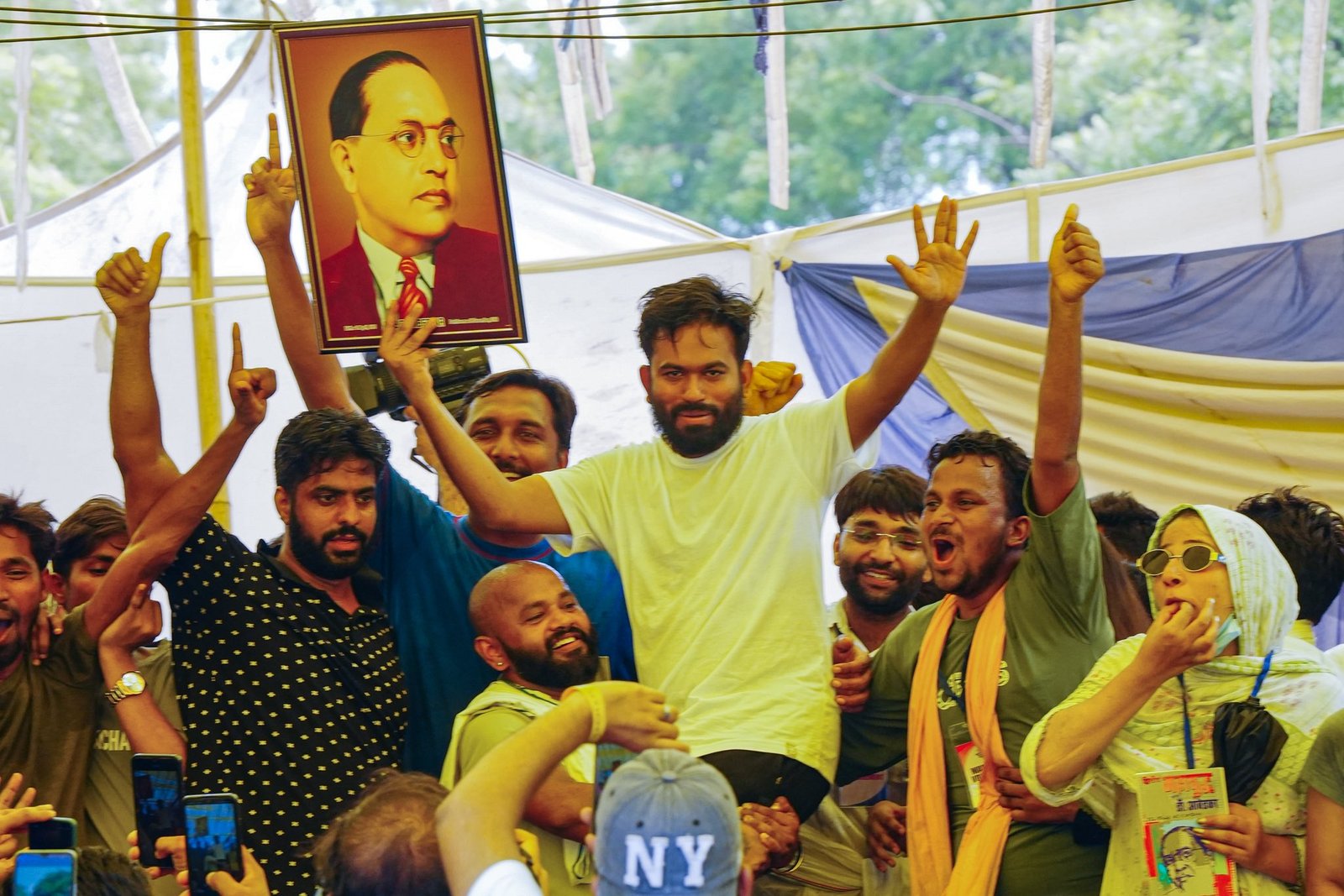
Start with the basic facts. The JP Movement grew out of a student protest against unemployment and inflation in Bihar in 1974, and under the moral leadership of Jayaprakash Narayan it widened into a call for ‘total revolution’ against Indira Gandhi’s government — a struggle that ended, eighteen months later, in the Emergency and, later still, in the historic defeat of the Congress in 1977. Anna Hazare’s movement began with the arrest of a 74-year-old Gandhian on 16 August 2011, demanding a strong Jan Lokpal law; it lasted roughly eight months, drew India’s urban middle class to Ramlila Ground and Jantar Mantar, and eventually reshaped party politics with the birth of the Aam Aadmi Party. The Kisan Andolan started in November 2020 when farmers from Punjab, Haryana and western Uttar Pradesh camped at the Singhu, Tikri and Ghazipur borders of Delhi to oppose three new farm laws; it ran for about thirteen months and ended when the laws were withdrawn. And the NEET agitation of 2026 began, almost by accident, with a courtroom remark.
What Lit the Fuse
Every one of these movements was set off by something specific, even if the anger behind it had been building for years. In Bihar, it was police repression of student protesters, and JP’s decision to lend his name to their cause. In 2011, it was Anna Hazare’s arrest, which turned a niche demand for an anti-corruption ombudsman into a national talking point overnight. In 2020-21, farmer anger crystallised around the sight of Rakesh Tikait weeping at the Ghazipur border in January 2021 — a moment that is widely credited with reviving a stir that had lost momentum after violence on Republic Day.
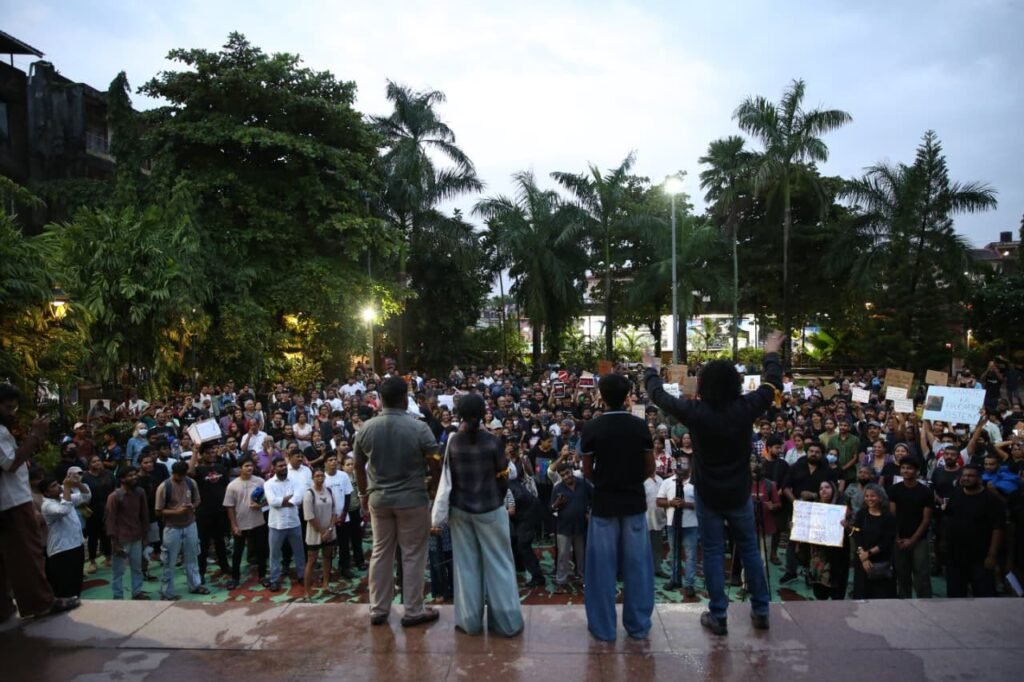
And in 2026, the spark was almost comic: during a routine Supreme Court hearing , Chief Justice of India Surya Kant reportedly likened litigants clogging the court with repeated pleas to cockroaches. A Boston-based student and former Aam Aadmi Party communications strategist, Abhijeet Dipke, turned the insult into a badge of honour, announcing the ‘Cockroach Janta Party’ on social media. What began as satire gathered real force once it fused with student fury over the botched NEET-UG exam of 3 May 2026, which had to be cancelled and re-conducted after evidence of a leak.
Who Turned Up
The social base of each movement tells its own story about the India it emerged from. JP’s coalition was broad — students, the middle class, farmers and nearly every opposition party then in existence. Anna Hazare pulled in urban professionals, civil society groups and, notably, extensive support from the RSS network alongside NGOs and volunteers. The Kisan Andolan was more regionally concentrated: it belonged, first and foremost, to the farmers of Punjab, Haryana and western Uttar Pradesh, organised and largely middle-aged or elderly, with support running high in the north-west but comparatively lukewarm elsewhere in the country.
The 2026 stir, by contrast, was a GenZ and young-millennial affair — NEET aspirants, coaching-centre students from cities like Patna and educated but anxious young India, gathering not just at Jantar Mantar but across metros and campuses. Where the Kisan Andolan’s iconography was the tractor and the langar — the community kitchen that fed protesters through two Delhi winters — the NEET agitation’s iconography was digital: memes, Instagram reels, admit cards held up as placards, and cockroach costumes worn half in anger, half in jest.
Leadership: From One Man to No One in Particular
Perhaps the sharpest contrast lies in leadership and organisation. JP was an undisputed moral leader in the Gandhian mould, giving the Bihar movement a single, recognisable face. Anna Hazare played a similar unifying role in 2011, flanked by figures such as Arvind Kejriwal, Kiran Bedi Prof Anand Kumar and Prashant Bhushan, who would later go on to build institutions and parties of their own. The Kisan Andolan sat somewhere in between: diffuse in its origins but centrally coordinated through the Samyukta Kisan Morcha, an umbrella of farm unions that gave the protest discipline and staying power over thirteen months.
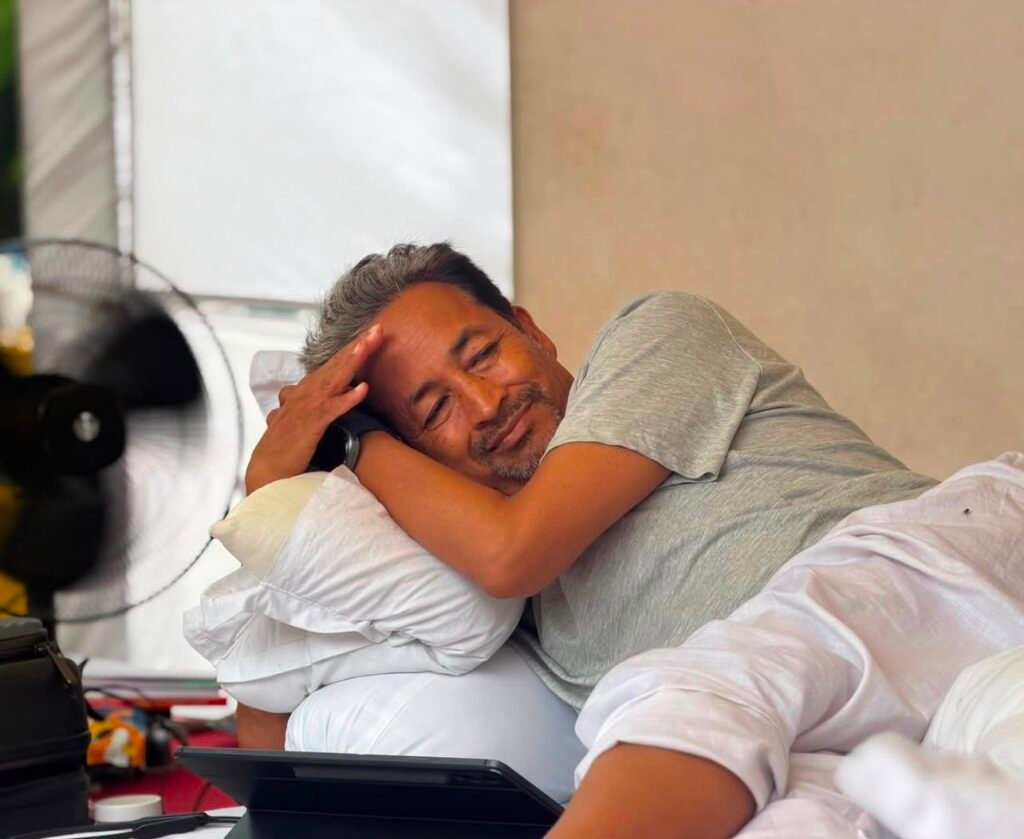
The NEET agitation pushed the model further still. The Cockroach Janta Party had a founder in Dipke, and a moral anchor in the Ladakhi education reformer and climate activist Sonam Wangchuk, who joined the protest with an indefinite hunger strike on 28 June and was, weeks later, forcibly removed from the site — an image that briefly dominated national headlines. But real control remained elemental and spontaneous, driven less by any single command structure than by social media itself. It was less a movement with a leader than a movement with a mascot.
Symbols and the Language of Dissent
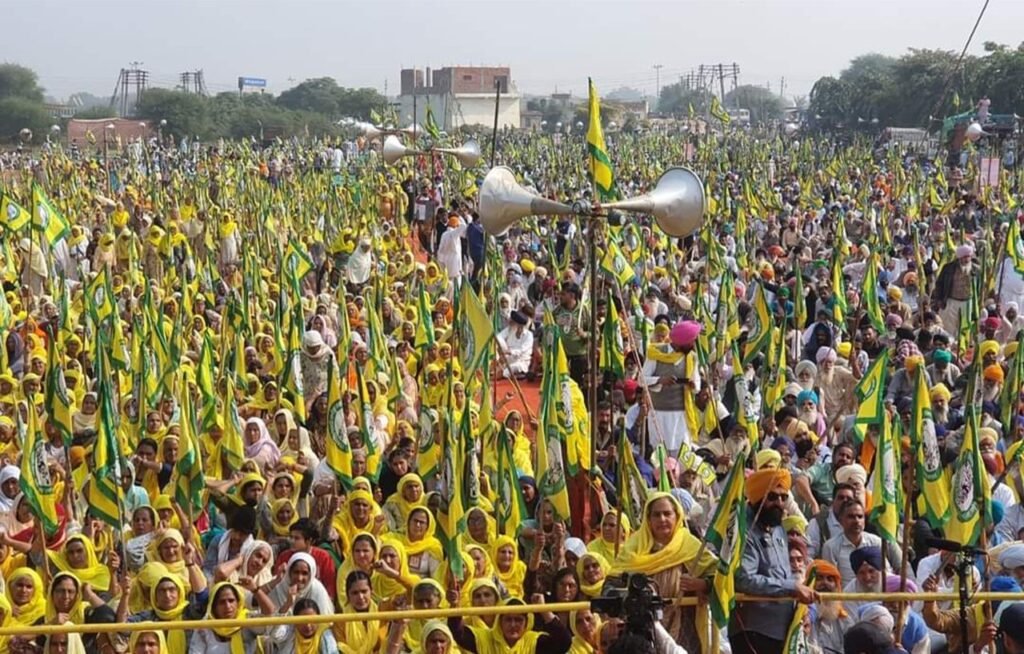
Each movement also spoke in its own visual and rhetorical language. The JP Movement drew on Gandhian symbolism — the cap, the flag, Narayan’s own speeches married to a language of total revolution and democratic socialism. Anna Hazare’s protest borrowed the same Gandhi cap but distilled its message into a single, marketable slogan: ‘I am Anna.’ The Kisan Andolan spoke through tractors rolling down highways and langars that fed anyone who arrived, a vocabulary of agrarian solidarity, protection and federalism.
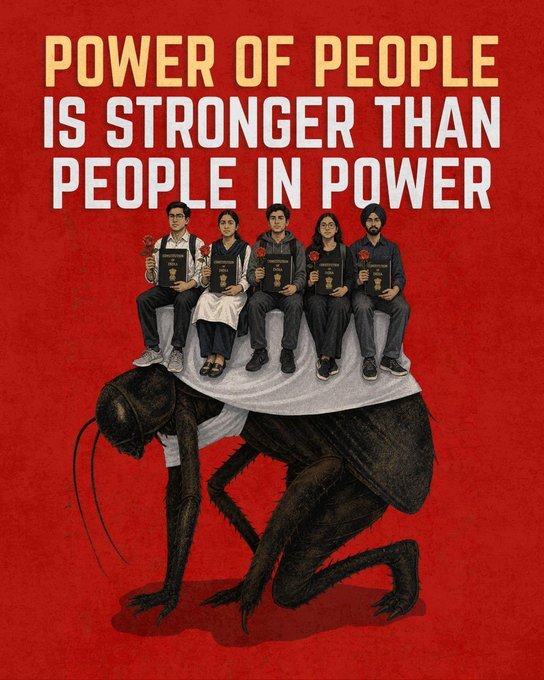
The 2026 protest inverted all of this: its central symbol was an insect, deployed satirically, alongside admit cards and books as props, and its ideology was less a coherent doctrine than a diffuse demand for merit, institutional fairness and accountability from a system young Indians had stopped trusting. If earlier movements asked to be taken seriously through solemnity, this one asked to be taken seriously by refusing to be solemn at all — and, improbably, it worked.
How the State Responded
In each case, the government’s playbook followed a familiar arc: repression first, negotiation later. The Bihar agitation was met with force that culminated in the imposition of the Emergency in 1975, a response so severe that it eventually cost the Congress the 1977 general election. Anna Hazare was arrested before New Delhi negotiated, and the pressure of his movement fed into a stronger anti-corruption framework, even as it hastened Congress’s decline through 2014. The Kisan Andolan, too, saw resistance before capitulation: farmers weathered water cannons and barricades at Delhi’s borders before Prime Minister Narendra Modi announced the repeal of the three farm laws in November 2021.
The NEET agitation followed the same script on a compressed timeline. Tear gas was used to stop a march on Parliament on 20 July 2026; Wangchuk was removed from his hunger strike; and yet, five days later, Education Minister Dharmendra Pradhan resigned, acknowledging the toll the controversy had taken on students, with Prahlad Joshi taking additional charge of the Education ministry. The tragedy underlying the numbers was real: several NEET aspirants reportedly died by suicide as the crisis dragged on, a grim reminder of what is actually at stake behind the memes and placards.
What Each Movement Leaves Behind
History tends to judge these agitations less by their demands than by their aftershocks. The JP Movement restored democratic norms after the Emergency, produced a new generation of regional and caste-based leaders like Lalu and Nitish and demonstrated — for the first time on this scale — that extra-constitutional pressure could bend an elected government. Anna Hazare’s stir put corruption on the national agenda, inaugurated an era of digital citizen activism, and midwifed the Aam Aadmi Party even as it fed a broader rightward shift in Indian politics. The Kisan Andolan left three clear aftershocks: it revived India’s farm unions, kept agrarian distress firmly in the national conversation, and strengthened identity-based mobilisation in states such as Punjab.
The NEET agitation’s legacy is still being written, but its early contours are visible: education and youth employment have been pushed to the centre of political debate, NEET itself is set to move to a computer-based format by 2027, and a generation that grew up online has shown it can mobilise — and extract accountability — without waiting for a party or a patriarch to lead it.
There is also an academic point buried inside this comparison, one that political scientists have long made about protest cycles: movements rarely start where they end. Jayaprakash Narayan did not set out to bring down a government; he set out to support angry students. Abhijeet Dipke did not set out to force a cabinet resignation; he set out to make a joke about an insect. What turns a local flashpoint into a national reckoning is not the original grievance but the presence of a much larger, pre-existing reservoir of resentment that the grievance happens to tap. Unemployment, examination anxiety, agrarian debt, the sense of an unaccountable state — these are the deep currents. The trigger is only ever the visible tip.
The Same Country, A Different Idiom
None of this means the two most recent movements are identical to each other, or to their predecessors. The Kisan Andolan had the discipline of a rural union movement decades in the making; the NEET agitation had the improvisational energy of a generation raised on irony and Instagram. One fed protesters through two Punjab winters in a langar; the other organised a hunger strike that trended as a hashtag. Where the Samyukt Kisan Morcha issued formal statements and negotiated across a table with the Union government, the Cockroach Janta Party mostly negotiated through headlines, viral clips and the sheer embarrassment of a chief justice’s remark being repeated back at him by teenagers in insect costumes. And yet both, like the Bihar movement and the India Against Corruption stir before them, drew their power from the same source: an ordinary grievance — a farm law, an exam paper — that came to stand for something much larger about how citizens are treated by the state.
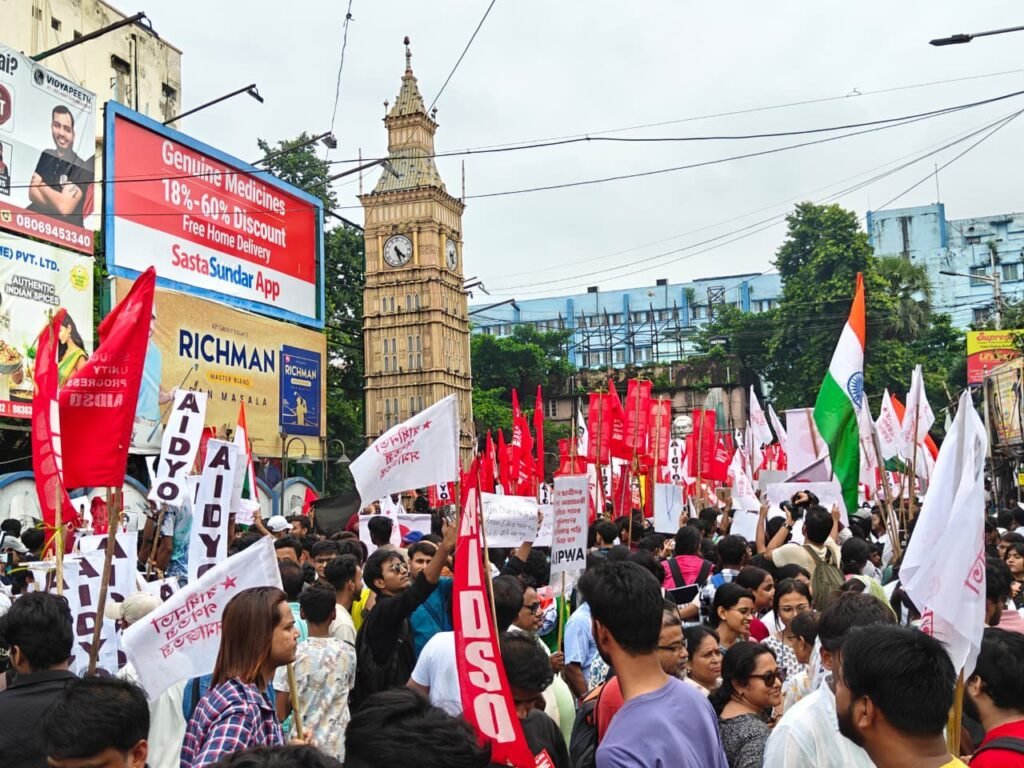
Read together, these four movements suggest that India’s protest culture has not weakened with time so much as it has changed its costume. The placard has given way to the Instagram post, the union card to the group chat, but the underlying instinct — to gather, to be counted, and to make a government listen — remains stubbornly, reassuringly the same. All of them are reminders that when govt’s turn repressive and arrogant, institutions fail to play their role, citizens have to come down to the streets to make the rulers feel the heat.
Whether the next great Indian agitation is born on a farm, a campus, or a smartphone screen, it will very likely be recognisable, in hindsight, as one more chapter in this same, unbroken story.

Prof Harjeshwar Singh
Prof Harjeshwar Pal Singh is a veteran writer on Punjab History and Politics. Director, Punjab Thinks