






















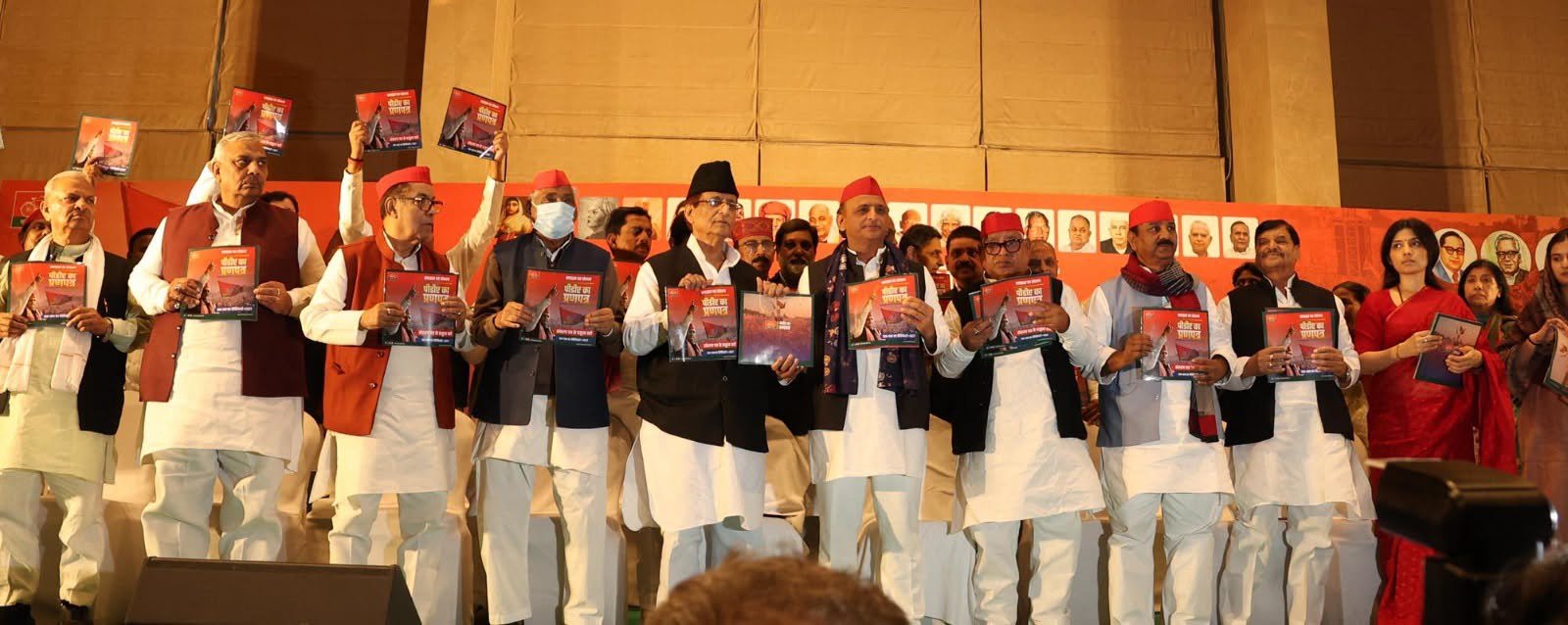
A closer examination of women’s assistance, free electricity, 25 lakh jobs and the Old Pension Scheme exposes the enormous financial and administrative challenge behind the Samajwadi Party’s 2027 promises.
LUCKNOW | November 26, 2026
Akhilesh Yadav has put an ambitious social contract before the electorate of Uttar Pradesh. But there is one department that will have to live with the consequences of his promises long after the election campaign ends: the Finance Department.
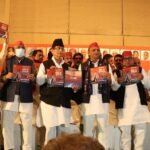
The Samajwadi Party’s 2027 manifesto promises ₹40,000 annually to women, 25 lakh government jobs in five years, ₹5,000 monthly unemployment assistance to graduates, 300 units of free electricity, restoration of the Old Pension Scheme and a farm loan waiver. The document is politically expansive. Its financial architecture, however, remains largely unexplained.
The 2026–27 Uttar Pradesh Budget provides the starting point for examining the promises. The state has a budget of ₹9.13 lakh crore and projected revenue receipts of ₹7.29 lakh crore. Salaries, pensions and interest payments together account for ₹3.54 lakh crore, or approximately 49 per cent of revenue receipts. The fiscal deficit is projected at ₹1.18 lakh crore.
This is not a state without resources. But it is a state with substantial existing commitments.
THE WOMEN’S ASSISTANCE QUESTION
The latest draft electoral roll, released on November 17, records 6.20 crore women voters in Uttar Pradesh. This is not the potential welfare beneficiary count, but it provides a useful reference point.
If half of these women — approximately 3.10 crore — qualify for the proposed ₹40,000 annual assistance, the expenditure would reach ₹1.24 lakh crore every year.
Even a two-crore beneficiary programme would cost ₹80,000 crore annually.
The scale is considerable. The state would have to explain whether the assistance is restricted by income, household circumstances, age or other eligibility conditions. It would also need a mechanism for identifying beneficiaries, preventing duplication and ensuring timely transfers.
Without an eligibility framework, the commitment cannot be converted into a reliable budget estimate.
ELECTRICITY: THE ₹47,591-CRORE EXPOSURE
The electricity promise has already attracted an independent assessment.
According to the Uttar Pradesh Rajya Vidyut Upbhokta Parishad, providing 300 units of free domestic electricity could require ₹34,746 crore annually in compensation to power utilities. Adding the existing agricultural electricity subsidy of ₹12,845 crore takes the combined annual electricity subsidy burden to ₹47,591 crore.
The distinction matters: ₹34,746 crore is the estimated domestic component, while ₹47,591 crore includes the existing agricultural subsidy.
The state already provides approximately ₹20,400 crore in electricity subsidies in 2026–27. Any expansion must therefore be assessed against existing subsidy commitments and the financial condition of the distribution companies.
There is also a question of coverage. Some reporting describes the SP promise as applying to rural households, while the electricity-sector estimate calculates a broader domestic-consumer programme. The exact scope needs clarification.
25 LAKH JOBS: WHERE ARE THE POSTS?
The employment promise is perhaps the most challenging administrative commitment.
Five lakh government appointments annually for five years would require an extraordinary expansion of recruitment capacity.
The Union Education Ministry’s 2026–27 assessment identifies 81,821 vacant teaching positions in UP’s elementary and secondary education systems. Of these, 77,400 are elementary teaching vacancies and 4,421 are secondary vacancies. The combined vacancy rate is approximately 31 per cent.
The Yogi government’s own recruitment announcement for 2026 had set a target of 1.5 lakh appointments, including 50,000 each in police and education and 20,000 in revenue.
The SP’s five-lakh annual target is more than three times that announced annual recruitment target.
The question is whether the party is promising to fill existing vacancies, create new sanctioned posts or include employment in public institutions and other organisations. These are fundamentally different commitments.
The official UP budget annexure provides department-wise sanctioned-post data, but the state needs to publish a current consolidated statement showing sanctioned strength, employees in position and vacancies. Without this information, the employment promise cannot be independently costed.
THE OLD PENSION QUESTION
The pension commitment could have consequences extending decades beyond the proposed government’s term.
UP has allocated ₹1,01,901 crore for pensions in 2026–27. Its Finance Accounts for 2024–25 record approximately 11.49 lakh pensioners across different categories.
The Reserve Bank of India’s September 2023 study on the fiscal costs of reverting to OPS estimated that the cumulative pension burden under OPS could be approximately 4.5 times that under NPS across the states studied.
This is not a UP-specific projection, but it illustrates why the state needs its own actuarial assessment before promising a change in pension arrangements.
The political attraction of OPS is understandable. The fiscal obligation, however, cannot be measured only by the immediate pension bill.
THE FINANCE DEPARTMENT’S DILEMMA
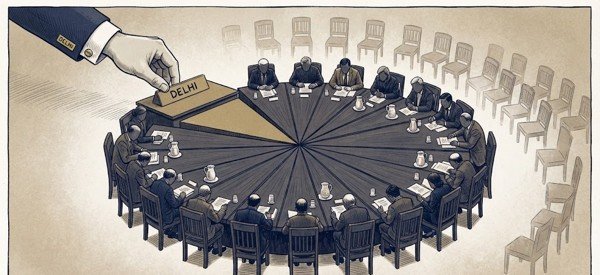
The numbers raise an important issue. The state already spends almost half its revenue receipts on committed expenditure. New cash-transfer programmes, free electricity, recruitment and pension changes would add to recurring liabilities.
The government would have to choose between additional revenue mobilisation, reprioritising expenditure, limiting eligibility or creating new borrowing requirements. Each option has consequences.
There is also a risk that an expanding revenue expenditure bill could crowd out investment in roads, irrigation, industrial infrastructure, schools and hospitals. Equally, properly designed cash transfers and public recruitment can support consumption and improve public-service delivery.
The question is not whether welfare expenditure is desirable. It is whether the proposed expenditure is properly funded and administratively deliverable.
Akhilesh Yadav has placed the political commitments on the table. The Finance Department now needs to see the accompanying calculations.
The real test of the PDA Pran Patra is not the number of people to whom it promises benefits. It is whether Uttar Pradesh can finance those benefits without mortgaging its development priorities and the fiscal choices of the next generation.


Leave a comment